War girls: a collection of First World War stories through the
eyes of young women (Andersen Press, 2014)
Nine stories by Theresa Breslin, Melvin Burgess, Berlie Doherty,
Anne Fine, Adele Geras, Mary Hooper, Rowena House, Sally Nicholls and Matt Whyman.
259 pages
Subjects: World War One, women in war, short stories, junior fiction (Years 6-10)

Synopsis
The back blurb says that “this collection of short stories
explores how the First World War changed and shaped the lives of women for
ever… Some of today’s leading writers for young people present moving portraits
of loss and grief, and of hope overcoming terrible odds.” (There isn’t any
other information inside about how the authors were chosen, and what inspired them in turn to choose their topic.)
Everyone
will have their own favourites, but these are the stories:
Shadow
and light by Theresa Breslin
Merle,
an aspiring artist, and her friend Grace join the British Red Cross to drive
ambulances for the Scottish Women’s Hospital for Foreign Service – staffed
entirely (doctors, nurses, cooks and ambulance drivers) by women. She has some
spiky run-ins with a golden-haired English captain who doesn’t realise she can
understand his comments in French about women in war. Together they get caught
up in the middle of the German advance near Albert.
Ghost
story by Matt Whyman
Some
Allied soldiers said they came under fire from female Turkish snipers at
Gallipoli – could that be true?
Storm
in a teacup by Mary Hooper
16 year
old Harriet isn’t old enough to be a nurse and doesn’t want to work in a
factory, so she gets a job as a waitress at the Lyons’ Corner House on the
Strand in London and stumbles across a spy ring. This seemed a little
far-fetched, but I liked the setting because my mother lived in London as a
young woman and always had a soft spot for Lyons’ Corner Houses.
The
marshalling of Angelique’s geese by Rowena House
Angelique
is 14 and lives in a French village; her father has just been killed and her
brother is away at the war as well. She goes on a long and adventurous
journey (with the geese!) trying to raise money to pay off her father’s debts.
Her journey is also linked to the spread of Spanish flu – or one theory about
its possible origins.
Mother
and Mrs Everington by Melvin Burgess
Effie’s
brother Robbie signs up underage and comes back with shellshock. She learns to
drive and forges a letter so she can get to France as a nurse and driver,
thinking he is just a weakling, but then finds out for herself - in an unexpected way - how terrible it
is to be caught under shellfire.
Sky
dancer by Berlie Doherty
Kate’s
young man Fred joins the Royal Flying Corps and goes to France. Obviously
that’s not going to end well (and it doesn’t). Kate wants to follow him - “just
to breathe the air that Fred breathed” - and, despite her shyness, signs up for
a concert party to entertain the troops. I found this to be an unusual, sad and memorable story.
Piercing
the veil by Anne Fine
During
the war, there was increased interest in spiritualism as people (especially
mothers) tried to get in contact with the dead - but Alice’s father is a
minister and doesn’t believe in such things.
The
green behind the glass by Adele Geras
Sarah
and her sister, a fiancé and a forbidden love and a ghostly warning.
Going
spare by Sally Nicholls
Set in
1977; the 14 year old narrator finds out from Miss Frobisher upstairs about
what life was like (quite exciting, in her case) for the "leftover women" who never
married after WW1.
Reviews:
The review in the Guardian says: “War Girls is like no other WW1 fiction I have read before. It
does not focus on the trenches, the tragic battle of the Somme nor the brave
men who fought. The book combines a mixture of exceptionally written, heart-wrenching
short stories into a book about the lives of the women left behind.”
The Bookbag says it is an “utterly engrossing” anthology with “not
a weak story among them”.
About the authors
Author biographies at the end tell you a bit about each author.
Some interesting backstory here by Theresa Breslin about the
writing of her contribution.
Other books you might like:
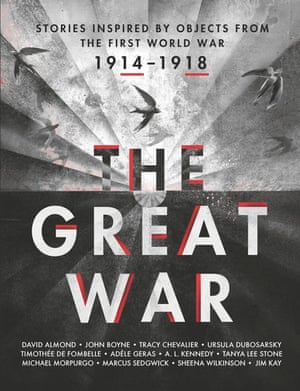
Other books by Theresa Breslin that I have reviewed on this blog are Ghost soldier and Remembrance. Another good short story collection is The Great War: stories inspired by objects from the First World War, which also has a piece by Adele Geras.
New Zealand connections:
The NZ soldiers get mentioned among the others at
the training camp at Etaples that Angelique is travelling to - that's the only reference I spotted!
Have you read it?
Have you read this
book? Let me know what you think!