Showing posts with label young adult fiction. Show all posts

Tuesday, 29 May 2018

Enemy camp by David Hill

Enemy camp by David Hill (Puffin, 2016)

260 pages (in diary format)


Subjects: World War Two, New Zealand, Japan, Prisoners of war, young adult fiction (Year 7-10)

Image result for enemy camp david hill

Synopsis
“When of hundreds of Japanese captives arrive at Featherston POW camp, the tiny town is divided. Tensions run high and then, on 25 February 1943, disaster strikes. Three boys witness it all.” (Publisher’s blurb)

Ewen lives in the small town of Featherson, where his father works as a guard at the POW camp. His diary covers the months between October 1942 and February 1943 and describes everyday life in wartime, school, the summer holidays, the attitudes of local people to the Japanese and the gradually increasing tension between some of the prisoners and guards. Together with his best friend Barry and Barry’s younger (polio-affected) brother Clarry, Ewen starts taking Japanese lessons from one of the officers, and this provides a great way to show a positive side of Japanese life and culture that many of the townsfolk have no idea of.

David Hill skilfully builds in many other aspects of 1940s life: the ever-present fear of polio, food shortages, barbed wire on the beaches, the blackout, the Home Guard, American GIs handing out sticks of gum, practice air raids, school milk, ink wells, picnics, the movies and dances. He has a wonderful way of capturing a 12-year-old boy’s voice, in Ewen’s remarks on the progress of the war (“So yeah, we’re going to win”) as well as the progress of his friendship with “snobby Susan Proctor” (“And – I’m still trying to believe this – I spent most of the time talking to Susan Proctor”). 

It’s also a refreshing change to read about a boy who reads and likes writing, and wants to be an author when he grows up, and about a warm and close, even if undemonstrative, father-son relationship.  

Reviews:
Bobs book blog says: "Superbly written in short diary entries that primary and intermediate students can easily read, coupled with David Hill’s easy style and you have great historical fiction. The account of the event itself with the boys looking on is sensitively done. A very readable novel." 
Another review by Siobhan Harvey calls it "both an enjoyable read and an imperceptible history lesson" and notes that "importantly, Hill personalises the demonised foe, allowing young readers to see Japanese captives as much victims of war as anyone fighting on the Allied side." 

About the author
David Hill is one of NZ’s best loved authors for young people. Here is an article in which he talks about the book: 
"I'm not preaching any themes. I want them to have a story first. I hope they like the people, especially Ewen the young protagonist. If they see attitudes that they agree with and some they disagree with I'll be very happy with that." 
There's another interview here on Radio NZ. I also enjoyed this interview and David Hill's comments about writing about war ("War is wonderful to write about because it involves conflict - physical, mental and internal") and why he likes writing for and about this age group ("because they're coming across ideas and experiences for the first time. They're surprisingly sophisticated, they have a good vocabulary and understand a lot. They're a lovely mixture between naivety and sophistication.")   

Links
You can read more about the “Featherston incident" here. 
And if you are ever driving on SH 2 between Featherston and Greytown, look out for the roadside memorial to the POW site.

Have you read it?
Have you read this book? Let me know what you think!

Saturday, 10 June 2017

Dreaming the enemy by David Metzenthen

Dreaming the enemy by David Metzenthen (Allen & Unwin, 2016)
47 chapters; 292 pages
Subjects: Vietnam, Australia, conscription, veterans, PTSD (post-traumatic stress disorder), young adult fiction (Year 11-13)

Synopsis
Johnny Shoebridge has come home from fighting in the jungles of Vietnam. It’s hard to readjust to ordinary life with his parents and the girl he used to know. He is haunted by memories of all the things he has seen; literally haunted, by a Viet-Cong ghost fighter called Khan who won’t leave him alone.

He is still young and can't understand how he has ended up in this position: “How had he gone from a kid swinging a stick as a Samurai sword, the star of a flickering home movie, to a nineteen-year-old digger on ambush, prepared to shoot someone in the side of the head?” He has lost good mates in battle and is trying to summon up the courage to go and visit their families. (These eventual encounters make for heart-wrenching scenes.) Even though he was a conscript with no choice about going, he’s assailed by anti-Vietnam war protesters, with people coming up to say “I just hope you’re happy… with what you did.”

“There was an awful lot of stuff that he wished he didn’t know.”

The story jumps back and forth in time and place. In the present, Johnny is back home again, heading off on a road trip. In the past, he is getting to know his new mates Baz and Lex; they start training together, go out on patrol, and fight side by side in battle. Another parallel story is that of Khan, Trung and Thang as they hide in the jungle, crawl through tunnels and fight on the other side.

I found the parts where Johnny somehow knows or imagines what Khan is doing a bit confusing, perhaps because of the distance imposed by having Johnny comment on what he sees. What worked best for me were the scenes between Johnny and his mates, and their convincing teenage-boy speech as they get to know and rely on each other. Johnny “knew himself to be one corner of a triangle, the strongest shape of all. He knew Lex and he knew Barry like he knew no one else on the planet.”

Of course you know that’s not going to end well. They’re going to get caught up in some terrible fighting and you suspect that at least one of them won’t make it home again.  

Reviews:
Booksellers NZ calls it “a poignant novel, posing meaningful questions about the effects of war”. It acknowledges “some might suggest the book is difficult to keep up with as it flicks from past to present to imagination “, but suggests that “this is in keeping with Johnny’s head and the confusion that follows him”.
A very good review in The Australian too: this final paragraph is worth quoting in full:
"Senior secondary students, especially boys, (and their teachers) might be grateful if Dreaming the Enemy were set for study. It is a sophisticated work — substantial, powerful, highly readable and with key characters close to their age. It touches on many issues: the aftermath of war, including how returned fighters were and are treated; the effects on mental and physical health and on families and relationships. It looks at conscription, the politics of wars, the destruction caused by the bombing and napalm, the attitudes of Americans, the contribution of Australians, and much else. The story is infused with humanity and embellished by Metzenthen’s flair for language and flashes of dry Aussie humour."
And on Reading time, David Metzenthen has some very wise words about the book:
"I wanted strongly to present something of what young Australians went through in this war, at the orders of their Government, and the great toll it took on them, their families, friends, and futures. In Dreaming The Enemy, I hope to have shown what happens to people, that what we do or is done to us, stays with us for a long time and must be met with compassion and understanding."
About the author
David Metzenthen lives in Melbourne. He is a keen environmentalist and was an advertising copywriter and a builder’s labourer before turning to fiction. He has written another war-related YA novel, Boys of blood and bone, as well as the thought-provoking picture book One minute’s silence.
Other books you might like:
There aren't nearly as many books about Vietnam as about World Wars One and Two. One book that I have reviewed is The battle of Messines Road.
Have you read it?
Have you read this book? Let me know what you think!

Sunday, 6 November 2016

Rilla of Ingleside by L.M. Montgomery

Rilla of Ingleside by L.M. (Lucy Maud) Montgomery (An Anne of Green Gables novel; first published 1921; this Aladdin edition 2015)

35 chapters; 440 pages

Subjects: World War One, Canada, family, women in war, young adult (Year 7-10)

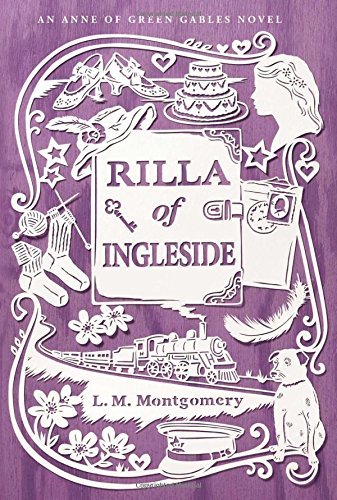
Image result for Rilla of Ingleside by L.M. (Lucy Maud) Montgomery (An Anne of Green Gables, novel; first published 1921; this Aladdin edition 2015)

(The cover of this new edition refers to different elements of the story, like Dog Monday, knitting socks, wedding cakes, the green hat, trains and letters.)

Synopsis
This is the 8th of 9 books (chronologically) in the Anne of Green Gables series, although the 6th to be written. I’d only read the first book in the series before, so I was confused initially as to who were all these people – but I kept reading and hoped it would come clear (it mostly did).

The book focuses on Marilla (“Rilla”) Blythe, Anne and Gilbert’s youngest daughter and the baby of the family. She is desperate to be seen as old enough to go to parties (and not treated as a child), but the years of light-hearted fun she dreams of vanish as World War One gets underway. We see Rilla grow in maturity as she takes on the organisation of the Junior Red Cross and responsibility for a war baby (carried home in a soup tureen), watches her brothers and many other friends go off to war and supports her mother in her grief.

It’s made very clear the pressure that boys were under to enlist – from themselves, their friends and society in general. The agony that every family went through with the news of battles fought, won or lost, is portrayed with complete authenticity, mixed with some humour to make it bearable.  “To me,” Rilla writes in her diary, “the strangest of all the strange things since 1914 is how we have all learned to accept things we never thought we could – to go on with life as a matter of course.”

The Canadian experience of WW1 was in some ways so similar to the NZ experience, but in other ways quite different, so it’s always interesting to read stories told from their perspective – for example, the references to the Gallipoli campaign.

The LM Montgomery Online site says that this is “one of the only contemporary depictions in Canadian fiction of women on the home front during the First World War.” 

Rilla of Ingleside is dedicated to the memory of Frederica Campbell MacFarlane, Maud’s friend and cousin who died in the flu epidemic in 1919. 

About the author
Everything you want to know about Lucy Maud Montgomery, much loved Canadian author (1874-1942) is here.

Some things I didn’t know about her:
  • her mother died of TB when she was 21 months old
  • she grew up with her grandparents
  • she was one of the few women of her time to study at university
  • when her manuscript of Anne of Green Gables was rejected by several publishers, she put it away in a hat box before trying again in 1907 (when it was accepted, published in 1908 and became an immediate bestseller)
  • she was secretly engaged for five years before getting married in 1911
  • she had three sons, but one was still-born
  • she left Prince Edward Island after her marriage, but nearly all (19 out of 20) of her novels are set there. 

I love some of her very delicious and funny lines:
- “I am done with crying which is a waste of time and discourages everybody.” (Susan, the housekeeper)
- (When their own horses aren’t available, and Rilla has to ride a very old one that keeps stopping every few yards) “Rilla felt that this, coupled with the fact that the Germans were only fifty miles from Paris, was hardly to be endured.”
- (Rilla talking about Fred Arnold, who is a very nice young man and “would be quite handsome if it were not for his nose”): “When he talks of commonplace things it does not matter so much, but when he talks of poetry and ideals the contrast between his nose and his conversation is too much for me and I want to shriek with laughter.”

Other books you might like:
Uprooted: a Canadian war story by Lynne Reid Banks tells the story of evacuees in WW2.
Where poppies grow: a World War I companion by Linda Granfield is a non-fiction book about WW1 from the Canadian perspective.

Have you read it?
Have you read this book? Let me know what you think!
Saturday, 21 May 2016

The year it all ended by Kirsty Murray

The year it all ended by Kirsty Murray (Allen & Unwin, 2014)

30 chapters; 243 pages

Subjects: World War One, Australia, France, Belgium, Germany, enemy aliens, white feathers, family, influenza, armistice, peace, Peace Day, war graves, Cheer Up Society, young adult fiction (Year 9-12)


Synopsis
This book starts with a poignant vignette of a pre-war scene, when 11-year-old Tiney – short for Martina - is allowed to join her big brother Louis and older cousin Will on their early morning expedition to Glenelg Beach. Six years later, everything has changed. Louis has gone to war and now the bells are ringing on Tiney’s 17th birthday to signal the armistice on 11 November 1918. 

As well as Louis, the family includes Tiney’s three older sisters: Dorothea (or Thea) the artist, Minna and Nette. Their family ancestry is German and Will (or Wilhelm) went to Heidelberg to study and was caught in Germany when the war started. As a result he was conscripted to fight on the German side. Will’s brother Paul, their other cousin, was interned as an enemy alien on Torrens Island.

As the cover suggests, “the year it all ended” was the year that things started to change, and the sub title (“War ends, the Jazz Age dawns. What will destiny bring Tiney Flynn?”) underlines this theme. Although the war is over, its effects continue and there will be many changes in Tiney’s life, both good and bad. Tiney is obsessed with what seems like an impossible dream, to go to Europe, but she manages to achieve it and sails across the world with her friend Ida and Ida’s mother, to visit the battlefields of France and Belgium.

I found this a very interesting viewpoint – not just Tiney’s, but that of a German-Australian family and the attitudes they faced in the war. 

Reviews:
I’ve tried to look for reviews that don’t give away too much of the plot, which is tricky as this reviewer acknowledges (but succeeds in doing - or not doing!) The reviewer loved "the vivid way in which Kirsty Murray has bought a period of history to life."

This review does contain more plot descriptions but I’ve included it as it has an author interview, I liked the answers to questions 4 and 6 in particular.

Here is a review from the Kids’ Bookshop (having given up by now on trying to avoid spoilers).

And there are more excerpts from reviews on Kirsty Murray's website here. 

About the author:
Kirsty Murray grew up in a family of seven children, in Melbourne and then Canada, has travelled widely, loves reading and says her most important job “and the one that took up most of my time was being a mother”, but has still produced a string of prize winning books. Lots of other info about her on her bio and FAQ pages.

I like her answers to What were your favourite books when you were a kid? and What’s the hardest part of writing for you?

Teachers’ notes are also available on her website here.

Other books you might like:
Remembrance by Theresa Breslin and Flora’s war by Pamela Rushby both tell the story of WW1 from the viewpoint of girls about Tiney's age. 

Things I didn’t know
The Cheer Up Society really did exist. “Its object was to support the soldiers in the First and Second World Wars as well as to bring them into contact with the 'highest type of womanhood'. “

You can see some wonderful photos here and here. 


Saturday, 26 September 2015

The Flambards trilogy by K.M. Peyton

The Flambards trilogy by K.M. Peyton (Flambards, The edge of the cloud, Flambards in summer) (Penguin, 1980)

Flambards was first published in 1967 and the sequels in 1969; the trilogy runs to just over 500 pages

Subjects: World War One, England, flying, pilots, class system, hunting, horses, women in war, young adult fiction (Year 9-12)


Synopsis
Winner of the 1970 Guardian award, and later made into a film, the Flambards trilogy captures a fascinating slice of history, not just the history of WW1 which is largely peripheral to the main action – mostly shown by men signing up and leaving, returning or failing to return from the front - but also the history of social attitudes, especially concerning women and the class system. Reading it makes you realise how often books about WW1 start in the middle of the war, or at the very beginning, but seldom before it. 

The three parts of the first book, Flambards, are set in 1908, 1910 and 1912. With the benefit of hindsight we know that war is looming, and some of the characters suspect that something bad is coming, but the story stays focused on Christina Parsons, 12 years old when the book opens, an orphan but an heiress, due to come into a fortune at 21. 

Having spent her childhood moving from household to household, Christina is summoned by her Uncle Russell to join him and his two sons, Mark and William, at Flambards, a crumbling estate famous for having the best stables in the county, where the year revolves around the hunting season (the opening sentence is: “The fox was running easily”) and far more care and attention is lavished on the horses than on the house. Uncle Russell, crippled after a hunting accident, angry, frustrated and bullying, rules the house from the study and despises his younger son, Will, who hates hunting so much that he goes to terrible lengths to ensure he will never have to hunt again.

Christina, self-possessed and used to looking after herself from an early age, copes with her new strange surroundings but she is convinced that “they’re all mad”. Everything changes for her when her uncle insists she learns to ride (under the careful tutelage of Dick, the stable boy) and she discovers how much she loves it; like her mother before her, she is “a hunting Russell”. With Mark, she goes out riding and hunting all through the hunting season and returns to talk over each day’s events with Russell over dinner, while Will sits by, mute.

In the two-year jumps between each part of this book, Christina, Mark, Will and Dick all get older and there are more changes. Will, a gifted mathematician, is besotted with the new flying machines. Dick is given his notice, a dreadful thing to happen in the days before social security when poverty and the workhouse posed real threats and families could easily fall through the cracks and disappear. Christina, growing up in a house without women apart from the cook and maid, and ignorant of matters that today’s children would understand at a much younger age, is often at a loss in situations where nobody will explain the truth or meaning to her. She doesn’t understand Will’s views on the inequality between their lives and those of the servants, and thinks it impossible for a servant girl to become pregnant before marriage, but she is brave and resilient, determined, sensible and loyal, with a warm and loving heart.  

The second book, The edge of the cloud, leaves Flambards behind and explores the world of the young flying enthusiasts. Flambards in summer takes us back again, with a grown-up (21-year-old) Christina, to a world that has changed in so many ways because of the war.

I enjoyed the first two books more than the third, because – without revealing too much of later plot (or romantic) developments – the third one has more of an elegiac and introspective tone, overshadowed by death, loss and grief, without any of the excitement of flying, and also the character of the child Tizzy didn’t really work for me. But the three together give a powerful impression of how people’s lives changed so utterly in that decade from 1908 to 1918.

Here is Christina, watching a sunset in the peace of the countryside: 
“It made her more bitter, this peace, that while she was standing looking at everything that was the essence of the sentimental picture of home, which all the newspapers made out that the  ‘boys over there’ were fighting for, the fact that the boys over there were now dead and would never come home again made completely negative the sweetness of every flower and the balm of every sunset.”

Reviews
These books with their long descriptive passages show the differences in writing for young people that have evolved over the last 40 years. On the other hand, I can remember skipping those long passages as a child reader. Did every child do that?
  
About the author
The bio at the front of the book says that K.M. Peyton was born in 1929, studied painting at Manchester Art School, lives in a village in Essex and enjoys sailing, riding and long distance walks.

Other books you might like
There are a number of book about horses in war, especially the Australian and NZ horses that travelled to Egypt, as well as Michael Morpurgo’s famous War horse. Elizabeth Wein's Rose under fire tells the story of a WW2 female pilot, but I haven't found many books that tell the stories of the early pilots (Biggles learns to fly is one.) The Flambards trilogy captures these heady days when flying was still new and largely untested, when aircraft were fragile and their design still a matter of experimentation, as were techniques like looping the loop, but accidents were common and often fatal. Some adventurous people paid to go up for a ride, others turned up in droves to watch competitions, but many ridiculed the new machines and doubted that they would ever replaces the horse and carriage.


Have you read it?
Have you read these books? Let me know what you think!

Sunday, 24 May 2015

What we did for love by Natasha Farrant

What we did for love: resistance, heartbreak, betrayal by Natasha Farrant (Scarlet Voyage, 2014)
Originally published as: The things we did for love (Faber and Faber, 2012)

ISBN 978-1-62324-028-8

3 Parts (February – June 1944); 208 pages

Subjects: World War Two, France, Resistance, young adult fiction (Year 10-13)


(This is the cover of the book I read, but there are several other designs.) 

Synopsis
"A story of love, sacrifice, betrayal and redemption, set against one of the most tragic and devastating episodes of French World War II history. France 1944. 
As war rages in Europe, teenagers Luc and Arianne fall passionately in love.  But German forces are closing in and Luc, desperate to atone for his family's past, is drawn into the dangerous world of the Resistance. Arianne will do almost anything to keep him safe, but someone else is secretly in love with her - someone who will stop at nothing to get rid of his rival..."

That’s taken from Natasha Farrant’s website, where you can also read a sample chapter.

Reviews:
The Bookbag review begins: "There are many kinds of love in this moving story, from family loyalty and friendship to patriotism, but what really preoccupies the two central characters, Arianne and Luc, is the passion and agony of first love."

Kirkus reviews says: "Set against the backdrop of World War II, Farrant’s first for teens... captures the whirlwind of first love and the complications of taking action during a most dangerous time… A worthwhile addition to historical romance that honors one real French town’s tragic and true event.

I think this Guardian review is a good one. It makes some pertinent points about plot, motivation, readership and language, including the dialogue, which I noticed as I read the book. Some of the phrases – like “drop dead gorgeous”, encountered very early on pg 10 - seem too contemporary, and like the reviewer, I didn’t get a feel for any French phrases or patterns of speech.

Author’s website
On her website, Natasha Farrant says “I get very grumpy if I don’t have a good book to read, if I’m not writing, if I’m hungry, tired or don’t get enough exercise.  Otherwise I am a generally cheerful person.”

Things I didn’t know
The final event in this book is based on something that did actually happen. The Afterword explains how “on 10 June 1944, at around 2 o’clock in the afternoon, the 2nd SS Panzer Division Das Reich really did enter the French village of Oradour-sur-Glane and ordered all the inhabitants to assemble on the market square, under the pretext of checking their papers."

The village of Oradour-sur-Glane was situated 22 km north-west of Limoges; you can visit its museum, the Centre de la mémoire, or read more about it online, but it is a sad tale.

Have you read it?
Have you read this book? Let me know what you think!


Saturday, 14 February 2015

When the guns fall silent by James Riordan

When the guns fall silent by James Riordan (OUP, 2000)

ISBN 978-0-19-273570-6

25 chapters; 157 pages

Subjects: World War One, France, football, Christmas, truce, trenches, deserters, young adult fiction (Year 9-11)


Synopsis
Jack and Harry, friends and keen footballers, go off to fight in WW1. The football game played in the Christmas truce of 1914 (the time “when the guns fall silent”, in the title) only takes up two or three chapters at the end, although there is more about football at the beginning as well. This main narrative is framed by the story of 12-year-old Perry, visiting the WW1 graves in France in 1964 with his grandfather (the older Jack.)

I don’t think I would give this to a child as their first book about WW1. The descriptions of death and battle are very graphic, possibly nightmare-inducing; they include references to firing squads, suicide, mercy killings, rumoured German atrocities and horrible injuries.
    
Parts of the dialogue are written in dialect, which can be hard to read aloud. The depiction of the officers is almost invariably critical. They are all “chinless wonders from Winchester”, apart from one poet-officer who is killed leading his men into battle; the rest of them are chateau generals who enjoy fancy food behind the lines and face no personal danger.

Some of the story is told in letters which would have been unlikely to get past the censors, but no reference is made to the issue of censorship (which is part of the war story, after all).  However I did like the inclusion of the poems, chants and songs at the start of many of the chapters, especially one I didn’t know before called “Achtung! Achtung!” by Mary Hacker.

The book was first published in 2000 but has been recently re-released for the centenary of the beginning of WW1 in 2014.

Reviews: 
The Bookbag calls it “a moving story which fully captures the horrors of war, and doesn't shy away from being fairly graphic in its telling of them.” Their reviewer also notes the puzzle of which age group to recommend it to: "I think thoughtful younger readers will get a huge amount out of it, but I know many parents and guardians will want to be warned of those things. Teens may initially be surprised by its short length, but it packs a lot into its relatively few pages."

Scribbles book review makes the same point (“A hard-hitting, graphic and, at times, upsetting account of soldiers on the front line during the First World War”), and draws an interesting comparison about the difference between graphic violence in fantasy or sci fi and in war books.

And finally, there's one more review here in Thoughts about Books. 

Author’s website
James Riordan died in 2012, aged 75, and you can read an obituary for him in the Guardian.  He certainly led an interesting life, which included joining the Communist Party of Great Britain in 1959 and going to live in Russia for many years; he was a keen footballer and football supporter and became the only foreigner to play in the Soviet football league.  

Jim Riordan was the only westerner to play in the Soviet football league
James Riordan (Photograph: BBC)
About the illustrator
Caroline Tomlinson did the cover and typography and you can read about her method of working here.

Other books you might like:
War game by Michael Foreman tells the story of a football game played between opposing sides during a temporary truce. Look at my blog posting on that book for more details about Christmas and other truces that took place during the First World War. 

Truce : the day the soldiers stopped fighting by Jim Murphy is a non fiction book on the same topic.

Or you can read more about the Christmas truce on the BBC Sport website here.

Valentine Joe by Rebecca Stevens also uses the device of a child visiting the war graves with a grandfather to frame the story.  

Things I didn’t know:
  • That the English national anthem God save the King (back then) was based on a German tune, and the Germans sang a hymn Heil Dir im Siegesktanz to the same tune in the trenches.
  • That the English Government banned all “alien” music, which included Mendelsohn’s Wedding march. (So I suppose you couldn't have it played at your wedding!) 
  • That in England during WW1, German shepherd dogs were renamed Alsatians.
Have you read it?
Have you read this book? Let me know what you think!

Friday, 9 January 2015

The red suitcase by Jill Harris

The red suitcase by Jill Harris (Makaro Press, 2014)

ISBN 978-0-9941069-0-2

30 chapters; 240 pages

Subjects: World War Two, England, air force, Bomber Command, Goldfish Club, New Zealand, Germany, Dresden, Cologne, young adult fiction (Years 8-11)


Synopsis
At first I didn't think this was going to be a book about war (and in the interview below, Jill Harris says that “even though her uncle's story was inspirational, she didn't want to write a ‘war book’”.) Set in the present day, it deals with contemporary issues like bullying and making friends, but also experiments with ideas of time, touches on terrorism and reaches back into the events of World War Two.

Ruth and her family have been living in Indonesia until a terrorist bomb forces them to leave. For various reasons the family is temporarily split up, with 14-year-old Ruth and her dad staying with her grandma at Takapuna Beach in Auckland. Ruth finds it difficult readjusting to New Zealand life and a new school, and what’s more, she finds herself experiencing strange episodes that seem to relate to an airman and his WW2 air crew. (These sections are written in italics.) The "red suitcase" of the title contains family papers that may provide a clue.

I found the dialogue between members of the crew in the plane both convincing and moving. When you remember how young many of them were and what responsibility they bore for each other, it's no wonder these air crews became melded into such tight units.

The foreword is a 1915 poem by Rudyard Kipling, titled "My boy Jack". Kipling lost his only son in WW1 and spent years searching for his body or grave, but never found him.

‘Have you news of my boy Jack?’
Not this tide.
‘When d’you think that he’ll come back?”
 Not with this wind blowing, and this tide. 

Reviews:
The red suitcase features on Bob’s books blog, which always has reliably good reviews.

You can also listen to John McIntyre from The Children's Bookshop reviewing the book here.

Questions:
You could ask yourself some of the questions that trouble Ruth and Thomas, or that Ruth tries to find answers for:
  • Was the bombing of German cities during the war “mass murder”, “aimed at civilians, not strategic war targets”, or was it justified because “the Germans started it”?
  • “Everyone knew about people doing terrible things, but how did you stop them? And what about the good people who did terrible things, like dropping bombs on all those cities?”
  • Where is Cologne, and what happened there in the war?
  • Where is Coventry, and what happened there in the war?

About the author
You can read about Jill Harris on the NZ Book Council site, where she mentions that she grew up in Takapuna and remembers how she "made huts using towels hooked onto the barbed wire that stretched along the beaches to keep the Japanese from landing during the Second World War." 

There’s a lovely newspaper interview (and photo) here about the inspiration for this book: how a  few years ago, Jill Harris' cousin gave her a stack of old letters written by her uncle Colwyn Jones, a navigator in the RAF's Bomber Command – “the group with the dangerous job of flying deep into German territory during World War II to attack enemy targets.”

I especially like these words of hers: 
"A former librarian and school-teacher, Harris took up fiction seriously around 2002. "I got sick to death of being the last car in the carpark at work. And I thought 'If you don't stop working, you will never get your writing done'. So I just stopped."
Writing for young people demands brevity, she says. "You can't go on and on about characters, and you can't get too heavy on what the book's saying ... It's all little dabs of colour.'"
Another interview (with equally lovely photo) here mentions that fact that Jill had been fighting serious illness, and sadly she died, aged 76, on Christmas Day 2014. 

Thanks to Barbara Murison for this photo of Jill at the launch of The red suitcase. 
Other books you might like:
In the newspaper interview above, Jill Harris mentions that her son was using her uncle’s letters for a a non-fiction book, Under a bomber’s moon. You can read about it here, along with extracts from the book and lots of added material including photos and maps.

Jill Harris' other books (not about war) are all well worth reading: At the lake, Missing Toby and Sil, which won an Honour award in the 2006 NZ Post Book Awards. We are so lucky that she made that decision to stop being "the last car in the carpark" and concentrate on her writing. 

Valentine Joe by Rebecca Stevens is a time travel book about World War One. Charlotte sometimes by Penelope Farmer is another title that explores ideas of moving back through time (and into war-time) and finding your own identity. 

Things I didn’t know
I first heard of The Goldfish Club ("gold for the value of life and fish for the sea") at the funeral of a friend’s father, but this story prompted me to find out more. Founded in 1942, it was an exclusive club for airmen who had survived a wartime aircraft ditching. There are some fascinating details here and here. The club was set up informally, but “news ...spread rapidly, even to POW camps, where eligible aircrew soon claimed membership. Their cards and badges were sent to their next of kin. …By the end of the war the club had over 9000 members.”

I checked on the Auckland War Memorial Museum library catalogue and they hold a ring binder containing details of 95 NZ airmen who survived after being shot down or forced to ditch their aircraft into water (sea, river, lake or canal) during WW2. And the Air Force Museum of NZ has a framed certificate for Warrant Officer Jim Colway, awarded to him after a 1942 crash over the Marlborough Sounds; he was the only one of the seven crew to survive.  


Links
In 2012, the Bomber Command Memorial was unveiled in Green Park, London, in a ceremony attended by thousands of veterans (including some from New Zealand) and relatives of the 55,000 airmen who died serving in Bomber Command in the war.

I find these statues very poignant - the seven Bomber Command crew, just back from a mission, searching the sky, waiting for their comrades to return - but there is an interestingly ambivalent review of the overall memorial here. 
The statues of seven airmen stand at the heart of the Bomber Command Memorial 
(photo taken by Mark Rea for the RAF Benevolent Fund)