Number the stars by Lois
Lowry (Houghton Mifflin Co., 1989)
ISBN 0 395
51060 0
17
chapters; 137 pages
Subjects:
World War Two, Denmark, Sweden, Jews, Resistance, Occupation, courage,
friendship, junior fiction (Year 6-8)

Synopsis
This is not a long book, but it
is simply but powerfully told and won the Newbery Award. I am going to
quote from the book jacket itself, because it provides the perfect intro:
“’How brave are you, little Annemarie?’ Uncle Henrik asks his
ten-year-old niece. It is 1943, and to Annemarie Johansen, life in Copenhagen
is a complicated mix of ordinary home and school life, food shortages, and the
constant presence of Nazi soldiers. Bravery seems a vague virtue, one possessed
by dragon-slaying knights in the bedtime stories she tells her younger sister,
Kirsti. Too soon, she herself is called upon for courage.
As the German troops begin their campaign to "relocate" all the Jews of Denmark, the Johansens take in Annemarie's best friend, Ellen Rosen, and pretend she is part of the family. Ellen and Annemarie must think quickly when three Nazi officers arrive late one night and question why Ellen is not blond, like her sisters.
Through Annemarie's eyes, we see the Danish Resistance as they manage to smuggle almost the entire Jewish population, nearly 7000 people, across the sea to Sweden. In this tale of an entire nation's heroism, Lois Lowry reminds us that there is pride and human decency in the world even during a time of terror and war.”
As the German troops begin their campaign to "relocate" all the Jews of Denmark, the Johansens take in Annemarie's best friend, Ellen Rosen, and pretend she is part of the family. Ellen and Annemarie must think quickly when three Nazi officers arrive late one night and question why Ellen is not blond, like her sisters.
Through Annemarie's eyes, we see the Danish Resistance as they manage to smuggle almost the entire Jewish population, nearly 7000 people, across the sea to Sweden. In this tale of an entire nation's heroism, Lois Lowry reminds us that there is pride and human decency in the world even during a time of terror and war.”
Lois Lowry
has written an Afterword in response to the question “How much of Annemarie’s story
is true?”
Reviews:
There are
lots of study guides available online. The Scholastic page has extra teaching resources including extension guides and writing prompts.
The book also features on the prestigious Kirkus reviews which calls it a "deftly told story that dramatizes how Danes appointed themselves bodyguards--not only for their king, who was in the habit of riding alone in Copenhagen, but for their Jews."
The book also features on the prestigious Kirkus reviews which calls it a "deftly told story that dramatizes how Danes appointed themselves bodyguards--not only for their king, who was in the habit of riding alone in Copenhagen, but for their Jews."
Questions:
Where does
the title come from? (Hint: Look in the chapter titled “Let us open the
casket”.) What do you think it means?
Author’s website
Lois Lowry’s website starts on a cheery, welcoming note: “Hi! I wish I could invite
you into my kitchen for a cup of tea and we could chat. That's not possible.
But please... join me here, at the website. It's the next best thing.”
It
contains her biography with lots of family photos and interesting facts, FAQs,
speeches, videos and even a quiz. Lois Lowry was born in Hawaii, went to school
in America and Japan, got married at 19 and had four children. She writes that
her older son was a fighter pilot in the US Air Force. “His death in the
cockpit of a warplane left a little girl fatherless and tore away a piece of my
world. But it left me, too, with a wish to honor him by joining the many others
trying to find a way to end conflict on this very fragile earth.”
I
also liked this paragraph:
“My
books have varied in content and style. Yet it seems that all of them deal,
essentially, with the same general theme: the importance of human connections. A summer to die, my first book, was a highly fictionalized retelling
of the early death of my sister, and of the effect of such a loss on a family. Number the stars, set in a different
culture and era, tells the same story: that of the role that we humans play in
the lives of our fellow beings.”
Other books you might like:
Claire Huchet
Bishop’s Twenty and ten, set in France, also shows
how courage and friendship can help to save those whose lives are in danger, as
does Hero on a bicycle by Shirley Hughes (set in Italy).
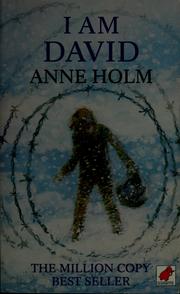
In I am David, Denmark is the country that David is told to head to. In my post on that book, I talk about how it isn't a WW2 story at all, but I still like the connection.
In I am David, Denmark is the country that David is told to head to. In my post on that book, I talk about how it isn't a WW2 story at all, but I still like the connection.
Things I didn’t know
I didn't know anything about the Danish Resistance (Denmark surrendered to Germany in 1940). I had no idea that over 7,000 Danish Jews - almost all of the country's Jewish population - were taken across to safety in Sweden.
I didn’t know about King Christian and loved the story of how he used to ride out on his horse every morning to greet his people, unguarded, because “the whole of Denmark” was his bodyguard. In fact there is a picture book about him, The Yellow Star: The Legend of King Christian X of Denmark by Carmen Agra Deedy, which tells how he responded to the Nazi edict that all Jews must wear a yellow star by wearing a yellow star himself – however, this is apparently a blend of fact and legend, as no Danish Jews were ever “forced" to wear the yellow star.
But as the Holocaust Encyclopedia points out, “The legend conveys an important historical truth, however: both the King and the majority of the Danish people stood by their Jewish citizens and were instrumental in saving almost all of them from Nazi persecution and death.”
I didn't know anything about the Danish Resistance (Denmark surrendered to Germany in 1940). I had no idea that over 7,000 Danish Jews - almost all of the country's Jewish population - were taken across to safety in Sweden.
I didn’t know about King Christian and loved the story of how he used to ride out on his horse every morning to greet his people, unguarded, because “the whole of Denmark” was his bodyguard. In fact there is a picture book about him, The Yellow Star: The Legend of King Christian X of Denmark by Carmen Agra Deedy, which tells how he responded to the Nazi edict that all Jews must wear a yellow star by wearing a yellow star himself – however, this is apparently a blend of fact and legend, as no Danish Jews were ever “forced" to wear the yellow star.
But as the Holocaust Encyclopedia points out, “The legend conveys an important historical truth, however: both the King and the majority of the Danish people stood by their Jewish citizens and were instrumental in saving almost all of them from Nazi persecution and death.”
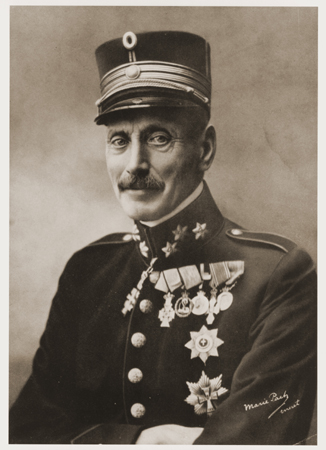 |
| King Christian X of Denmark |
Here is a picture of a Danish rescue boat, and a map showing how close Denmark is to Sweden. You can even see film footage of the German presence in Copenhagen.
Have you read it?
Have you
read this book? Let me know what you think!