Showing posts with label dogs. Show all posts

Monday, 23 April 2018

The red poppy by David Hill, illustrated by Fifi Colston

The red poppy by David Hill, illustrated by Fifi Colston (Scholastic, 2012)

Also published in te reo as Te Popi Whero. 

Subjects: World War One, France, poppy, dogs, animals, picture books (Year 3-6)


The Red Poppy (Book and CD)

Synopsis

Jim McLeod is a young soldier like any other, waiting in the trenches as the time of attack draws nearer. Nipper is a stray dog, found in an abandoned French  village, whom the soldiers have trained to act as a messenger dog, carrying messages in a leather bag around his neck (and he was a good rat-killer as well).

The only patch of colour is a cluster of poppies amidst the grey mud. Jim, an "enemy" German soldier and Nipper are about to see their paths meet - and the poppies have a role to play as well.

There's a CD at the back of the book  (and lyrics on the back page) featuring an original song (Little red poppy) written by Canadian musician Rob Kennedy and performed by Giselle Sanderson. (David Hill says in the acknowledgements that the song "started everything off".) Little red poppy has now been sung at commemoration services around the world and you can listen to it here on You tube.

You can also listen to The red poppy on Radio NZ's Treasure chest.

Reviews:
My bestfriends are books interviews David and Fifi about family history, writing this book and what it meant to them. 
Kids' book review calls it "a breathtaking and deeply moving book. It’s about a man, a war, and the basic concepts of humankind. It’s about a dog, an unlikely friendship and the iconic red poppy used to commemorate our fallen". 
You can find teacher notes from Scholastic here

About the author:
David Hill is one of New Zealand's best (and best loved) writers for children and young adults. You can read more about him on the NZ Book Council site or the Christchurch City libraries site. 
His other books with a war theme include Enemy camp and Flight path.  (Interestingly, he says in this newspaper interview that he started writing war stories because "it became embarrassing for an "old guy" to try and write contemporary teenage slang ".)

About the illustrator:
Fifi Colston has a great website with this page about her children's book illustration (including The red poppy).  

Other books you might like:
Caesar the Anzac dog and The Anzac puppy are both stories about dogs in World War One.

Links
Dogs were used for many different purposes in World War One (there was even a War Dog School Of Instruction). This article has some interesting facts about "four-legged fighters". 
This one has a picture of a dog wearing a gas mask. 
More pictures and info here and here

Have you read it?
Have you read this book? Let me know what you think!

Sunday, 6 August 2017

Three books by Mark Wilson

Angel of Kokoda (Lothian Children’s Books, 2010)
Vietnam diary (Lothian Children’s Books, 2013)
The Afghanistan pup (Lothian Children’s Books, 2014)

All similar format: hardback, 32 pages with full colour illustrations

Subjects: World War Two, Papua New Guinea, Pacific, Vietnam, brothers, Afghanistan, animals, dogs, mascots, picture books (Year 3-6)


Synopsis
A Papua New Guinea boy helps a wounded Australian soldier along the Kokoda Track. A young man goes off to fight in Vietnam, despite the protests of his brother. A dog is rescued from the ruins of a bombed school and becomes a soldier’s pet. 

These three books are part of the Children in War series which explores children’s experiences of, and reactions to, four different wars involving Australians:  World War One, World War Two, the Vietnam War and the war in Afghanistan. The texts are clear and not too detailed (apart from the Vietnam one, which includes handwritten diary entries).

They are well-produced books that cover lesser known aspects of war, although I would have liked some more context for each story (perhaps because they are very Australian - oriented). 

Reviews
Reading time (from the Children's Book Council of Australia)
reviews The Afghanistan pup here and admires the way that Mark Wilson "skilfully weaves narratives that tell stories of tragedy and hope with his extraordinarily evocative illustrations", while "snippets of newspaper clippings, reports, poems and letters enrich the stories and add layers of meaning."

There are teacher notes and activities - 
for The Afghanistan pup here 
for Angel of Kokoda here
for Vietnam diary here.

About the author: 
Mark Wilson's website shows his prolific and impressive output and also talks about his interesting life and varied career!

Other books you might like: Also by the same author is My mother’s eyes: the story of a boy soldier.  Mark Wilson illustrated A day to remember: the story of Anzac Day by Jackie French.

Have you read it? Have you read these books? Let me know what you think!

Sunday, 31 January 2016

Ghost soldier by Theresa Breslin

Ghost soldier by Theresa Breslin (Doubleday, 2014)

33 chapters; 291 pages (but fairly large print)

Subjects: World War One, England, Borders, Scotland, trains, animals, dogs, hospitals, junior fiction (Year 5-8)


Synopsis
The author’s website calls this “a mystery plus detective story with poignant scenes as two children, in a desperate search for their ‘missing-in-action’ father, meet the staff and wounded men on the hospital trains that stop near their farm”. The mystery/detective element is related to strange goings-on in an old house in the woods, a suspected German spy and a shadowy ghost figure in an upstairs window.

I liked the relationship between brother and sister Rob and Millie; the focus on how those at home coped – or didn’t cope - while the husbands and fathers were away at war, and the details about how dogs could be taken away by the army (which is why they try to save their puppy, and how they end up hiding it at the old house in the woods). Thousands of dogs were needed in the war so many families must have had to give theirs up, willingly or not. The story of the ambulance trains was interesting, too, although I was never clear about whether they did or didn’t try to take injured soldiers to a hospital near their home.

I found some of the action a bit hard to believe; either too many coincidences, or too unlikely (would they really have let the children on board the train? would they have let the wounded soldier wander round the grounds so freely at night?) but this post by the author about her research suggests that the ambulance trains did stop in the countryside like this.

Reviews:
In this review, Theresa Breslin said she started writing the book because she “was asked to provide a story for a film company and this was a story I felt needed to be told”. So I wonder if that means there is a film underway?

Author’s website
I didn’t know anything about Theresa Breslin before I read her book Remembrance, but according to her website, she was born and brought up in a small town in Scotland, worked as a mobile librarian, has written over 30 books for children and young adults and won the Carnegie Medal for Whispers in the graveyard (1994) about a dyslexic boy. Her website also provides teaching notes for the book. 

Other books you might like:
Remembrance is another book about World War One by Theresa Breslin, but for older readers.
The Anzac puppy by Peter Millett and Trish Bowles is written for younger readers about a dog in war time.

Things I didn’t know
The details about blood transfusion are intriguing. Today we take blood banks for granted but back in WW1 they were still figuring out the science of blood groups and anticoagulants. 
You can read about "A brief history of blood transfusion" at the Institute of Biomedical Science, or find out more at the Science Museum


Tuesday, 27 October 2015

Caesar the Anzac dog by Patricia Stroud, illustrated by Bruce Potter

Caesar the Anzac dog by Patricia Stroud, illustrated by Bruce Potter (Harper Collins, 2003)

40 pages with sepia illustrations

Subjects: World War One, France, dogs, animals, mascots, junior fiction (Year 2-6)


Synopsis:
This book is based on the true story of Caesar, which was told to the author, Patricia Stroud, by her mother, Ida. 

Ida (aged four) was in the crowd when Caesar the bulldog, as official mascot, led the Rifle Brigade down Queen St in Auckland to board the ships that would take them to Egypt and the Western Front. As described in the book, Ida donated her blue ribbon for Caesar to wear. She gave it to her uncle Tom who was Caesar’s handler and he tied it onto Caesar’s collar.

Caesar worked during the Battle of the Somme in 1916 as a Red Cross dog. These dogs helped the stretcher-bearers to rescue wounded soldiers at night from No man’s land, the area in-between the trenches of the two opposing sides. They were trained to look for something that belonged to the man, such as a coat or cap, bring that item back to the stretcher bearers and then lead them to the wounded soldier.

Caesar was shot and killed in action. His handler, Tom, was temporarily blinded by mustard gas and sent to hospital in England. He married one of the nurses and they returned home on a hospital ship.

The family history aspect of the story is underlined by the way it is told to three boys, James, Brendon and Michael, who are visiting their great-grandmother (Ida) in the summer holidays. She tells them about the parade, and how her other uncles also went off to war.

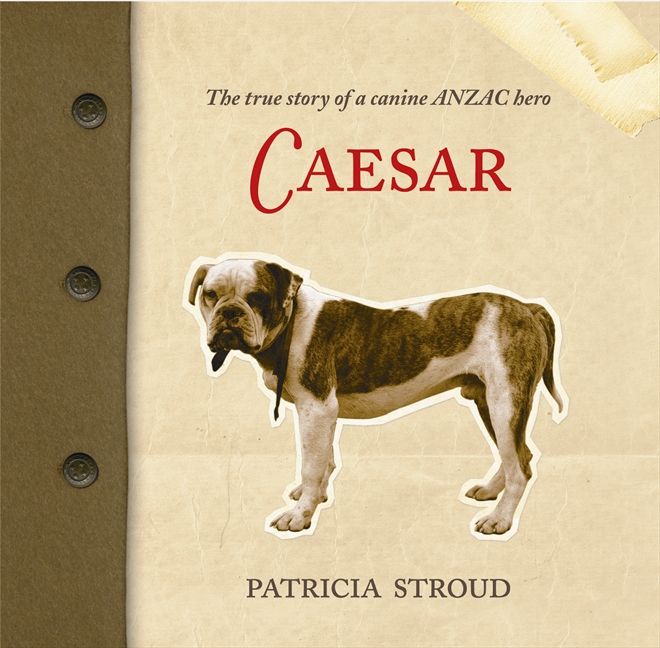
The book was reprinted in 2009, with extra content, as Caesar: The True Story of a Canine ANZAC Hero ("A recount of the life of the bulldog that became the official mascot of the 4th Battalion of the NZ Rifle Brigade").


About the author
According to the Harper Collins website: “Patricia Stroud is a mother and grandmother, who has researched the facts behind a much loved family story to record a little-known aspect of New Zealand’s military history. As a volunteer, she spends many hours interviewing war veterans and recording their stories for the oral history archives of her local museum. Patricia and her mother Ida both live in Auckland.”

There is an interview with Patricia in the New Zealand herald, and here she is visiting the children of Botany Downs school

About the illustrator
Bruce Potter (here is his Storylines profile) has illustrated many other books, including The Donkey Man by Glyn Harper, Grandad's Medals by Tracy Duncan, Soldier in the Yellow socks by Janice Marriott and My Grandfather's War by Glyn Harper. (And who knew he is also "an internationally ranked powerlifter"??)

Other books you might like 
The Anzac puppy by Peter Millett and Trish Bowles is an appealing picture book based on the true story of a World War One mascot. The red poppy by David Hill, illustrated by Fifi Colston, tells the story of Nipper the messenger dog. 

Links
This unusual vintage clip shows a French Bulldog working on the Western Front in France in 1917.

The article about Caesar on the NZ History website includes this photograph of his collar (with an incorrect spelling of his name), now held at the Auckland War Memorial Museum (where you can also buy a soft toy Caesar!).


Jack, the New Zealand Engineers' canine mascot in France, World War I
Jack, the New Zealand Engineers' canine mascot in France, World War I. Ref: 1/2-013104-G. Alexander Turnbull Library. http://natlib.govt.nz/records/23171041

Bull, George Robert, 1910-1966 (Photographer) : Maori Battalion soldier and dog Paddy the mascot, Christmas Day, Maadi camp, Egypt
WW2 Maori Battalion soldier and dog Paddy, the mascot, share some pork from the hangi on Christmas Day at Maadi Camp, Egypt; Ref: DA-04880-F. Alexander Turnbull Library, http://natlib.govt.nz/records/22812710

Have you read it?
Have you read this book? Let me know what you think!

Sunday, 19 October 2014

I am David by Anne Holm

I am David by Anne Holm, translated from the Danish by L.W. Kingsland (Puffin, 1969; first published in Denmark, 1963)

8 chapters; 153 pages

Subjects: Denmark, Italy, Eastern Europe, concentration camps, Cold War, dogs, fable, intermediate fiction (Year 6-8)


Synopsis
This entry might be a bit of a cheat, but it is included in all sincerity, even if under slightly false pretences. 

I am David made a strong impression on me when I read it as a child. It’s one of the many classic Puffin books discovered and published by their marvellous editor Kaye Webb.

Recently I re-read it in preparation for a workshop I was holding on Writing about war for children, and discovered that what I thought I knew about it was quite wrong. I thought it was a book about a Jewish boy escaping from a concentration camp in World War Two (a bit like The boy in the striped pyjamas, but with a happier ending.) Turns out that’s not true at all.

The clue is on pg 50 (in my edition). Because David has grown up in the camp, he has no idea about geography or anything else in the outside world, and he’s trying to work out which countries are safe. His definition of a safe country is one with a king or queen, and when he asks someone about England, the answer given is that “at the moment there was a queen because the last king had had no sons, only daughters.” So the book must be set after 1953 (when Queen Elizabeth came to the throne) and it’s an Eastern Europe / Cold War / Communism story, not a World War Two story at all.

Or is it? This article points out that David is 12 in the story, so it's possible that he could have been born during World War Two. 

There are some unlikely coincidences in the plot, especially towards the end, but I think this ambiguity is partly why it has stayed in my memory. It is quite a haunting book.

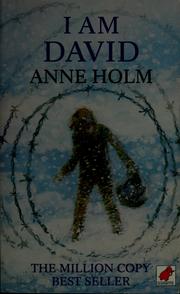
The book cover above is my own copy, but there are a number of other editions with different covers.


Reviews:
This review on The bookbag calls David "an introspective, deep child" who "observes constantly and learns quickly and ... has his own, strong sense of what is right and what is wrong." 

Another review on Reading matters comments that “the book is not set in a real time or place. Although the circumstances seem real enough, David's background is a synthesis of all the terrible persecution that happened during the Second World War and the subsequent years of cold war communism. This helps to make David a very powerful and pure figure. I don't think he is particularly real. Anne Holm uses him as a blank canvas on which can be drawn the first experiences of life - beauty, knowledge, trust, religion, love, everything.”

It’s a classic, there are masses of reviews and reading guides online. Don’t get bogged down in them. Just read the book for yourself.

About the author
For such a famous book, I couldn’t find much info on the author.

According to this obituary in the Independent, Anne Lise Elfe was born in Aal, Jutland, on 10 September 1922. She married Johan Holm in 1949 and they had one son. She died on 27 December 1998. 

The writer of the obituary describes the book as "a landmark in bringing to children's attention the existence of a world of political evil and the misery this causes. Some doubted the need for revealing such harsh truths at an early stage, but the thousands of children who read the book often sent letters of thanks to the author. Sometimes they wrote directly to the fictional David as well." 

found this very interesting as it echoed the issues we were discussing in the workshop, to do with "how much” to tell children about war.

In the book, David himself says, “I am glad I told Maria that evil exists. I don’t want her to be afraid, but it’s something you have to know about. Can’t you understand that children have a right to know everything that’s true?”

Other books you might like:
The silver sword by Ian Serraillier (1956) is also about children wandering through post-war Europe, trying to reach a safe country (in this case, Switzerland), although these children do have each other and aren't as completely alone as David.  

Number the stars by Lois Lowry is set in Denmark (where David is told to head to) in World War Two and celebrates the bravery and compassion of the Danish people

Things I didn’t know
That this book which I loved as a child isn't about World War Two at all!

Tuesday, 11 March 2014

The Anzac puppy by Peter Millett and Trish Bowles


The Anzac puppy by Peter Millett and Trish Bowles (Scholastic, March 2014)

32 pages

Subjects: World War One, France, trenches, animals, dogs, mascots, picture books (Year 3-6)

cv_the_anzac_puppy

Synopsis
I really like the opening lines:
"In the middle of the night, in the middle of winter,
In the middle of a war, a puppy was born."

Freda is a Dalmatian puppy owned by Lucy’s family. They can’t afford to keep her and she is adopted by a young soldier called Sam who promises to bring her back to Lucy “safe and sound” after the war. Freda becomes his good luck mascot, and the memory of the promise he made keeps him brave amidst the terror of the trenches. There are many recorded examples of dogs and other animals whom the troops adopted as their mascots, and they really did play an important role in helping to keep the soldiers' morale up.

Freda gets bigger, Sam gets older, the war goes on until one day at last “the roaring guns fell silent.” Sam goes back with Freda to fulfil his promise to Lucy, and…(here's a clue: it's a happy ending.) 

Author’s website
Peter Millett lives on the North Shore and is a part-time writer and a full-time house dad. He started writing for children in 1998. His books published since then include The Anzac Biscuit Man and Other Classic Kiwi Tales (Reed 2007) and Boy Zero Wannabe Hero (shortlisted for the LIANZA book awards 2011) 

In his website, he explains that “the fictional story 'The Anzac Puppy' was inspired a by a series of true events that took place during the Great War of 1914-18.” These true events are described in a two-page spread of historical notes at the back. 

You can read an interview with Peter here


Peter Millett and illustrator Trish Bowles


Info about the illustrator
Trish Bowles is a self-taught artist who lives in Christchurch and has illustrated more than 20 children's books.

I'm sure children will find her style of illustration very appealing, especially the picture of Freda sitting in her box on the pavement under the sign "Puppy free to a good home". The cover also shows a nice juxtaposition of war-related images (uniforms, airplanes, soldiers with guns, handwritten letters home) with the puppy peeping out of Sam's knapsack in the foreground. 

Other books you might like:
Caesar the Anzac dog by Patricia Stroud, illustrated by Bruce Potter (Harper Collins, 2003; reprinted in 2009, with extra content, as Caesar: The True Story of a Canine ANZAC Hero)

NZ connections:
I knew about Freda, the Great Dane (or possibly Dalmatian) mascot of the New Zealand Rifle Brigade at their training camp at Cannock Chase in England. You can read about her here

Image copyright Auckland War Memorial Museum.

I did some research on Freda and found someone in England who kindly went out on Cannock Chase to get me a photo of her grave for my Anzac Day book. However I didn’t know the story about Sergeant Ashby and the real life Freda which Peter tells at the back of the book.


Cannock Chase
Cannock Chase is an area of pine forests, woodland and open heath in the county of Staffordshire. In England, a “chase” is an area of unenclosed land formerly reserved for hunting, so in medieval times it was a royal hunting forest. Today it has lots of walking and biking trails and also contains several war cemeteries and memorials.

During WW1, the Chase was the site of a large military camp (used by the NZ Rifle Brigade) and also a prisoner of war hospital. Men who died at the camp (many of them from the influenza pandemic) and in the hospital are buried in the Cannock Chase War Cemetery which contains the graves of 73 New Zealanders and 286 German POWs.  You can find it on the map hereThe Anzac Day Commemoration Service which takes place at there is one of the largest outside Australia and NZ.

After Freda died in 1918, she was buried at Cannock Chase and members of the Rifle Brigade put up a headstone (since replaced by a newer one)  in her memory. On Armistice Day 2010, a special ceremony for working dogs took place at her grave, to remember and celebrate their “loyalty and service.”

Model WW1 battlefield at Cannock Chase
I’d never heard about this before. Completely off the topic of the Anzac puppy, but fascinating!

“In June 1917, soldiers from the New Zealand Rifle Brigade held off stiff resistance from German forces in the Belgian town [of Messines], near the French border, to take control of a ridge regarded as strategically important in setting up the later assault on Passchendaele.
On their return to the UK from the Western Front, troops sketched out in minute detail replica trenches, terrain, contours, and obstacles before it was rendered in concrete. They used German POWs to do the hard labour and make small-scale reconstructions of Messines' buildings, including its church, railway lines, and roads. The mock-up was then used as a training aid for soldiers coming through Brocton Camp in Staffordshire.”
The practice battlefield was uncovered by archaeologists in 2013. You can read more about what they discovered here and here
The Dolores Cross Project
It’s very nice to see the publisher’s acknowledgements to historians Marion Kettle and Dolores Ho “for the extensive research they undertook to preserve Freda’s memory”. I haven’t worked with Marion, but I’ve had contact several times with Dolores and she's always been unfailingly helpful. 

I’ve been interested to learn about her own war-related project, the Dolores Cross Project, which aims “to personally pay tribute to approximately 30,000 New Zealand military personnel buried on foreign soil with a hand-made tribute.”

Dolores Cross Military Gravestone
A military gravestone bearing the Dolores Cross.
In fact Dolores began her Cross project at Cannock Chase. She was there for Anzac Day 2008 (see the History section of this page of her blog) and wanted to place RSA poppies on the graves, but didn’t have enough so made some flax crosses to make up the shortfall.

Meeting the Prime Minister
Dolores meeting the PM at Westminster Abbey, Anzac Day 2011