Showing posts with label women in war. Show all posts

Friday, 14 July 2017

A present from the past by Jennifer Beck; illustrated by Lindy Fisher

A present from the past by Jennifer Beck; illustrated by Lindy Fisher (Scholastic, 2006)

32 pages with colour illustrations

Subjects: World War One, France, Christmas, nurses, women in war, grandparents, family, picture books (Year 1-4)


Synopsis

It’s nearly Christmas time. Emily is waiting with her parents at the airport for her Aunt Mary whom she’s never met before. Aunt Mary has come all the way from England, bringing a special gift: a small oblong parcel, with a note saying “Best wishes from Princess Mary”. Inside, to Emily’s disappointment, is nothing but a small brass box with a damaged lid. But as Aunt Mary tells the story behind the box, Emily comes to realise that it is indeed a precious family heirloom.

These boxes, containing items such as sweets and tobacco, were the idea of Princess Mary, the 17-year-old daughter of King George V and Queen Mary, who wanted to give every serving soldier, sailor and nurse a Christmas present in December 1914 as a personal thank you for their sacrifices and hard work. You can read more about them here and here.

These Christmas boxes make a lovely story on their own, but the box in this book played an even more important role.

Don’t miss the dedication: “In memory of women in wartime”. There is also a fact sheet at the end.

Reviews:
A review on Perfect Picture Book Friday says the book "would be a great resource in History classes enticing conversations about war, troops overseas, and families dealing with loved ones during war time in the past."

There's another review on Momo celebrating time to read (great title for a blog!) 

About the author
You can read an interview with Jennifer Beck on the Christchurch City Libraries website, or learn more about her on the Book Council Writers files. 

About the illustrator
Lindy Fisher is profiled on the Book Council and Storylines sites. She has also had over 75 stamps published by New Zealand Post! You can see some of her artwork on her website.

Other books you might like:
Jennifer Beck is the author of the much-loved picture book The bantam and the soldier. She and Lindy Fisher have worked together on other books, including Stefania’s dancing slippers and Remember that November (about Parihaka).

NZ connections:
When I was researching for my Anzac Day book, I got to see one of these tins. It belonged to Hami Grace, an old boy of Wellington College, and is now held in the College Archives.


Things I didn’t know
I didn’t know that Princess Mary was born on 25 April (1897) – the day that later became Anzac Day! What a lovely connection!

Have you read it?
Have you read this book? Let me know what you think!

Friday, 30 June 2017

War girls: a collection of First World War stories through the eyes of young women

War girls: a collection of First World War stories through the eyes of young women (Andersen Press, 2014)
Nine stories by Theresa Breslin, Melvin Burgess, Berlie Doherty, Anne Fine, Adele Geras, Mary Hooper, Rowena House, Sally Nicholls and Matt Whyman.
259 pages
Subjects: World War One, women in war, short stories, junior fiction (Years 6-10)

Synopsis
The back blurb says that “this collection of short stories explores how the First World War changed and shaped the lives of women for ever… Some of today’s leading writers for young people present moving portraits of loss and grief, and of hope overcoming terrible odds.” (There isn’t any other information inside about how the authors were chosen, and what inspired them in turn to choose their topic.)

Everyone will have their own favourites, but these are the stories:

Shadow and light by Theresa Breslin
Merle, an aspiring artist, and her friend Grace join the British Red Cross to drive ambulances for the Scottish Women’s Hospital for Foreign Service – staffed entirely (doctors, nurses, cooks and ambulance drivers) by women. She has some spiky run-ins with a golden-haired English captain who doesn’t realise she can understand his comments in French about women in war. Together they get caught up in the middle of the German advance near Albert.

Ghost story by Matt Whyman
Some Allied soldiers said they came under fire from female Turkish snipers at Gallipoli – could that be true?

Storm in a teacup by Mary Hooper
16 year old Harriet isn’t old enough to be a nurse and doesn’t want to work in a factory, so she gets a job as a waitress at the Lyons’ Corner House on the Strand in London and stumbles across a spy ring. This seemed a little far-fetched, but I liked the setting because my mother lived in London as a young woman and always had a soft spot for Lyons’ Corner Houses.

The marshalling of Angelique’s geese by Rowena House
Angelique is 14 and lives in a French village; her father has just been killed and her brother is away at the war as well.  She goes on a long and adventurous journey (with the geese!) trying to raise money to pay off her father’s debts. Her journey is also linked to the spread of Spanish flu – or one theory about its possible origins.

Mother and Mrs Everington by Melvin Burgess
Effie’s brother Robbie signs up underage and comes back with shellshock. She learns to drive and forges a letter so she can get to France as a nurse and driver, thinking he is just a weakling, but then finds out for herself - in an unexpected way - how terrible it is to be caught under shellfire.

Sky dancer by Berlie Doherty
Kate’s young man Fred joins the Royal Flying Corps and goes to France. Obviously that’s not going to end well (and it doesn’t). Kate wants to follow him - “just to breathe the air that Fred breathed” - and, despite her shyness, signs up for a concert party to entertain the troops. I found this to be an unusual, sad and memorable story.

Piercing the veil by Anne Fine
During the war, there was increased interest in spiritualism as people (especially mothers) tried to get in contact with the dead - but Alice’s father is a minister and doesn’t believe in such things.  

The green behind the glass by Adele Geras
Sarah and her sister, a fiancé and a forbidden love and a ghostly warning.

Going spare by Sally Nicholls
Set in 1977; the 14 year old narrator finds out from Miss Frobisher upstairs about what life was like (quite exciting, in her case) for the "leftover women" who never married after WW1.

Reviews:
The review in the Guardian says: “War Girls is like no other WW1 fiction I have read before. It does not focus on the trenches, the tragic battle of the Somme nor the brave men who fought. The book combines a mixture of exceptionally written, heart-wrenching short stories into a book about the lives of the women left behind.”
The Bookbag says it is an “utterly engrossing” anthology with “not a weak story among them”.  
About the authors
Author biographies at the end tell you a bit about each author.
Some interesting backstory here by Theresa Breslin about the writing of her contribution.
Other books you might like:
Other books by Theresa Breslin that I have reviewed on this blog are Ghost soldier and Remembrance. Another  good short story collection is The Great War: stories inspired by objects from the First World War, which also has a piece by Adele Geras. 
New Zealand connections:
The NZ soldiers get mentioned among the others at the training camp at Etaples that Angelique is travelling to - that's the only reference I spotted! 
Have you read it?
Have you read this book? Let me know what you think!

Sunday, 6 November 2016

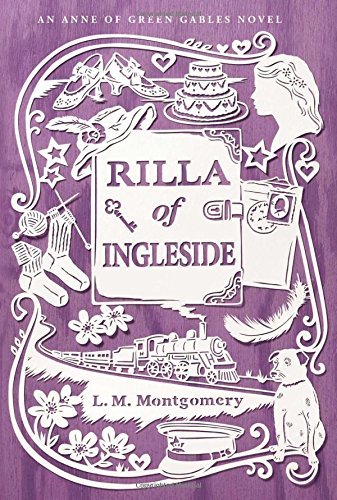
Rilla of Ingleside by L.M. Montgomery

Rilla of Ingleside by L.M. (Lucy Maud) Montgomery (An Anne of Green Gables novel; first published 1921; this Aladdin edition 2015)

35 chapters; 440 pages

Subjects: World War One, Canada, family, women in war, young adult (Year 7-10)

Image result for Rilla of Ingleside by L.M. (Lucy Maud) Montgomery (An Anne of Green Gables, novel; first published 1921; this Aladdin edition 2015)

(The cover of this new edition refers to different elements of the story, like Dog Monday, knitting socks, wedding cakes, the green hat, trains and letters.)

Synopsis
This is the 8th of 9 books (chronologically) in the Anne of Green Gables series, although the 6th to be written. I’d only read the first book in the series before, so I was confused initially as to who were all these people – but I kept reading and hoped it would come clear (it mostly did).

The book focuses on Marilla (“Rilla”) Blythe, Anne and Gilbert’s youngest daughter and the baby of the family. She is desperate to be seen as old enough to go to parties (and not treated as a child), but the years of light-hearted fun she dreams of vanish as World War One gets underway. We see Rilla grow in maturity as she takes on the organisation of the Junior Red Cross and responsibility for a war baby (carried home in a soup tureen), watches her brothers and many other friends go off to war and supports her mother in her grief.

It’s made very clear the pressure that boys were under to enlist – from themselves, their friends and society in general. The agony that every family went through with the news of battles fought, won or lost, is portrayed with complete authenticity, mixed with some humour to make it bearable.  “To me,” Rilla writes in her diary, “the strangest of all the strange things since 1914 is how we have all learned to accept things we never thought we could – to go on with life as a matter of course.”

The Canadian experience of WW1 was in some ways so similar to the NZ experience, but in other ways quite different, so it’s always interesting to read stories told from their perspective – for example, the references to the Gallipoli campaign.

The LM Montgomery Online site says that this is “one of the only contemporary depictions in Canadian fiction of women on the home front during the First World War.” 

Rilla of Ingleside is dedicated to the memory of Frederica Campbell MacFarlane, Maud’s friend and cousin who died in the flu epidemic in 1919. 

About the author
Everything you want to know about Lucy Maud Montgomery, much loved Canadian author (1874-1942) is here.

Some things I didn’t know about her:
  • her mother died of TB when she was 21 months old
  • she grew up with her grandparents
  • she was one of the few women of her time to study at university
  • when her manuscript of Anne of Green Gables was rejected by several publishers, she put it away in a hat box before trying again in 1907 (when it was accepted, published in 1908 and became an immediate bestseller)
  • she was secretly engaged for five years before getting married in 1911
  • she had three sons, but one was still-born
  • she left Prince Edward Island after her marriage, but nearly all (19 out of 20) of her novels are set there. 

I love some of her very delicious and funny lines:
- “I am done with crying which is a waste of time and discourages everybody.” (Susan, the housekeeper)
- (When their own horses aren’t available, and Rilla has to ride a very old one that keeps stopping every few yards) “Rilla felt that this, coupled with the fact that the Germans were only fifty miles from Paris, was hardly to be endured.”
- (Rilla talking about Fred Arnold, who is a very nice young man and “would be quite handsome if it were not for his nose”): “When he talks of commonplace things it does not matter so much, but when he talks of poetry and ideals the contrast between his nose and his conversation is too much for me and I want to shriek with laughter.”

Other books you might like:
Uprooted: a Canadian war story by Lynne Reid Banks tells the story of evacuees in WW2.
Where poppies grow: a World War I companion by Linda Granfield is a non-fiction book about WW1 from the Canadian perspective.

Have you read it?
Have you read this book? Let me know what you think!

Saturday, 26 September 2015

The Flambards trilogy by K.M. Peyton

The Flambards trilogy by K.M. Peyton (Flambards, The edge of the cloud, Flambards in summer) (Penguin, 1980)

Flambards was first published in 1967 and the sequels in 1969; the trilogy runs to just over 500 pages

Subjects: World War One, England, flying, pilots, class system, hunting, horses, women in war, young adult fiction (Year 9-12)


Synopsis
Winner of the 1970 Guardian award, and later made into a film, the Flambards trilogy captures a fascinating slice of history, not just the history of WW1 which is largely peripheral to the main action – mostly shown by men signing up and leaving, returning or failing to return from the front - but also the history of social attitudes, especially concerning women and the class system. Reading it makes you realise how often books about WW1 start in the middle of the war, or at the very beginning, but seldom before it. 

The three parts of the first book, Flambards, are set in 1908, 1910 and 1912. With the benefit of hindsight we know that war is looming, and some of the characters suspect that something bad is coming, but the story stays focused on Christina Parsons, 12 years old when the book opens, an orphan but an heiress, due to come into a fortune at 21. 

Having spent her childhood moving from household to household, Christina is summoned by her Uncle Russell to join him and his two sons, Mark and William, at Flambards, a crumbling estate famous for having the best stables in the county, where the year revolves around the hunting season (the opening sentence is: “The fox was running easily”) and far more care and attention is lavished on the horses than on the house. Uncle Russell, crippled after a hunting accident, angry, frustrated and bullying, rules the house from the study and despises his younger son, Will, who hates hunting so much that he goes to terrible lengths to ensure he will never have to hunt again.

Christina, self-possessed and used to looking after herself from an early age, copes with her new strange surroundings but she is convinced that “they’re all mad”. Everything changes for her when her uncle insists she learns to ride (under the careful tutelage of Dick, the stable boy) and she discovers how much she loves it; like her mother before her, she is “a hunting Russell”. With Mark, she goes out riding and hunting all through the hunting season and returns to talk over each day’s events with Russell over dinner, while Will sits by, mute.

In the two-year jumps between each part of this book, Christina, Mark, Will and Dick all get older and there are more changes. Will, a gifted mathematician, is besotted with the new flying machines. Dick is given his notice, a dreadful thing to happen in the days before social security when poverty and the workhouse posed real threats and families could easily fall through the cracks and disappear. Christina, growing up in a house without women apart from the cook and maid, and ignorant of matters that today’s children would understand at a much younger age, is often at a loss in situations where nobody will explain the truth or meaning to her. She doesn’t understand Will’s views on the inequality between their lives and those of the servants, and thinks it impossible for a servant girl to become pregnant before marriage, but she is brave and resilient, determined, sensible and loyal, with a warm and loving heart.  

The second book, The edge of the cloud, leaves Flambards behind and explores the world of the young flying enthusiasts. Flambards in summer takes us back again, with a grown-up (21-year-old) Christina, to a world that has changed in so many ways because of the war.

I enjoyed the first two books more than the third, because – without revealing too much of later plot (or romantic) developments – the third one has more of an elegiac and introspective tone, overshadowed by death, loss and grief, without any of the excitement of flying, and also the character of the child Tizzy didn’t really work for me. But the three together give a powerful impression of how people’s lives changed so utterly in that decade from 1908 to 1918.

Here is Christina, watching a sunset in the peace of the countryside: 
“It made her more bitter, this peace, that while she was standing looking at everything that was the essence of the sentimental picture of home, which all the newspapers made out that the  ‘boys over there’ were fighting for, the fact that the boys over there were now dead and would never come home again made completely negative the sweetness of every flower and the balm of every sunset.”

Reviews
These books with their long descriptive passages show the differences in writing for young people that have evolved over the last 40 years. On the other hand, I can remember skipping those long passages as a child reader. Did every child do that?
  
About the author
The bio at the front of the book says that K.M. Peyton was born in 1929, studied painting at Manchester Art School, lives in a village in Essex and enjoys sailing, riding and long distance walks.

Other books you might like
There are a number of book about horses in war, especially the Australian and NZ horses that travelled to Egypt, as well as Michael Morpurgo’s famous War horse. Elizabeth Wein's Rose under fire tells the story of a WW2 female pilot, but I haven't found many books that tell the stories of the early pilots (Biggles learns to fly is one.) The Flambards trilogy captures these heady days when flying was still new and largely untested, when aircraft were fragile and their design still a matter of experimentation, as were techniques like looping the loop, but accidents were common and often fatal. Some adventurous people paid to go up for a ride, others turned up in droves to watch competitions, but many ridiculed the new machines and doubted that they would ever replaces the horse and carriage.


Have you read it?
Have you read these books? Let me know what you think!

Thursday, 19 June 2014

Rose under fire by Elizabeth Wein

Rose under fire by Elizabeth Wein (Hyperion, 2013)

ISBN 978-142318309-9

360 pages


Subjects: World War Two, France, Resistance, pilots, women in war, concentration camps, RavensbrĂĽck, Nuremburg, young adult fiction (Years 10-13)


Synopsis
It’s August, 1944. Rose Moyer Justice, aged 18, from a Pennsylvania Dutch family in the United States, has come to England to work for the British Air Transport Auxiliary. Rose’s family is obviously wealthy and she learnt to fly at the age of 12, so she is quite confident delivering planes to bases all over the country. 

Rose is keen to fly to France as well, and gets permission to do so a few days after Paris has been freed in September 1944 but her return flight goes wrong when she is captured in the air by German planes and made to land at an airfield in Germany. From there, she is taken to RavensbrĂĽck concentration camp where she is registered as a French political prisoner, despite having an American passport.

Rose makes friends at the camp, including Irina, a Russian pilot, and a young Polish girl called Roza, one of the group known as Rabbits who have been used for medical experiments by the Nazis. Everyone is treated badly in the camp, but the women are determined that the story of the brutality meted out to the Rabbits should reach the outside world. Rose, an aspiring poet, comforts them with poems by her favourite writer, Edna St Vincent Millay, and also makes up a poem to remember their names. She doesn’t let on that she has already heard reports about their treatment on the wireless and dismissed them as propaganda.

There is little let-up from the grim scenes at the camp, which take up 200 of the 360 pages. The events and living conditions are not dwelt on gratuitously, but they are still stomach-churning if you stop to think of the implications or to imagine the reality. Readers who only know of the camps from Anne Frank’s diary – which stops, of course, before she arrives there – will find this a very different, and possibly difficult reading experience.

The story of how Rose readjusts to outside life takes up the last section of the book (which is where the Nuremburg Trials come into it.) In some ways, this widens the scope of the book as it relates to how anyone who has been through trauma comes to terms with it.

Rose Under Fire UK

Reviews:
This review on Gossamer obsessions calls it "definitely a darker, bleaker novel than Verity." The review does raise the point - which I was aware of as I read - that the diary nature of the book works “for and against” it. Rose can’t keep a diary in RavensbrĂĽck (or it would have stretched credibility if she had been able to write one in sufficient detail and smuggle it out  as well) so that portion of the story is written while she is staying in a hotel in Paris after her release. But that means we realise she has escaped to safety, which takes away some of the tension of the events described. The only (slight) tension left is that we know something about her boyfriend, Nick, that she doesn’t yet know. Rose has lost touch with her concentration camp friends, but we expect she will find them again.

The Los Angeles times called the book "a soaring tale of triumph." 

Author’s website
Elizabeth Wein has written books set in Arthurian Britain and sixth century Ethiopia. Code name Verity is about a female pilot who is captured in France; her story is mentioned in Rose under fire, because the character of Maddie connects the two pilots.

There is an interview with Elizabeth Wein here on the girls like giants blog. 
And it’s also interesting to note that she is a pilot herself.

From another interview in the Vancouver Sun:
Q Why did you write this book?
A I think that the dark underbelly of women’s wartime roles is fascinating. My previous novel, Code Name Verity, takes an inside look at the dangerous and dirty work that women did as spies and saboteurs for resistance movements in Nazi occupied Europe. Rose Under Fire more or less continues the story of these women — about a third of those sent into occupied France ended their lives as prisoners in concentration camps. I was particularly fascinated with RavensbrĂĽck because it was a camp specifically for women. It was operated differently from other camps; its history is not well known and is worth knowing.

Other books you might like:
There must be very few books written about women in concentration camps, compared to the large number of books about men in that situation. The books that spring to mind are escape stories, like The great escape, so they are more “heroic” in nature, and perhaps it was simply impossible for women to even try to escape – how would they have survived outside?

NZ connections:
You can read my review of Code name Verity for more details about the Air Transport Auxiliary, including a brief profile of Jane Winstone, one of the few NZers in the ATA.

Things I didn’t know
It’s a side issue, but I didn’t know that the emigrants who settled in Pennsylvania Dutch Country in the USA (incl the Amish) weren’t named because they were Dutch, but because of the dialect of the language they spoke. They came from a number of German-speaking areas in Europe, such as Alsace in France, Switzerland and Germany. This adds an extra layer of irony of the story, in that Rose is being held captive in the land where her family came from.

If you want to, you can read more about the Nuremburg Trial or the Polish Rabbits, but some of this material is confronting.  

RavensbrĂĽck is now a museum. More than 132,000 women and children from twenty-three countries passed through this concentration camp…At least 92,000 of them perished. They were gassed, shot, beaten and starved to death; or they died from sadistic medical experiments or exposure or dis­ease or exhaustion, or just be­cause they gave up trying to survive. 

A low stone wall newly built by the lakeside bears a chiseled inscription in German by the East German writer Anna Seghers. It reads: “The women of RavensbrĂĽck are the mothers and sisters of us all. You would not have been able to learn and play in liberty—indeed you might even not have been born—if women like these had not placed their delicate, weak bodies as a steel shield before you and your future.”

A work team in RavensbrĂĽck
[​IMG]


One of those who died RavensbrĂĽck was Violette Szabo, the legendary SOE special agent. There is a poignant story about her training when she was trying to commit a poem to memory (this was a device to help code messages, using words from the poem. ) It was best not to choose well known poems in case the enemy could recognise them, and it was important to get the words and the spelling of the chosen poem exactly right.  Violette kept making mistakes until the SOE codemaster, Leo Marks, gave her a new poem to learn. It was simple but memorable and it worked for Violette. Leo Marks had written the poem himself after the woman he loved had been killed in a plane crash. 

The life that I have
Is all that I have
And the life that I have
Is yours

The love that I have
Of the life that I have
Is yours and yours and yours

A sleep I shall have
A rest I shall have
Yet death will be but a pause

For the peace of my years
In the long green grass
Will be yours and yours
And yours

Sunday, 10 November 2013

Code name Verity by Elizabeth Wein

Code name Verity by Elizabeth Wein (Electric Monkey, 2012)
Cover title: Code name Verity – I have told the truth

452 pages

Subjects: World War Two, France, Resistance, pilots, women in war, young adult fiction (Years 10-13)


Synopsis:
Part 1 (just over half the book) is titled Verity and takes the form of entries – like diary entries, but not quite - written at a place called Ormaie in France over three weeks of November 1943. Gradually we piece together the story, which is being told by a captured female English Flight Officer who has (apparently) made a deal with a German officer to put down in writing “anything you ask, everything I can remember” – wireless codes, facts about English aircraft and air fields etc. She seems to be spilling all these secrets quite blithely; the other prisoners certainly think so, and despite her for it.

She interleaves this sequence with the story of the growing wartime friendship between two girls, Maddie and Queenie, as Maddie becomes a pilot with the Air Transport Auxiliary and Queenie becomes a radio operator (and possibly something else, more secret), and with day to day accounts of what is happening to her in her captivity and her relationship with her captors, especially the German officer von Linden. She lives in a state of almost constant terror and dread, under threat of being sent to one of the worst Nazi concentration camps, but maintains a black sense of humour throughout. Her last entries describe her flight into Nazi-occupied France, soon after which she was arrested, and a horrible public execution of another female prisoner. Almost right at the end, she reveals her real name. Many aspects of her story, however, turn out to be not quite what they seem.

Part 2, titled Kittyhawk (Maddie’s code name), takes up the story from Maddie’s point of view after she has to make a  crash landing, and while she is being looked after by the local Resistance while waiting for rescue. The two stories start to merge as they realise “Verity” is being held by the Gestapo in Ormaie.

It’s a book about friendship, bravery and courage – not only the courage to face fear and stay calm and level-headed in terrible circumstances, but also the courage needed to make the most difficult of decisions, based on that friendship.

Reviews:
Be careful what reviews you read, because it’s a hard book to review without giving away crucial plot details. (As the NY Times reviewer below explains: "I have to review a book in which even the hint of plot summary could ruin everything."

"The pilot and the spy" in the New York Times Sunday Book Review: "This is a rare young adult novel entirely about female power and female friendship, with only the faintest whiff of cute-boy romance... A smart book about the power of female friendship is like finding Neverland." 


And one more review here of "this heart-wrenching story of spies and friendship."

Questions:
What does “verity” mean?
What is true and not true in this book?
Why did Maddie do what she did when Julie called “Kiss me, Hardy”?

Author’s website:
This is Elizabeth Wein's website. She published a companion novel to Code name Verity in 2013, called Rose under fire, about a female pilot who is shot down over Germany in World War Two and ends up in a Nazi concentration camp. She has also written books set in Arthurian Britain and sixth century Ethiopia.
There is an interview with her here.

And it’s also interesting to note that she is a pilot herself.

Other books you might like:
Elizabeth Wein has listed two books that she was influenced by in writing Code name Verity. Neither of these is listed in our local library so I don’t think I’ll be able to get hold of them, but one is Le Silence de la Mer (The silence of the sea) by “Vercors” (real name Jean Bruller), a book secretly published under a pseudonym in 1942, about a French family who have to share their home with  a German officer and use silence as their only possible weapon against him.  (Verity mentions this book in one of her entries.)

Another is La jeune fille au pair (The young au pair) by Joseph Joffo, about the daughter of a Nazi official (now in prison) who works after the war as an au pair for a family of Jewish Auschwitz survivors. Both books apparently try to show German officials, not just as evil characters with no human side to them at all, but as real and complicated people striving to deal with their own perceptions of good and bad, right and wrong, honour and duty.

The character of Maddie connects Code name Verity with Rose under fire, Elizabeth Wein's book about a young American woman who comes to England in 1944 to work for the British Air Transport Auxiliary, and is captured and taken to Ravensbruck concentration camp. Rose under fire is a powerful book but it is a darker, bleaker read than this one. 


New Zealand connections:
I didn't know anything about the British Air Transport Auxiliary before reading this book, but during the war it was vital in delivering planes from factories to military airfields, bringing them back for repairs, and carrying out other transportation and communications duties around Britain.

It was open at first to private pilots, or to commercial pilots who were out of a job because so many routes were closed in wartime. After some opposition, its ranks were opened to women as well, but they weren’t allowed to fly into Europe until the very end of the war.

Here is a story about one of them, Maureen Dunlop.

And here is a fabulous BBC clip about the "glamour girls of the war."

There were a handful of New Zealanders in the ATA and one of them was Jane Winstone.
“After taking off on 10 February 1944 the engine of her Spitfire failed at 600 feet. The aircraft spun into the ground near Tong Castle and she was killed; she was 31 years old. Members of the ATA acted as pallbearers at her funeral, at the Church of St Joseph, Maidenhead; she was buried in a section of the local cemetery set aside for ATA casualties... Jane Winstone was one of 16 women from the ATA killed during the war.”