Showing posts with label Italy. Show all posts

Sunday, 19 October 2014

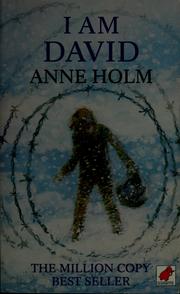
I am David by Anne Holm

I am David by Anne Holm, translated from the Danish by L.W. Kingsland (Puffin, 1969; first published in Denmark, 1963)

8 chapters; 153 pages

Subjects: Denmark, Italy, Eastern Europe, concentration camps, Cold War, dogs, fable, intermediate fiction (Year 6-8)


Synopsis
This entry might be a bit of a cheat, but it is included in all sincerity, even if under slightly false pretences. 

I am David made a strong impression on me when I read it as a child. It’s one of the many classic Puffin books discovered and published by their marvellous editor Kaye Webb.

Recently I re-read it in preparation for a workshop I was holding on Writing about war for children, and discovered that what I thought I knew about it was quite wrong. I thought it was a book about a Jewish boy escaping from a concentration camp in World War Two (a bit like The boy in the striped pyjamas, but with a happier ending.) Turns out that’s not true at all.

The clue is on pg 50 (in my edition). Because David has grown up in the camp, he has no idea about geography or anything else in the outside world, and he’s trying to work out which countries are safe. His definition of a safe country is one with a king or queen, and when he asks someone about England, the answer given is that “at the moment there was a queen because the last king had had no sons, only daughters.” So the book must be set after 1953 (when Queen Elizabeth came to the throne) and it’s an Eastern Europe / Cold War / Communism story, not a World War Two story at all.

Or is it? This article points out that David is 12 in the story, so it's possible that he could have been born during World War Two. 

There are some unlikely coincidences in the plot, especially towards the end, but I think this ambiguity is partly why it has stayed in my memory. It is quite a haunting book.

The book cover above is my own copy, but there are a number of other editions with different covers.


Reviews:
This review on The bookbag calls David "an introspective, deep child" who "observes constantly and learns quickly and ... has his own, strong sense of what is right and what is wrong." 

Another review on Reading matters comments that “the book is not set in a real time or place. Although the circumstances seem real enough, David's background is a synthesis of all the terrible persecution that happened during the Second World War and the subsequent years of cold war communism. This helps to make David a very powerful and pure figure. I don't think he is particularly real. Anne Holm uses him as a blank canvas on which can be drawn the first experiences of life - beauty, knowledge, trust, religion, love, everything.”

It’s a classic, there are masses of reviews and reading guides online. Don’t get bogged down in them. Just read the book for yourself.

About the author
For such a famous book, I couldn’t find much info on the author.

According to this obituary in the Independent, Anne Lise Elfe was born in Aal, Jutland, on 10 September 1922. She married Johan Holm in 1949 and they had one son. She died on 27 December 1998. 

The writer of the obituary describes the book as "a landmark in bringing to children's attention the existence of a world of political evil and the misery this causes. Some doubted the need for revealing such harsh truths at an early stage, but the thousands of children who read the book often sent letters of thanks to the author. Sometimes they wrote directly to the fictional David as well." 

found this very interesting as it echoed the issues we were discussing in the workshop, to do with "how much” to tell children about war.

In the book, David himself says, “I am glad I told Maria that evil exists. I don’t want her to be afraid, but it’s something you have to know about. Can’t you understand that children have a right to know everything that’s true?”

Other books you might like:
The silver sword by Ian Serraillier (1956) is also about children wandering through post-war Europe, trying to reach a safe country (in this case, Switzerland), although these children do have each other and aren't as completely alone as David.  

Number the stars by Lois Lowry is set in Denmark (where David is told to head to) in World War Two and celebrates the bravery and compassion of the Danish people

Things I didn’t know
That this book which I loved as a child isn't about World War Two at all!

Monday, 16 September 2013

Hero on a bicycle by Shirley Hughes

Hero on a bicycle by Shirley Hughes (Walker Books, 2012)

30 chapters; 222 pages with small black and white illustrations as chapter headings

Subjects: World War Two, Italy, Partisans, Resistance, Nazis, junior fiction (Year 5-8)


Synopsis:
The hero of the title is 13-year-old Paolo Crivelli, who is living with his older sister Constanza and English mother Rosemary on the outskirts of Florence. It is 1944 and Florence is occupied by Nazi German forces, but the Allies are moving up through the south of Italy and fast approaching the city. Paolo’s father has joined the Partisans – the Italian Resistance – and they don’t know where he is, or even if he is still alive.  

Paolo is desperate to help the Resistance movement, but keeps being told he is too young. Then the fighting gets closer and they are placed in even more danger when the Partisans ask them to shelter two escaped Allied prisoners, English David and Canadian Joe. 

In the foreword, Shirley Hughes talks about how she was captivated by Florence on her first visit, aged 19. This was not long after the end of World War Two, when the ex-Partisans would still gather in the Piazza on Sunday mornings, and she could imagine what it was like there during the war. 

The story is told mostly from Paolo’s point of view, but also from that of Constanza and Rosemary, and I wonder if children are less likely to be interested in the thoughts and worries of Rosemary, the children’s mother. However it is a fascinating story about a part of the war that is very little known, and it raises interesting ideas about the nature of collaboration vs resistance, and choices that have to be made in war; also about how war is not black and white – there can be good people on both sides, forced to do things they don’t want to do.

The book has its own website here. It includes a map and a timeline, and some of Shirley Hughes' lovely sketches. 


Reviews:
The review in the Guardian of "a wartime adventure by someone with a  strong feeling for the time" mentions the importance to Paolo of his relationship with his bicycle, and suggests there is an essay to be written about "the significance of the bicycle in Italian culture"!

There is another review here on An awfully big blog adventure, and one here in the New York Times Sunday Book Review

Questions:
Was Paolo’s mother right to put her family in danger by sheltering the Allied prisoners? 
Did she have any choice? Why did she agree to do so?
How or why was Paolo a hero? Who else is a hero in this book?

Author’s website:
Shirley Hughes (born 1927) is of course more famous as a writer and illustrator of picture books, such as Dogger and the Alfie series. She has also written her autobiography, called A life drawing: recollections of an illustrator. Hero on a bicycle is her first novel. 

Shirley Hughes
Shirley Hughes at home in Holland Park. Photograph: Eamonn McCabe for the Guardian
You can read an interview with her here, including a description of her childhood, how she started out as an artist and 10 things you didn't know about her. 

The Independent has another interview, in which she sums up her "life in six words" (Unfailingly interesting, inspired by family life.)

Here’s an interesting comment from this interview in the Guardian:
'Shirley …believe[s] that a childhood packed with activities is the enemy of invention. "I grew up in the war and there was absolutely nothing to do, except the radio or the cinema when you were older," says Shirley, of her childhood in Wirral. "There was so much time just to moon around. I think boredom's immensely important for creativity – I'm sure that's why I became an illustrator."'

Other books you might like:
School Journal Part 4 no 2 (1983): The courier by Joan Walmsley tells a gripping story of how the author had to deliver a message to the Partisans, disguised as an Italian peasant girl, and how she got past the sentry because she had a small boy, Gino, with her.

Joan Walmsley, WW Two soldier (in the same Journal) is an interview about her life as a VA (Voluntary Aid) with the Red Cross in Cairo, then as a special force military intelligence agent in France and Italy.

NZ connections:
New Zealand troops served in Italy from October 1943 to the end of World War Two, under Lieutenant-General Bernard 'Tiny' Freyberg. You can read more about the Italian campaign here

A group of 28 (Maori) Battalion soldiers drive along a street in Sora, June 1944.Alexander Turnbull LibraryWar History Collection, Reference: DA-06147

New Zealand soldiers camped close to one of the main streets, Trieste, May 1945. Alexander Turnbull Library War History Collection
Reference: DA-9389