Showing posts with label Resistance. Show all posts

Sunday, 24 May 2015

What we did for love by Natasha Farrant

What we did for love: resistance, heartbreak, betrayal by Natasha Farrant (Scarlet Voyage, 2014)
Originally published as: The things we did for love (Faber and Faber, 2012)

ISBN 978-1-62324-028-8

3 Parts (February – June 1944); 208 pages

Subjects: World War Two, France, Resistance, young adult fiction (Year 10-13)


(This is the cover of the book I read, but there are several other designs.) 

Synopsis
"A story of love, sacrifice, betrayal and redemption, set against one of the most tragic and devastating episodes of French World War II history. France 1944. 
As war rages in Europe, teenagers Luc and Arianne fall passionately in love.  But German forces are closing in and Luc, desperate to atone for his family's past, is drawn into the dangerous world of the Resistance. Arianne will do almost anything to keep him safe, but someone else is secretly in love with her - someone who will stop at nothing to get rid of his rival..."

That’s taken from Natasha Farrant’s website, where you can also read a sample chapter.

Reviews:
The Bookbag review begins: "There are many kinds of love in this moving story, from family loyalty and friendship to patriotism, but what really preoccupies the two central characters, Arianne and Luc, is the passion and agony of first love."

Kirkus reviews says: "Set against the backdrop of World War II, Farrant’s first for teens... captures the whirlwind of first love and the complications of taking action during a most dangerous time… A worthwhile addition to historical romance that honors one real French town’s tragic and true event.

I think this Guardian review is a good one. It makes some pertinent points about plot, motivation, readership and language, including the dialogue, which I noticed as I read the book. Some of the phrases – like “drop dead gorgeous”, encountered very early on pg 10 - seem too contemporary, and like the reviewer, I didn’t get a feel for any French phrases or patterns of speech.

Author’s website
On her website, Natasha Farrant saysI get very grumpy if I don’t have a good book to read, if I’m not writing, if I’m hungry, tired or don’t get enough exercise.  Otherwise I am a generally cheerful person.”

Things I didn’t know
The final event in this book is based on something that did actually happen. The Afterword explains how “on 10 June 1944, at around 2 o’clock in the afternoon, the 2nd SS Panzer Division Das Reich really did enter the French village of Oradour-sur-Glane and ordered all the inhabitants to assemble on the market square, under the pretext of checking their papers."

The village of Oradour-sur-Glane was situated 22 km north-west of Limoges; you can visit its museum, the Centre de la mémoire, or read more about it online, but it is a sad tale.

Have you read it?
Have you read this book? Let me know what you think!


Wednesday, 4 March 2015

Number the stars by Lois Lowry

Number the stars by Lois Lowry (Houghton Mifflin Co., 1989)

ISBN 0 395 51060 0

17 chapters; 137 pages

Subjects: World War Two, Denmark, Sweden, Jews, Resistance, Occupation, courage, friendship, junior fiction (Year 6-8)


Synopsis
This is not a long book, but it is simply but powerfully told and won the Newbery Award. I am going to quote from the book jacket itself, because it provides the perfect intro:

“’How brave are you, little Annemarie?’ Uncle Henrik asks his ten-year-old niece. It is 1943, and to Annemarie Johansen, life in Copenhagen is a complicated mix of ordinary home and school life, food shortages, and the constant presence of Nazi soldiers. Bravery seems a vague virtue, one possessed by dragon-slaying knights in the bedtime stories she tells her younger sister, Kirsti. Too soon, she herself is called upon for courage.

As the German troops begin their campaign to "relocate" all the Jews of Denmark, the Johansens take in Annemarie's best friend, Ellen Rosen, and pretend she is part of the family. Ellen and Annemarie must think quickly when three Nazi officers arrive late one night and question why Ellen is not blond, like her sisters.

Through Annemarie's eyes, we see the Danish Resistance as they manage to smuggle almost the entire Jewish population, nearly 7000 people, across the sea to Sweden. In this tale of an entire nation's heroism, Lois Lowry reminds us that there is pride and human decency in the world even during a time of terror and war.”

Lois Lowry has written an Afterword in response to the question “How much of Annemarie’s story is true?”

Reviews:
There are lots of study guides available online. The  Scholastic page has extra teaching resources including extension guides and writing prompts.

The book also features on the prestigious Kirkus reviews which calls it a "deftly told story that dramatizes how Danes appointed themselves bodyguards--not only for their king, who was in the habit of riding alone in Copenhagen, but for their Jews."

Questions:
Where does the title come from? (Hint: Look in the chapter titled “Let us open the casket”.) What do you think it means?

Author’s website
Lois Lowry’s website starts on a cheery, welcoming note: “Hi! I wish I could invite you into my kitchen for a cup of tea and we could chat. That's not possible. But please... join me here, at the website. It's the next best thing.”

It contains her biography with lots of family photos and interesting facts, FAQs, speeches, videos and even a quiz. Lois Lowry was born in Hawaii, went to school in America and Japan, got married at 19 and had four children. She writes that her older son was a fighter pilot in the US Air Force. “His death in the cockpit of a warplane left a little girl fatherless and tore away a piece of my world. But it left me, too, with a wish to honor him by joining the many others trying to find a way to end conflict on this very fragile earth.”

I also liked this paragraph:
“My books have varied in content and style. Yet it seems that all of them deal, essentially, with the same general theme: the importance of human connections. summer to diemy first book, was a highly fictionalized retelling of the early death of my sister, and of the effect of such a loss on a family. Number the starsset in a different culture and era, tells the same story: that of the role that we humans play in the lives of our fellow beings.”

Other books you might like:
Claire Huchet Bishop’s Twenty and ten, set in France, also shows how courage and friendship can help to save those whose lives are in danger, as does Hero on a bicycle by Shirley Hughes (set in Italy).

In I am David, Denmark is the country that David is told to head to. In my post on that book, I talk about how it isn't a WW2 story at all, but I still like the connection. 

Things I didn’t know
I didn't know anything about the Danish Resistance (Denmark surrendered to Germany in 1940).  I had no idea that over 7,000 Danish Jews - almost all of the country's Jewish population - were taken across to safety in Sweden.

I didn’t know about King Christian and loved the story of how he used to ride out on his horse every morning to greet his people, unguarded,  because “the whole of Denmark” was his bodyguard. In fact there is a picture book about him, The Yellow Star: The Legend of King Christian X of Denmark by Carmen Agra Deedy, which tells how he responded to the Nazi edict that all Jews must wear a yellow star by wearing a yellow star himself – however, this is apparently a blend of fact and legend, as no Danish Jews were ever “forced" to wear the yellow star.


But as the Holocaust Encyclopedia points out, “The legend conveys an important historical truth, however: both the King and the majority of the Danish people stood by their Jewish citizens and were instrumental in saving almost all of them from Nazi persecution and death.”


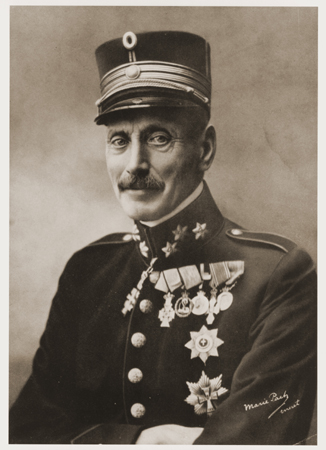
King Christian X. According to popular legend, King Christian X chose to wear a yellow star in support of the Danish Jews during the Nazi occupation of Denmark. In another version, the Danish people decided to wear a yellow star for the same reason. Both of these stories are fictional. However, the legend conveys an important historical truth: both the King and the Danish people stood by their Jewish citizens and were instrumental in saving the overwhelming majority of them from Nazi persecution and death.
King Christian X of Denmark

Here is a picture of a Danish rescue boat, and a map showing how close Denmark is to Sweden. You can even see film footage of the German presence in Copenhagen.

Have you read it?
Have you read this book? Let me know what you think!

Thursday, 19 June 2014

Rose under fire by Elizabeth Wein

Rose under fire by Elizabeth Wein (Hyperion, 2013)

ISBN 978-142318309-9

360 pages


Subjects: World War Two, France, Resistance, pilots, women in war, concentration camps, Ravensbrück, Nuremburg, young adult fiction (Years 10-13)


Synopsis
It’s August, 1944. Rose Moyer Justice, aged 18, from a Pennsylvania Dutch family in the United States, has come to England to work for the British Air Transport Auxiliary. Rose’s family is obviously wealthy and she learnt to fly at the age of 12, so she is quite confident delivering planes to bases all over the country. 

Rose is keen to fly to France as well, and gets permission to do so a few days after Paris has been freed in September 1944 but her return flight goes wrong when she is captured in the air by German planes and made to land at an airfield in Germany. From there, she is taken to Ravensbrück concentration camp where she is registered as a French political prisoner, despite having an American passport.

Rose makes friends at the camp, including Irina, a Russian pilot, and a young Polish girl called Roza, one of the group known as Rabbits who have been used for medical experiments by the Nazis. Everyone is treated badly in the camp, but the women are determined that the story of the brutality meted out to the Rabbits should reach the outside world. Rose, an aspiring poet, comforts them with poems by her favourite writer, Edna St Vincent Millay, and also makes up a poem to remember their names. She doesn’t let on that she has already heard reports about their treatment on the wireless and dismissed them as propaganda.

There is little let-up from the grim scenes at the camp, which take up 200 of the 360 pages. The events and living conditions are not dwelt on gratuitously, but they are still stomach-churning if you stop to think of the implications or to imagine the reality. Readers who only know of the camps from Anne Frank’s diary – which stops, of course, before she arrives there – will find this a very different, and possibly difficult reading experience.

The story of how Rose readjusts to outside life takes up the last section of the book (which is where the Nuremburg Trials come into it.) In some ways, this widens the scope of the book as it relates to how anyone who has been through trauma comes to terms with it.

Rose Under Fire UK

Reviews:
This review on Gossamer obsessions calls it "definitely a darker, bleaker novel than Verity." The review does raise the point - which I was aware of as I read - that the diary nature of the book works “for and against” it. Rose can’t keep a diary in Ravensbrück (or it would have stretched credibility if she had been able to write one in sufficient detail and smuggle it out  as well) so that portion of the story is written while she is staying in a hotel in Paris after her release. But that means we realise she has escaped to safety, which takes away some of the tension of the events described. The only (slight) tension left is that we know something about her boyfriend, Nick, that she doesn’t yet know. Rose has lost touch with her concentration camp friends, but we expect she will find them again.

The Los Angeles times called the book "a soaring tale of triumph." 

Author’s website
Elizabeth Wein has written books set in Arthurian Britain and sixth century Ethiopia. Code name Verity is about a female pilot who is captured in France; her story is mentioned in Rose under fire, because the character of Maddie connects the two pilots.

There is an interview with Elizabeth Wein here on the girls like giants blog. 
And it’s also interesting to note that she is a pilot herself.

From another interview in the Vancouver Sun:
Q Why did you write this book?
A I think that the dark underbelly of women’s wartime roles is fascinating. My previous novel, Code Name Verity, takes an inside look at the dangerous and dirty work that women did as spies and saboteurs for resistance movements in Nazi occupied Europe. Rose Under Fire more or less continues the story of these women — about a third of those sent into occupied France ended their lives as prisoners in concentration camps. I was particularly fascinated with Ravensbrück because it was a camp specifically for women. It was operated differently from other camps; its history is not well known and is worth knowing.

Other books you might like:
There must be very few books written about women in concentration camps, compared to the large number of books about men in that situation. The books that spring to mind are escape stories, like The great escape, so they are more “heroic” in nature, and perhaps it was simply impossible for women to even try to escape – how would they have survived outside?

NZ connections:
You can read my review of Code name Verity for more details about the Air Transport Auxiliary, including a brief profile of Jane Winstone, one of the few NZers in the ATA.

Things I didn’t know
It’s a side issue, but I didn’t know that the emigrants who settled in Pennsylvania Dutch Country in the USA (incl the Amish) weren’t named because they were Dutch, but because of the dialect of the language they spoke. They came from a number of German-speaking areas in Europe, such as Alsace in France, Switzerland and Germany. This adds an extra layer of irony of the story, in that Rose is being held captive in the land where her family came from.

If you want to, you can read more about the Nuremburg Trial or the Polish Rabbits, but some of this material is confronting.  

Ravensbrück is now a museum. More than 132,000 women and children from twenty-three countries passed through this concentration camp…At least 92,000 of them perished. They were gassed, shot, beaten and starved to death; or they died from sadistic medical experiments or exposure or dis­ease or exhaustion, or just be­cause they gave up trying to survive. 

A low stone wall newly built by the lakeside bears a chiseled inscription in German by the East German writer Anna Seghers. It reads: “The women of Ravensbrück are the mothers and sisters of us all. You would not have been able to learn and play in liberty—indeed you might even not have been born—if women like these had not placed their delicate, weak bodies as a steel shield before you and your future.”

A work team in Ravensbrück
[​IMG]


One of those who died Ravensbrück was Violette Szabo, the legendary SOE special agent. There is a poignant story about her training when she was trying to commit a poem to memory (this was a device to help code messages, using words from the poem. ) It was best not to choose well known poems in case the enemy could recognise them, and it was important to get the words and the spelling of the chosen poem exactly right.  Violette kept making mistakes until the SOE codemaster, Leo Marks, gave her a new poem to learn. It was simple but memorable and it worked for Violette. Leo Marks had written the poem himself after the woman he loved had been killed in a plane crash. 

The life that I have
Is all that I have
And the life that I have
Is yours

The love that I have
Of the life that I have
Is yours and yours and yours

A sleep I shall have
A rest I shall have
Yet death will be but a pause

For the peace of my years
In the long green grass
Will be yours and yours
And yours

Sunday, 10 November 2013

Code name Verity by Elizabeth Wein

Code name Verity by Elizabeth Wein (Electric Monkey, 2012)
Cover title: Code name Verity – I have told the truth

452 pages

Subjects: World War Two, France, Resistance, pilots, women in war, young adult fiction (Years 10-13)


Synopsis:
Part 1 (just over half the book) is titled Verity and takes the form of entries – like diary entries, but not quite - written at a place called Ormaie in France over three weeks of November 1943. Gradually we piece together the story, which is being told by a captured female English Flight Officer who has (apparently) made a deal with a German officer to put down in writing “anything you ask, everything I can remember” – wireless codes, facts about English aircraft and air fields etc. She seems to be spilling all these secrets quite blithely; the other prisoners certainly think so, and despite her for it.

She interleaves this sequence with the story of the growing wartime friendship between two girls, Maddie and Queenie, as Maddie becomes a pilot with the Air Transport Auxiliary and Queenie becomes a radio operator (and possibly something else, more secret), and with day to day accounts of what is happening to her in her captivity and her relationship with her captors, especially the German officer von Linden. She lives in a state of almost constant terror and dread, under threat of being sent to one of the worst Nazi concentration camps, but maintains a black sense of humour throughout. Her last entries describe her flight into Nazi-occupied France, soon after which she was arrested, and a horrible public execution of another female prisoner. Almost right at the end, she reveals her real name. Many aspects of her story, however, turn out to be not quite what they seem.

Part 2, titled Kittyhawk (Maddie’s code name), takes up the story from Maddie’s point of view after she has to make a  crash landing, and while she is being looked after by the local Resistance while waiting for rescue. The two stories start to merge as they realise “Verity” is being held by the Gestapo in Ormaie.

It’s a book about friendship, bravery and courage – not only the courage to face fear and stay calm and level-headed in terrible circumstances, but also the courage needed to make the most difficult of decisions, based on that friendship.

Reviews:
Be careful what reviews you read, because it’s a hard book to review without giving away crucial plot details. (As the NY Times reviewer below explains: "I have to review a book in which even the hint of plot summary could ruin everything."

"The pilot and the spy" in the New York Times Sunday Book Review: "This is a rare young adult novel entirely about female power and female friendship, with only the faintest whiff of cute-boy romance... A smart book about the power of female friendship is like finding Neverland." 


And one more review here of "this heart-wrenching story of spies and friendship."

Questions:
What does “verity” mean?
What is true and not true in this book?
Why did Maddie do what she did when Julie called “Kiss me, Hardy”?

Author’s website:
This is Elizabeth Wein's website. She published a companion novel to Code name Verity in 2013, called Rose under fire, about a female pilot who is shot down over Germany in World War Two and ends up in a Nazi concentration camp. She has also written books set in Arthurian Britain and sixth century Ethiopia.
There is an interview with her here.

And it’s also interesting to note that she is a pilot herself.

Other books you might like:
Elizabeth Wein has listed two books that she was influenced by in writing Code name Verity. Neither of these is listed in our local library so I don’t think I’ll be able to get hold of them, but one is Le Silence de la Mer (The silence of the sea) by “Vercors” (real name Jean Bruller), a book secretly published under a pseudonym in 1942, about a French family who have to share their home with  a German officer and use silence as their only possible weapon against him.  (Verity mentions this book in one of her entries.)

Another is La jeune fille au pair (The young au pair) by Joseph Joffo, about the daughter of a Nazi official (now in prison) who works after the war as an au pair for a family of Jewish Auschwitz survivors. Both books apparently try to show German officials, not just as evil characters with no human side to them at all, but as real and complicated people striving to deal with their own perceptions of good and bad, right and wrong, honour and duty.

The character of Maddie connects Code name Verity with Rose under fire, Elizabeth Wein's book about a young American woman who comes to England in 1944 to work for the British Air Transport Auxiliary, and is captured and taken to Ravensbruck concentration camp. Rose under fire is a powerful book but it is a darker, bleaker read than this one. 


New Zealand connections:
I didn't know anything about the British Air Transport Auxiliary before reading this book, but during the war it was vital in delivering planes from factories to military airfields, bringing them back for repairs, and carrying out other transportation and communications duties around Britain.

It was open at first to private pilots, or to commercial pilots who were out of a job because so many routes were closed in wartime. After some opposition, its ranks were opened to women as well, but they weren’t allowed to fly into Europe until the very end of the war.

Here is a story about one of them, Maureen Dunlop.

And here is a fabulous BBC clip about the "glamour girls of the war."

There were a handful of New Zealanders in the ATA and one of them was Jane Winstone.
“After taking off on 10 February 1944 the engine of her Spitfire failed at 600 feet. The aircraft spun into the ground near Tong Castle and she was killed; she was 31 years old. Members of the ATA acted as pallbearers at her funeral, at the Church of St Joseph, Maidenhead; she was buried in a section of the local cemetery set aside for ATA casualties... Jane Winstone was one of 16 women from the ATA killed during the war.”


Monday, 16 September 2013

Hero on a bicycle by Shirley Hughes

Hero on a bicycle by Shirley Hughes (Walker Books, 2012)

30 chapters; 222 pages with small black and white illustrations as chapter headings

Subjects: World War Two, Italy, Partisans, Resistance, Nazis, junior fiction (Year 5-8)


Synopsis:
The hero of the title is 13-year-old Paolo Crivelli, who is living with his older sister Constanza and English mother Rosemary on the outskirts of Florence. It is 1944 and Florence is occupied by Nazi German forces, but the Allies are moving up through the south of Italy and fast approaching the city. Paolo’s father has joined the Partisans – the Italian Resistance – and they don’t know where he is, or even if he is still alive.  

Paolo is desperate to help the Resistance movement, but keeps being told he is too young. Then the fighting gets closer and they are placed in even more danger when the Partisans ask them to shelter two escaped Allied prisoners, English David and Canadian Joe. 

In the foreword, Shirley Hughes talks about how she was captivated by Florence on her first visit, aged 19. This was not long after the end of World War Two, when the ex-Partisans would still gather in the Piazza on Sunday mornings, and she could imagine what it was like there during the war. 

The story is told mostly from Paolo’s point of view, but also from that of Constanza and Rosemary, and I wonder if children are less likely to be interested in the thoughts and worries of Rosemary, the children’s mother. However it is a fascinating story about a part of the war that is very little known, and it raises interesting ideas about the nature of collaboration vs resistance, and choices that have to be made in war; also about how war is not black and white – there can be good people on both sides, forced to do things they don’t want to do.

The book has its own website here. It includes a map and a timeline, and some of Shirley Hughes' lovely sketches. 


Reviews:
The review in the Guardian of "a wartime adventure by someone with a  strong feeling for the time" mentions the importance to Paolo of his relationship with his bicycle, and suggests there is an essay to be written about "the significance of the bicycle in Italian culture"!

There is another review here on An awfully big blog adventure, and one here in the New York Times Sunday Book Review

Questions:
Was Paolo’s mother right to put her family in danger by sheltering the Allied prisoners? 
Did she have any choice? Why did she agree to do so?
How or why was Paolo a hero? Who else is a hero in this book?

Author’s website:
Shirley Hughes (born 1927) is of course more famous as a writer and illustrator of picture books, such as Dogger and the Alfie series. She has also written her autobiography, called A life drawing: recollections of an illustrator. Hero on a bicycle is her first novel. 

Shirley Hughes
Shirley Hughes at home in Holland Park. Photograph: Eamonn McCabe for the Guardian
You can read an interview with her here, including a description of her childhood, how she started out as an artist and 10 things you didn't know about her. 

The Independent has another interview, in which she sums up her "life in six words" (Unfailingly interesting, inspired by family life.)

Here’s an interesting comment from this interview in the Guardian:
'Shirley …believe[s] that a childhood packed with activities is the enemy of invention. "I grew up in the war and there was absolutely nothing to do, except the radio or the cinema when you were older," says Shirley, of her childhood in Wirral. "There was so much time just to moon around. I think boredom's immensely important for creativity – I'm sure that's why I became an illustrator."'

Other books you might like:
School Journal Part 4 no 2 (1983): The courier by Joan Walmsley tells a gripping story of how the author had to deliver a message to the Partisans, disguised as an Italian peasant girl, and how she got past the sentry because she had a small boy, Gino, with her.

Joan Walmsley, WW Two soldier (in the same Journal) is an interview about her life as a VA (Voluntary Aid) with the Red Cross in Cairo, then as a special force military intelligence agent in France and Italy.

NZ connections:
New Zealand troops served in Italy from October 1943 to the end of World War Two, under Lieutenant-General Bernard 'Tiny' Freyberg. You can read more about the Italian campaign here

A group of 28 (Maori) Battalion soldiers drive along a street in Sora, June 1944.Alexander Turnbull LibraryWar History Collection, Reference: DA-06147

New Zealand soldiers camped close to one of the main streets, Trieste, May 1945. Alexander Turnbull Library War History Collection
Reference: DA-9389