Charlotte sometimes by Penelope Farmer (Red Fox, 1999; first published Chatto and Windus,
1969)
3 parts;
198 pages with a few full-page black and white illustrations
Subjects:
World War One, England, Armistice, VE Day, school, sisters, friends, time
travel, junior fiction (Year 5-8)


Synopsis
This was one of my
favourite books as a child, although I realise now that I read it as a
time travel fantasy, with very little understanding of the historical
background.
The New York Review
has a succinct summary of the plot:
It’s natural
to feel a little out of place when you’re the new girl, but when Charlotte
Makepeace wakes up after her first night at boarding school, she’s baffled:
everyone thinks she’s a girl called Clare Mobley, and even more shockingly, it
seems she has traveled forty years back in time to 1918. In the months to
follow, Charlotte wakes alternately in her own time and in Clare’s. And instead
of having only one new set of rules to learn, she also has to contend with the
unprecedented strangeness of being an entirely new person in an era she knows
nothing about. Her teachers think she’s slow, the other girls find her odd,
and, as she spends more and more time in 1918, Charlotte starts to wonder if she
remembers how to be Charlotte at all. If she doesn’t figure out some way to get
back to the world she knows before the end of the term, she might never have
another chance.
On her blog, Penelope Farmer writes an interesting summary herself, describing the
book as being “set in the kind of English boarding school my twin sister and I
attended/were incarcerated in – take your pick – for part of the fifties.” No wonder the school scenes ring so true. The girls have very English names:
Susannah, Vanessa, Janet, Elizabeth, Sarah, and there is a mystery about
Sarah’s unexpected kindness to Charlotte, explained at the end.

(This is the school
which Penelope and her sister went to, and which she used as the setting for
the book, including the cedar tree and the glassed-over verandah that Charlotte
climbs out onto.)
She adds that “the
whole book turned – though I didn’t see that when I wrote it – on identity; how
do people identify you as you?” and says this is “a particularly relevant
question for twins in general, and still more so for two not identical but
similar looking twins like my sister and me, quite different in character and
ability – even opposites in many respects, she right-handed, me left - but
always taken together not singly. This was another connection I did not make at
the time I was writing.” (More on her twin sister below.)
The first clues about
the war setting come with breakfast (“porridge… as solid as bread, much solider
in lumps, and slippery too”) when Bunty tells Charlotte-as-Clare, “Miss Bite
says it’s doing your bit, to eat things you don’t like… I don’t see how it hurts
Germans myself, eating nasty porridge.”
In September 1918, the
war is drawing to a close. We as readers know it is nearly over, but the girls
at school don’t, and it still affects their everyday lives. There are air raid
alarms in the middle of the night, and an army training camp nearby with
soldiers dressed in khaki, who “strolled casually about or marched stiffly up
and down.” Injured soldiers arrive home
on the hospital trains. A girl with a German surname is ostracised by the
others, and the teachers, girls and nearby villagers have fiancés, fathers or
sons away fighting in France; some of them won’t ever come back.
Part Three only takes
up about 25 pages but it brings the story to a perfect, poignant
ending.
You can find lots of
lots of different covers, some of which are better than others.
About the author
A number of excellent fiction writers are called Penelope. This writer is not
Penelope Mortimer or Penelope Fitzgerald or (another of my favourites) Penelope
Lively.
Penelope
Farmer was born in 1939. At first glance, there isn’t a lot of information about
her online, but the New York Review says that she published her first book of
short stories for children, The China People,
in 1960 and writes novels for adults and children, including several books
about Charlotte and her sister Emma. (We also had Emma in winter when I was a child, which
I enjoyed - but not as much as Charlotte
sometimes.)
There is
some biographical material about her here (including more fascinating twin info
about the circumstances of her birth).
However, an
absorbing article in the Guardian reveals a lot about her family life. Written
in 2007, it describes the events of 16 years before when her twin sister lay
dying in hospital in Oxford, and the connection that developed between her and
the daughters of the woman who was dying in the next bed. It is a sad, moving
and yet lovely story, all hinging on a chance meeting in the street.
Later, living
in Lanzarote in the Canary Islands, she wrote about starting a blog called
grannyp (“Old writers may
not die, but they do have to move on. Thank God for the internet”) but it
doesn’t seem to go beyond 2010.
Info about the illustrator
The cover
illustration on my copy is by Emma Chichester-Clark who is best known for her
Blue kangaroo books (and incidentally she also went to boarding school)
Other books you might like
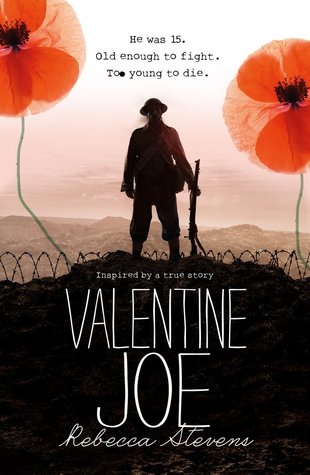
Valentine Joe is a time travel book about World
War One.
The red suitcase by Jill Harris is another, but about World War Two.
Things I didn’t know
I didn’t know
anything at all about Penelope Farmer. It has been a delight to find out all
this info about her, and this remains one of my favourite books.
And how
many children’s books have inspired songs? This one inspired a song by The
Cure, called Charlotte Sometimes and
full of quotations. This Smashwords blog article points to two other blog postings that talk about the copyright implications, the
impact it had on her sales, how Penelope Farmer actually got to meet the Cure at
one of their concerts, how she signed a copy of the Puffin edition for Robert
Smith (who told her that his older brother read him the story at bedtime when
he was about 12, and “it never got out of my head”) and how she enjoyed her own
“brief moment of pop glory” when they played the song as an encore at the end
of the concert.