Showing posts with label family. Show all posts

Monday, 30 October 2017

The war that saved my life by Kimberly Brubaker Bradley

The war that saved my life by Kimberly Brubaker Bradley (Dial Books, 2015)

46 chapters; 316 pages

Subjects: World War Two, London, evacuees, family, junior fiction (Year 5-8)

Image result for The war that saved my life by Kimberly Brubaker Bradley

Synopsis
I’ve always been fascinated by stories about World War Two evacuees, as it’s not part of the New Zealand war story at all. This author takes a different approach. The main character Ada is already damaged by a childhood of emotional and physical abuse by her mother, who seems to hate Ada for her disability (a clubfoot, which could have been easily fixed) and never lets her go outside. (The local children, who only ever see her waving from their window, think she is simple, not disabled.)

Ada is about ten years old, although she doesn’t know for sure. Despite being kept indoors for her whole life, she is smart and determined, and she gets her chance when her little brother Jamie comes home from school and announces that they are being sent to the country because of the war. Ada manages to escape to the train with him and as nobody else wants the two of them, they are reluctantly taken into the home of a childless woman, Susan Smith.

WW2 forms a backdrop to the story, with the neighbouring airfield and the danger of spies, and it provides several important plot points, especially at the end. The book traces the developing relationship between Ada and Susan, but also Ada’s growing sense of her own self-worth, which has been almost destroyed by her mother’s treatment of her.

Because she has lived such a restricted life up until now, Ada has never been to school, and can’t read or write.  The fact that she doesn’t know what everyday things like shops or banks are, or the meaning of many common words, is potentially tricky for a writer but Kimberly Bradley handles the challenge very skilfully.

This is a memorable story and I especially liked Susan as a character. Her life story is only hinted at, never fully described, but enough is hinted at to make it understandable, at least for older readers.      

I didn’t find Ada’s mother quite as convincing. She was so utterly malevolent that she seemed less believable, although the scene when Jamie finally realised the truth about her (which he had always been shielded from before) is very sad.

Reviews:
There are many glowing reviews of this book, such as this one on NZBookgirl. 
Kidsreads calls it “an unforgettable gripping story, one that is not only earmarked to be an award-winning novel, but also has the potential of becoming an all-time classic.”
The School Library Journal describes it as “Anne of Green Gables without quite so much whimsy” in which “hope, in whatever form it ultimately takes, is the name of the game.” “Enormously satisfying and fun to read, Bradley takes a work of historical fiction and gives the whole premise of WWII evacuees a kick in the pants.”
And this from Kirkus Reviews: “Set against a backdrop of war and sacrifice, Ada’s personal fight for freedom and ultimate triumph are cause for celebration.”
You can also find lesson plans here. 

About the author
You can find Kimberly Brubaker Bradley's website here. 
In this review on book reporter, she describes how she was born in Fort Wayne, Indiana, studied chemistry at college and married her high school sweetheart, and now lives on a 52-acre farm, with ponies, dogs, cats, sheep, goats, and lots and lots of trees in the foothills of the Appalachian mountains.

Other books you might like:
Other books about evacuees include: Lord of the nutcracker men by Iain Lawrence, When the siren wailed by Noel Streatfeild, Ronnie’s war by Bernard Ashley, The dolphin crossing by Jill Paton Walsh, Carrie’s war by Nina Bawden and Uprooted: a Canadian war story by Lynne Reid Banks.

Have you read it?
Have you read this book? Let me know what you think!

Thursday, 24 August 2017

A winter’s day in 1939 by Melinda Szymanik

A winter’s day in 1939 by Melinda Szymanik (Scholastic, 2013)
24 chapters; 285 pages
Subjects: World War Two; Poland; family; evacuees, refugees; junior fiction (Year 7-10)
Image result for A winter’s day in 1939

Synopsis
I should have reviewed this book before, because it is so good and has collected lots of awards and shortlistings: Storylines Notable Book 2014, Finalist 2014 NZ Post Book Awards, Finalist 2014 LIANZA Esther Glen Junior Fiction Award, Winner Librarian's Choice Award 2014 LIANZA Children's Book Awards

Melinda explains in the foreword that A winter’s day in 1939 is based on the story of her father, Leszek Szymanik, who was 12 when the Soviet Red Army invaded his homeland of Poland in 1939. His family was transported from Poland to a Russian labour camp in 1940.

The family in the book are Adam, his parents, older brother Tomasz and younger sisters Zofia and Maria. They live on a small farm, growing crops (tobacco, potatoes) and raising cows, pigs and chickens. Tragedy strikes the family at the very start of the story, followed by uncertainty and worry as Germany invades Poland – and then the Russian tanks arrive. Their farm is requisitioned (taken over by the Russians) and they are given a week to leave and find a new home - one room in a house  in a village 15km away.  

Things get worse, not better, and more long hard journeys, and much sadness, lie ahead of them.

Melinda includes a historical note, a map of the family’s journey, glossary, bibliography and a postscript about what happened next. Her foreword ends: “The past is filled with stories like these, of people who suffered terrible conditions and overwhelming sadness but remained hopeful and survived, despite everything. It is up to us to honour their memories and remember this stories to make the world a better place.”

I’m lucky to have a signed copy, and Melinda has written this in the front of my book: “We have to know the past to make a better future.”

Reviews
Booksellers NZ comments that “Melinda is a very skilled observer of family relationships, and this is what really brings the book to a higher level”.
Hooked on NZ books has links to a whole collection of reviews.
Teacher notes from Scholastic here.
About the author
Melinda has a great blog where she talks about all sort of writing issues and the writing life. In this blog post, she talks about how she came to write the book.
You can read more about Melinda here.   
Other books you might like:
Stefania's dancing slippers by Jennifer Beck tells another story of a Polish refugee family in picture book format. 
New Zealand connection
Of course there is a very real NZ connection in this case, because Melinda’s father ended up here, and so did over 700 Polish children who came out by ship and went to the Polish children’s camp at Pahiatua. It’s hard for us as an island nation to imagine what it must be like to live in a country that is surrounded by other nations and has been the site of conflict for centuries.
Links
In November 2014, there was a series of events to mark the 70th anniversary of the arrival of the Polish children at Pahiatua. You can read more about the "Polish Week" anniversary here.    
Have you read it?

Have you read this book? Let me know what you think.

Friday, 14 July 2017

A present from the past by Jennifer Beck; illustrated by Lindy Fisher

A present from the past by Jennifer Beck; illustrated by Lindy Fisher (Scholastic, 2006)

32 pages with colour illustrations

Subjects: World War One, France, Christmas, nurses, women in war, grandparents, family, picture books (Year 1-4)


Synopsis

It’s nearly Christmas time. Emily is waiting with her parents at the airport for her Aunt Mary whom she’s never met before. Aunt Mary has come all the way from England, bringing a special gift: a small oblong parcel, with a note saying “Best wishes from Princess Mary”. Inside, to Emily’s disappointment, is nothing but a small brass box with a damaged lid. But as Aunt Mary tells the story behind the box, Emily comes to realise that it is indeed a precious family heirloom.

These boxes, containing items such as sweets and tobacco, were the idea of Princess Mary, the 17-year-old daughter of King George V and Queen Mary, who wanted to give every serving soldier, sailor and nurse a Christmas present in December 1914 as a personal thank you for their sacrifices and hard work. You can read more about them here and here.

These Christmas boxes make a lovely story on their own, but the box in this book played an even more important role.

Don’t miss the dedication: “In memory of women in wartime”. There is also a fact sheet at the end.

Reviews:
A review on Perfect Picture Book Friday says the book "would be a great resource in History classes enticing conversations about war, troops overseas, and families dealing with loved ones during war time in the past."

There's another review on Momo celebrating time to read (great title for a blog!) 

About the author
You can read an interview with Jennifer Beck on the Christchurch City Libraries website, or learn more about her on the Book Council Writers files. 

About the illustrator
Lindy Fisher is profiled on the Book Council and Storylines sites. She has also had over 75 stamps published by New Zealand Post! You can see some of her artwork on her website.

Other books you might like:
Jennifer Beck is the author of the much-loved picture book The bantam and the soldier. She and Lindy Fisher have worked together on other books, including Stefania’s dancing slippers and Remember that November (about Parihaka).

NZ connections:
When I was researching for my Anzac Day book, I got to see one of these tins. It belonged to Hami Grace, an old boy of Wellington College, and is now held in the College Archives.


Things I didn’t know
I didn’t know that Princess Mary was born on 25 April (1897) – the day that later became Anzac Day! What a lovely connection!

Have you read it?
Have you read this book? Let me know what you think!

Friday, 2 June 2017

From Billabong to London by Mary Grant Bruce

From Billabong to London by Mary Grant Bruce (London: Ward Lock, 1915)

About 320 pages with a few full page illustrations

Subjects: World War One, Australia, England, London, ships, family, junior fiction (Year 8-10)


Synopsis
I had to borrow this book from the Dorothy Neal White collection at the National Library, and it’s the earliest book that I’ve yet reviewed. It’s number 4 of the 15 books that make up the Billabong series; others include Jim and Wally and Captain Jim (1916 & 1919).

Billabong is the house and the station, 2 miles from the nearest road and 17 miles from the nearest town. No other home is visible, “only peaceful paddocks”. The main characters are gradually introduced, but readers of the series would already know them: David Linton, the widowed station owner, and his children Jim (19) and Norah (nearly 15); their friend Wally (17); Mrs Brown, the housekeeper; the station hands, and Black Billy, the “native boy”.

The first quarter of the book is taken up with station life: a tame wallaby, snakes, a bullock stuck in a swamp, breaking in a new colt, as shown on the cover. But two topics overshadow everyone’s thoughts: the drought, and the war in Europe. Many of the local young men have already signed up. Wally (who is still underage) and Jim are desperate to go as well. A fortuitous inheritance calls Mr Linton “Home” to deal with the paperwork in England, and the decision is made that they will all go – Jim and Wally, so they can sign up there, and Norah so she’s not left on her own.

By pg. 91, they are on board the Perseus in some degree of comfort, about to leave from Port Melbourne. Their 6-week journey takes them via Adelaide and across the Indian Ocean to Durban, Cape Town, then Las Palmas to arrive in Falmouth, Cornwall, from where they take a train to London. Ordinary shipboard pursuits such as deck quoits, boat drill, whale and porpoise spotting and listening to the Captain’s gramophone life are enlivened by the capture of a German spy (not really a spoiler as it’s so heavily foreshadowed), an alarming passage through the fog and their own capture by a German warship. Not surprisingly, they are rescued in time and make it to England safely.

This is a well-written story with lively dialogue and warm family relationships, but reading it 100 years after publication, it’s hard to overlook the book’s treatment of Aboriginal and black South African characters. The Zulus are viewed either as picturesque rickshaw-pullers, or as dangerous robbers. The Aboriginal people are dismissed as “useless, shifty, lazy” and “thieving”. Black Billy is ridiculed for his use of English, rather than admired for having learnt another language, and there is no acknowledgment of the original inhabitants of the land. The writing is of course a product of its time, but the attitudes jar today.

Reviews:
Here you can read a contemporary review from the Port Fairy Gazette of 15 October 1915, which compares Norah’s stories to that of Little Women in their widespread appeal.

About the author
Mary Grant Bruce (1878-1958) worked as a journalist after leaving school and started the Billabong stories as a newspaper serial; she became a best-selling and much loved Australian children’s author. In WW2 she wrote patriotic talks and sold her autographs at charity auctions for the war effort.

Here's my favourite part of her bio from the official website: “Mary began writing when she was six and, from age 16, she entered and won the annual examinations of the Melbourne Shakespeare Society three times in a row whilst still a schoolgirl.”

You can read more about her here in the Australian Dictionary of Biography, which says that she was known as Minnie but "Mary" was thought to be a "more marketable" name. It also points out that "Australians, and not only children, looking at Billabong, could see themselves as they wanted to be - mates in fortune and adversity, sturdy, decent and fearless inheritors of a tough, but rewarding land."

About the illustrator
The Port Fairy Gazette review above credits them to Fred Leist, “an Australian artist now in London”.

Other books you might like:
The Belgian twins by Lucy Fitch Perkins (1917) and Rilla of Ingleside by L.M. Montgomery (1921) are two other books written during or just after WW1.

New Zealand connections:
Does NZ get a mention? Possibly not - anyway, I didn't spot any!

Have you read it?
Have you read this book? Let me know what you think!

Sunday, 6 November 2016

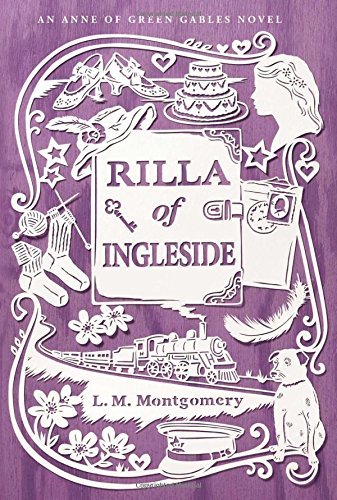
Rilla of Ingleside by L.M. Montgomery

Rilla of Ingleside by L.M. (Lucy Maud) Montgomery (An Anne of Green Gables novel; first published 1921; this Aladdin edition 2015)

35 chapters; 440 pages

Subjects: World War One, Canada, family, women in war, young adult (Year 7-10)

Image result for Rilla of Ingleside by L.M. (Lucy Maud) Montgomery (An Anne of Green Gables, novel; first published 1921; this Aladdin edition 2015)

(The cover of this new edition refers to different elements of the story, like Dog Monday, knitting socks, wedding cakes, the green hat, trains and letters.)

Synopsis
This is the 8th of 9 books (chronologically) in the Anne of Green Gables series, although the 6th to be written. I’d only read the first book in the series before, so I was confused initially as to who were all these people – but I kept reading and hoped it would come clear (it mostly did).

The book focuses on Marilla (“Rilla”) Blythe, Anne and Gilbert’s youngest daughter and the baby of the family. She is desperate to be seen as old enough to go to parties (and not treated as a child), but the years of light-hearted fun she dreams of vanish as World War One gets underway. We see Rilla grow in maturity as she takes on the organisation of the Junior Red Cross and responsibility for a war baby (carried home in a soup tureen), watches her brothers and many other friends go off to war and supports her mother in her grief.

It’s made very clear the pressure that boys were under to enlist – from themselves, their friends and society in general. The agony that every family went through with the news of battles fought, won or lost, is portrayed with complete authenticity, mixed with some humour to make it bearable.  “To me,” Rilla writes in her diary, “the strangest of all the strange things since 1914 is how we have all learned to accept things we never thought we could – to go on with life as a matter of course.”

The Canadian experience of WW1 was in some ways so similar to the NZ experience, but in other ways quite different, so it’s always interesting to read stories told from their perspective – for example, the references to the Gallipoli campaign.

The LM Montgomery Online site says that this is “one of the only contemporary depictions in Canadian fiction of women on the home front during the First World War.” 

Rilla of Ingleside is dedicated to the memory of Frederica Campbell MacFarlane, Maud’s friend and cousin who died in the flu epidemic in 1919. 

About the author
Everything you want to know about Lucy Maud Montgomery, much loved Canadian author (1874-1942) is here.

Some things I didn’t know about her:
  • her mother died of TB when she was 21 months old
  • she grew up with her grandparents
  • she was one of the few women of her time to study at university
  • when her manuscript of Anne of Green Gables was rejected by several publishers, she put it away in a hat box before trying again in 1907 (when it was accepted, published in 1908 and became an immediate bestseller)
  • she was secretly engaged for five years before getting married in 1911
  • she had three sons, but one was still-born
  • she left Prince Edward Island after her marriage, but nearly all (19 out of 20) of her novels are set there. 

I love some of her very delicious and funny lines:
- “I am done with crying which is a waste of time and discourages everybody.” (Susan, the housekeeper)
- (When their own horses aren’t available, and Rilla has to ride a very old one that keeps stopping every few yards) “Rilla felt that this, coupled with the fact that the Germans were only fifty miles from Paris, was hardly to be endured.”
- (Rilla talking about Fred Arnold, who is a very nice young man and “would be quite handsome if it were not for his nose”): “When he talks of commonplace things it does not matter so much, but when he talks of poetry and ideals the contrast between his nose and his conversation is too much for me and I want to shriek with laughter.”

Other books you might like:
Uprooted: a Canadian war story by Lynne Reid Banks tells the story of evacuees in WW2.
Where poppies grow: a World War I companion by Linda Granfield is a non-fiction book about WW1 from the Canadian perspective.

Have you read it?
Have you read this book? Let me know what you think!

Monday, 3 October 2016

Anzac biscuits by Phil Cummings

Anzac biscuits by Phil Cummings, illustrated by Owen Swan (Scholastic, 2013)

32 pages with full page illustrations

Subjects: World War One, Australia, family, food, picture books (Year 1-3)

Synopsis
This book seems to be set during World War One but that is never actually stated, although there are clues (barbed wire, choking smells, snow, trenches suggest Europe; the “smell of burning red gum” suggests Australia).

The story, told in very few words, alternates between Rachel and her mother baking biscuits in their cosy farmhouse, and Rachel’s father alone on the battlefield, tramping through the mud and sheltering from the weather and the gunfire. The colours alternate between warm colours and colder hues, but the two worlds are linked by mirrored words, images and actions and by a framed photograph of her father on the farmhouse wall.  

I’ve said “alone” because the soldier is completely alone in almost every scene (in one spread, he is trudging behind two other men, but we can’t see their faces.) It feels odd and unusual to have a battlefield shown as being so empty, but it does underline his loneliness and separation from his family. 

On the final page, the biscuits have found their way to Rachel’s father on the other side of the world. The back page blurb says: “This is a touching story of a family torn apart by war but brought together through the powerful simplicity of ANZAC biscuits.”

At first reading, I found it a bit disconcerting that Rachel and her mother could be singing, dancing and laughing. But actually I think that is a good message: that you can miss someone, but you don’t have to be miserable all the time, or feel guilty about having happy moments. (I think that’s why the empty battlefield bothered me, because many soldiers did find companionship with their mates).

Reviews:                                                         
My little bookcase calls it “a tender story of war” that “shows the private moments of families who are left behind to worry about their fathers, brothers, uncles and sons.”

Kids’ book review says it offers a gentle narrative that isn’t too scary or confronting.

Aussie reviews calls it "a lovely tale, and a beautiful way of introducing both the subject of war and the history of Anzac biscuits".

Questions:                                               
“The soldier bravely lifted his head to peer across the fields.” I’m still wondering about this line - is he brave or not? Shouldn’t he be keeping his head down?

About the author
You can see Phil Cummings' website here. You can also watch him talk about Anzac biscuits and his inspiration or the book. 

About the illustrator
You can read about Owen Swan and some of the other books he has illustrated here. 

Other books you might like
The Anzac puppy by Peter Millett is another non-confrontational book about war for this age group.

Have you read it?                          
Have you read this book? Let me know what you think!

Saturday, 21 May 2016

The year it all ended by Kirsty Murray

The year it all ended by Kirsty Murray (Allen & Unwin, 2014)

30 chapters; 243 pages

Subjects: World War One, Australia, France, Belgium, Germany, enemy aliens, white feathers, family, influenza, armistice, peace, Peace Day, war graves, Cheer Up Society, young adult fiction (Year 9-12)


Synopsis
This book starts with a poignant vignette of a pre-war scene, when 11-year-old Tiney – short for Martina - is allowed to join her big brother Louis and older cousin Will on their early morning expedition to Glenelg Beach. Six years later, everything has changed. Louis has gone to war and now the bells are ringing on Tiney’s 17th birthday to signal the armistice on 11 November 1918. 

As well as Louis, the family includes Tiney’s three older sisters: Dorothea (or Thea) the artist, Minna and Nette. Their family ancestry is German and Will (or Wilhelm) went to Heidelberg to study and was caught in Germany when the war started. As a result he was conscripted to fight on the German side. Will’s brother Paul, their other cousin, was interned as an enemy alien on Torrens Island.

As the cover suggests, “the year it all ended” was the year that things started to change, and the sub title (“War ends, the Jazz Age dawns. What will destiny bring Tiney Flynn?”) underlines this theme. Although the war is over, its effects continue and there will be many changes in Tiney’s life, both good and bad. Tiney is obsessed with what seems like an impossible dream, to go to Europe, but she manages to achieve it and sails across the world with her friend Ida and Ida’s mother, to visit the battlefields of France and Belgium.

I found this a very interesting viewpoint – not just Tiney’s, but that of a German-Australian family and the attitudes they faced in the war. 

Reviews:
I’ve tried to look for reviews that don’t give away too much of the plot, which is tricky as this reviewer acknowledges (but succeeds in doing - or not doing!) The reviewer loved "the vivid way in which Kirsty Murray has bought a period of history to life."

This review does contain more plot descriptions but I’ve included it as it has an author interview, I liked the answers to questions 4 and 6 in particular.

Here is a review from the Kids’ Bookshop (having given up by now on trying to avoid spoilers).

And there are more excerpts from reviews on Kirsty Murray's website here. 

About the author:
Kirsty Murray grew up in a family of seven children, in Melbourne and then Canada, has travelled widely, loves reading and says her most important job “and the one that took up most of my time was being a mother”, but has still produced a string of prize winning books. Lots of other info about her on her bio and FAQ pages.

I like her answers to What were your favourite books when you were a kid? and What’s the hardest part of writing for you?

Teachers’ notes are also available on her website here.

Other books you might like:
Remembrance by Theresa Breslin and Flora’s war by Pamela Rushby both tell the story of WW1 from the viewpoint of girls about Tiney's age. 

Things I didn’t know
The Cheer Up Society really did exist. “Its object was to support the soldiers in the First and Second World Wars as well as to bring them into contact with the 'highest type of womanhood'. “

You can see some wonderful photos here and here. 


Friday, 22 April 2016

Lest we forget by Feana Tu’akoi

A book for Anzac Day:

Lest we forget by Feana Tu’akoi, illustrated by Elspeth Alix Batt (Scholastic, 2011)

32 pages with pen and wash illustrations

Subjects: World War Two, Vietnam, Anzac Day, dawn parade, family, picture books (Year 2-5)


Synopsis
This story is unusual for a picture book about war, in that it spends a lot of time focusing on women and giving them a voice. Tyson doesn’t want to go along to the Anzac Day dawn parade because he thinks it’s all about glorifying war. But after talking with his mother, Nana and Great-gran, he starts to see another side of the story. On Anzac morning he gets up early after all and goes to the dawn parade with his mother and Koro, who was wounded in Vietnam, and together they recognise the importance of the day and remember those who have died in war.

The te reo Māori version was shortlisted in the SLANZA Te Kura Pounamu awards 2012 and the late Katerina Mataira won the Te Rōpū Whakahau award Te Tohu Pounamu 2012 for her translation.

There’s a family tree at the beginning, which is useful to flip back to until you have the family connections straight in your mind.

Reviews
Here's a review on the National Library Create readers site. 
You can also listen to the story on the RNZ Storytime treasure chest.

About the author
Feana Tu’akoi has written many stories and article for the educational market, as well as the What is a ///? non-fiction series.  She lives in Hamilton with her Tongan husband and their children. amiloton with her Tongan husband and their chidlrne. You can read more about her on the Book Council and Storylines sites.

Here’s an interesting interview with her on Paula Green’s Poetry Box website:
“I wrote Lest We Forget very quickly – in one sitting, in fact – although I did spend a lot of time editing and re-editing, until I was happy with it. I didn’t need to do any research, as it was a mixture of all the thoughts I’d ever had about ANZAC Day parades. The understanding that Tyson comes to during afternoon tea is the understanding I came to, after studying NZ history at university.”

There’s another interview, talking about why she wrote this book, on the My best friends arebooks blog: "We need to remember the past, so we can make better decisions in the future. I think that the next generation is smart enough to do just that. And that’s why I dedicated this book to my kids.”

About the illustrator
Elspeth Alix Batt has also done a lot of illustration work for the educational market, especially the School Journal

Other books you might like:
Grandad’s medals by Tracy Duncan, illustrated by Bruce Potter, My Grandad marches on Anzac Day by Catriona Hoy, Anzac Day parade by Glenda Kane

Have you read it?
Have you read this book? Let me know what you think!