Showing posts with label Jews. Show all posts

Wednesday, 19 October 2016

The Mozart question by Michael Morpurgo

The Mozart question by Michael Morpurgo, illustrated by Michael Foreman (Walker Books, 2007)

75 pages (but a small size, so quite short); gorgeous watercolour illustrations of Venice and sobering, muted ones of the scenes at the concentration camps

Subjects: World War Two, Jews, concentration camps, music, junior fiction (Year 6-8, but have to be ready to hear about the Holocaust)


Synopsis
I can’t better the synopsis on Michael Morpurgo’s own website:
“When Lesley is sent to Venice to interview world-renowned violinist Paulo Levi on his fiftieth birthday, she cannot believe her luck. She is told that she can ask him anything at all – except the Mozart question. But it is Paulo himself who decides that it is time for the truth to be told. And so follows the story of his parents as Jewish prisoners of war, forced to play Mozart violin concerti for the enemy; how they watched fellow Jews being led off to their deaths and knew that they were playing for their lives.”

In the note at the back, the author talks about how the story grew from “the sight of a small boy in a square… in Venice, sitting one night, in his pyjamas on his tricycle, listening to a busker. He sat totally enthralled by the music that seemed to him, and to me, to be heavenly.”

Reviews:
  • Kids reads says “Morpurgo's tale is straightforwardly told, almost fable-like in its simplicity and emotional impact. Its simple language and elegant structure would make The Mozart question an excellent book for parents and teachers to read with children, opening the door to more questions about family history, historic atrocities, and the miraculous powers of music to resist and overcome even the most shocking evils.”

About the author

What more can you say about Michael Morpurgo – he’s just amazing.
This page on his website talks about themes of war in his books. 

About the illustrator
And similarly for Michael Foreman – equally amazing!
This article in the Guardian profiles his 50-year career. 

Other books you might like:
War horse and Private Peaceful, both by Michael Morpurgo,  War game, The general and The amazing tale of Ali Pasha by Michael Foreman

Have you read it?
Have you read this book? Let me know what you think!

Monday, 9 November 2015

The singing tree by Kate Seredy

The singing tree written and illustrated by Kate Seredy (George G Harrap & Co, first published 1940)

11 chapters; 216 pages with full page and chapter heading black-and-white illustrations

Subjects: World War One, Hungary, Jews, Christmas, junior fiction (Year 5-8)


Synopsis
I had to request this book from the library's Central Stack section (in other words: “old books not borrowed much any more”). I read it as a child, and the title has stuck in my head, but I didn’t recall exactly what it was about, apart from a vague idea that it was set in Eastern Europe.  

In fact it is set in a small rural village on the Hungarian plains, where 12-year-old Kate lives with her 13-year-old cousin Jancsi on his father’s farm. The opening chapter shows Kate and Jancsi entering the village store, kept by Uncle Moses, so Kate can buy some red satin ribbons for her hat. The children are puzzled and intrigued by Uncle Mo’s method of book-keeping, which relies on his good memory and knowledge of the local people, and involves complicated deals and shrewd bargaining. It’s interesting to think about how this would have read on the book’s first publication in 1940, when the Jews in Europe were already under threat.

The villagers’ way of life is embedded in tradition, hinted at by the costumes in the illustrations. The main street, lined with “freshly whitewashed houses and blooming geraniums in the blue and green windowboxes”, echoes to the cheerful and peaceful sound of “the laughter of playing children, mixed with the cackling of hens, the honk-honk of waddling geese, the yips and barks of dogs”. Wedding celebrations involve the whole village, and run according to a carefully scripted programme, from the calling of the guests at first light to the ceremonies of the Seeking and the Lead Me Home at the end of the night of feasting and dancing; there are herds of horses on the plains and sheep and lambs – “hundreds and thousands of them… like a big white cloud rolling over the meadows.” 

But there are rumours, mutterings and threats like tiny puffs of cloud in a blue sky, and once the storm of WW1 breaks, this calm and peace is threatened forever.

The first real warning sign washes over Kate’s sleepy head as she dozes on the way home from the wedding in the horse-drawn wagon. At a brief stop in front of Uncle Moses’ house, his son Aaron says something that makes her father exclaim in alarm: “Francis Ferdinand had been shot this afternoon – somewhere in Bosnia”.  The adults begin to speak strange and sinister words, “words with a vaguely ugly meaning. ‘Assassination… rights of minorities… ultimatum to Serbia... mobilization.’” Soon not only Hungary but all Europe is at war. (This is at pg 99, so almost halfway through the story.)

Reviews:
This book also led me to an interesting review website: kidlithistory ("Everything I need to know about history, I learned through children's literature".) 

Questions:
Where is Hungary? Look it up on a map (and look for a map of Hungary in 1914 as well).

About the author: 
I couldn't find much biographical info about Kate Seredy, but according to LibraryThing, she was born in Budapest in 1896 and served as a nurse in WW1. She emigrated to the USA in 1922, learned English, ran a children's bookstore and worked as a commercial illustrator and painter. Although she wrote several (award-winning) books, she always thought of herself as an illustrator, not a writer. She died in 1975. 

Other books you might like:
The endless steppe by Esther Hauzig
A winter's day in 1939 by Melinda Szymanik is set in Poland and Russia. 
I am David by Anne Holm also begins in an unnamed concentration camp that seems to be in eastern Europe. 

Things I didn’t know
Anything about life in Hungary before WW1. (We talk about the Austro-Hungarian Empire during WW1, but I’d never thought much about the Hungarian side of it.)

The singing tree is a sequel to Kate Seredy's earlier book, The good master

Have you read it?
Have you read this book? Let me know what you think!

Thursday, 11 June 2015

No stars at the circus by Mary Finn

No stars at the circus: to hide is to survive by Mary Finn (Walker Books, 2014)

ISBN 978-1-4063-4733-3

Chapters (unnumbered) each about 4-5 pgs long; 266 pages

Subjects: World War Two, France, Paris, Jews, circus, family, deaf, junior fiction (Year 5-8)


Synopsis
Ten-year-old Jonas Alber lives in Paris with his father (a watchmaker and jeweller), his mother (a former pianist) and his younger sister Nadia, who is deaf. When the Germans occupy the city, the family is forced to leave behind their shop and their home and move to another part of town. Jonas makes friends with an Italian family who are part of a circus troupe, and by chance, he is staying with them during the night of 16 July 1942, known as la Rafle, when thousands of Jewish men, women and children were rounded up. Jonas finds out later that these people were held at the Vélodrome d’Hiver (Vel’ d’Hiv for short) for several days and eventually sent eastwards. He doesn’t know what has happened to them after that (and it’s possible he will never know.)  

By another lucky chance, his mother has slipped into his pocket the address of her former piano teacher, and when it becomes too dangerous for him to stay with the circus folk, he is smuggled into the Professor’s house. “We just don’t know where the boy’s family was sent to. We became his second family," says Signor Corrado. "Now, Monsieur, I’m asking you to be his third.”

Jonas lives in hiding in an attic and keeps a diary in a series of notebooks, until even the Professor’s house is not safe any more and a new plan has to be made for him. 

Jonas’ family life is lovingly drawn, and his parents’ care and concern for their children in the privations of war is easy to see. A lot is made of the special sign language that the family has developed to be able to communicate with Nadia.  I kept expecting this to play some crucial part in the plot, but when it was finally used, it was a bit of a letdown as the same information was soon afterwards delivered in spoken form.  

An afterword explains some of the historical facts on which the story is based. The chance meeting between Jonas and the circus folk seems a bit too coincidental; however, Mary Finn explains that “the circus, if not perhaps my Italians, was real, even during the Occupation of Paris. I found it in wartime photographs taken by Robert Doisneau… and others.”

After all, many events in life do stem from a chance encounter – and after this first meeting, the events that follow are steered by Jonas’ own character. It is because he is the sort of boy he is – outgoing, curious, engaging, interested in the world – that the circus performers respond to him, become fond of him, include him in their routines and call on him when they need help – and are then able to help him in turn. 

The author is good at showing us only what Jonas knows, or can understand, and his ten-year-old voice (with its occasional asides and jokes) is very convincing. The relationship between him and the Professor is also a significant part of the story.

Reviews
The lovereading4kids site includes a summary which is also available elsewhere.  And here is another review on the Snuggling on the sofa blog (nice name!) 

Author’s website
This interview was published in Lovereading4kids for the publication of Mary Finn’s debut novel, Anila’s journey. “Mary Finn worked for years as a magazine journalist with Radio Telefis Eireann, the Irish Broadcasting service. She lives in Dublin with her son and works as a freelance writer. Ten Things you didn’t know about Mary Finn include the fact that she and her son once met Roald Dahl in Galway.

Another interview on Gobblefunked talks about the inspiration for and process of writing the book. She also talks about exactly which parts of Paris in her book (streets, parks and statues) are real. "But the original prompt for my story came when I saw the plaques erected on so many school walls, in the centre of Paris as throughout France. These remember the Jewish pupils, seized by the Nazis, who never returned to their schools."

Other books you might like
My book Lighthouse family, set in WW2, also includes a deaf sibling: Frances' younger brother Stephen. I found out during my research for this book that the use of sign language was frowned on at the time, at least in the New Zealand of the 1940s. Deaf children were encouraged to rely on lip reading, but in schools for the deaf they would use sign language out of sight of the teachers.

NZ connections
New Zealand even gets a mention here! Jonas has little to read except for an encyclopaedia, where he reads about basking sharks, salmon and albatrosses that “go to places like New Zealand” to lay their eggs and “lay them near a cliff so the first thing the chick will see when it hatches is the ocean.”

Things I didn’t know
Every time I read a children’s book set in war time, I pick up some new snippet of information. I’ve recently read Suite Francaise, by Irène Némirovsky  (1903-1942) about life in France under German occupation. I probably won’t review it here as it’s not a children’s book (although some young adults might read it) but it contains detailed descriptions of the panicked flight from Paris that so many people undertook. However, even that book didn’t include this detail of the “cloud of black smoke” that drifted over Paris and “rained black rain”, because the car factories on the outskirts of the city were burning.

Flea circuses are a real thing, with a long history! (Did you know a flea can jump 30,000 times without a break?)  (Who counted??)

La Rafle: this article in the NY Times points out how the round-up of Parisian Jews was planned for the night of 14 July, until it was realised that Bastille Day might not be the best date to choose.

There is a memorial at the Vélodrome d’Hiver (Vel’ d’Hiv for short)

Paris, France.  Monument to the Victims of the Deportation to the Velodrome d'Hiver byWalter Spitzer, dedicated 1994. Photo: Samuel D. Gruber 2012.
Links
Robert Doisneau is mentioned by Mary Finn as a wartime photographer whose most famous photograph, taken in 1950 for Life magazine, is “Le baiser de l'hôtel de ville (The Kiss by the Hotel de Ville). This article tells the story behind the photo, including law suits and disputed identities. You can see the famous photo and read more about him here.


Have you read it?
Have you read this book? Let me know what you think!

Wednesday, 4 March 2015

Number the stars by Lois Lowry

Number the stars by Lois Lowry (Houghton Mifflin Co., 1989)

ISBN 0 395 51060 0

17 chapters; 137 pages

Subjects: World War Two, Denmark, Sweden, Jews, Resistance, Occupation, courage, friendship, junior fiction (Year 6-8)


Synopsis
This is not a long book, but it is simply but powerfully told and won the Newbery Award. I am going to quote from the book jacket itself, because it provides the perfect intro:

“’How brave are you, little Annemarie?’ Uncle Henrik asks his ten-year-old niece. It is 1943, and to Annemarie Johansen, life in Copenhagen is a complicated mix of ordinary home and school life, food shortages, and the constant presence of Nazi soldiers. Bravery seems a vague virtue, one possessed by dragon-slaying knights in the bedtime stories she tells her younger sister, Kirsti. Too soon, she herself is called upon for courage.

As the German troops begin their campaign to "relocate" all the Jews of Denmark, the Johansens take in Annemarie's best friend, Ellen Rosen, and pretend she is part of the family. Ellen and Annemarie must think quickly when three Nazi officers arrive late one night and question why Ellen is not blond, like her sisters.

Through Annemarie's eyes, we see the Danish Resistance as they manage to smuggle almost the entire Jewish population, nearly 7000 people, across the sea to Sweden. In this tale of an entire nation's heroism, Lois Lowry reminds us that there is pride and human decency in the world even during a time of terror and war.”

Lois Lowry has written an Afterword in response to the question “How much of Annemarie’s story is true?”

Reviews:
There are lots of study guides available online. The  Scholastic page has extra teaching resources including extension guides and writing prompts.

The book also features on the prestigious Kirkus reviews which calls it a "deftly told story that dramatizes how Danes appointed themselves bodyguards--not only for their king, who was in the habit of riding alone in Copenhagen, but for their Jews."

Questions:
Where does the title come from? (Hint: Look in the chapter titled “Let us open the casket”.) What do you think it means?

Author’s website
Lois Lowry’s website starts on a cheery, welcoming note: “Hi! I wish I could invite you into my kitchen for a cup of tea and we could chat. That's not possible. But please... join me here, at the website. It's the next best thing.”

It contains her biography with lots of family photos and interesting facts, FAQs, speeches, videos and even a quiz. Lois Lowry was born in Hawaii, went to school in America and Japan, got married at 19 and had four children. She writes that her older son was a fighter pilot in the US Air Force. “His death in the cockpit of a warplane left a little girl fatherless and tore away a piece of my world. But it left me, too, with a wish to honor him by joining the many others trying to find a way to end conflict on this very fragile earth.”

I also liked this paragraph:
“My books have varied in content and style. Yet it seems that all of them deal, essentially, with the same general theme: the importance of human connections. A summer to die, my first book, was a highly fictionalized retelling of the early death of my sister, and of the effect of such a loss on a family. Number the stars, set in a different culture and era, tells the same story: that of the role that we humans play in the lives of our fellow beings.”

Other books you might like:
Claire Huchet Bishop’s Twenty and ten, set in France, also shows how courage and friendship can help to save those whose lives are in danger, as does Hero on a bicycle by Shirley Hughes (set in Italy).

In I am David, Denmark is the country that David is told to head to. In my post on that book, I talk about how it isn't a WW2 story at all, but I still like the connection. 

Things I didn’t know
I didn't know anything about the Danish Resistance (Denmark surrendered to Germany in 1940).  I had no idea that over 7,000 Danish Jews - almost all of the country's Jewish population - were taken across to safety in Sweden.

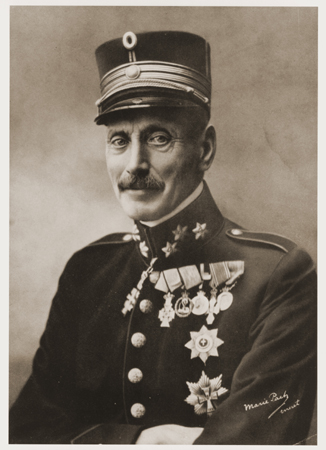
I didn’t know about King Christian and loved the story of how he used to ride out on his horse every morning to greet his people, unguarded,  because “the whole of Denmark” was his bodyguard. In fact there is a picture book about him, The Yellow Star: The Legend of King Christian X of Denmark by Carmen Agra Deedy, which tells how he responded to the Nazi edict that all Jews must wear a yellow star by wearing a yellow star himself – however, this is apparently a blend of fact and legend, as no Danish Jews were ever “forced" to wear the yellow star.


But as the Holocaust Encyclopedia points out, “The legend conveys an important historical truth, however: both the King and the majority of the Danish people stood by their Jewish citizens and were instrumental in saving almost all of them from Nazi persecution and death.”


King Christian X. According to popular legend, King Christian X chose to wear a yellow star in support of the Danish Jews during the Nazi occupation of Denmark. In another version, the Danish people decided to wear a yellow star for the same reason. Both of these stories are fictional. However, the legend conveys an important historical truth: both the King and the Danish people stood by their Jewish citizens and were instrumental in saving the overwhelming majority of them from Nazi persecution and death.
King Christian X of Denmark

Here is a picture of a Danish rescue boat, and a map showing how close Denmark is to Sweden. You can even see film footage of the German presence in Copenhagen.

Have you read it?
Have you read this book? Let me know what you think!

Friday, 19 September 2014

Summer of my German soldier by Bette Greene

Summer of my German soldier by Bette Greene (Puffin Books, 2006; first published The Dial Press, 1973)

ISBN 0 14 240651 1

21 chapters; 230 pages

Subjects: World War Two, United States, Jews, Germans, Prisoners of war, young adult (Year 8-10)


Synopsis
This book  won ALA Notable Book along with New York Times Book of the Year (1973); it was a National Book Award Finalist and was made into a movie in 1978. I read it for the first time for this blog in this Puffin modern classics edition, which makes it yet another modem children's classic that has somehow passed me by until now.  

(From the Puffin page)”When her small hometown in Arkansas becomes the site of a camp housing German prisoners during World War II, 12-year-old Patty Bergen learns what it means to open her heart. Although she's Jewish, she begins to see a prison escapee, Anton, not as a Nazi--but as a lonely, frightened young man with feelings not unlike her own, who understands and appreciates her in a way her parents never will. And Patty is willing to risk losing family, friends--even her freedom--for what has quickly become the most important part of her life. Thoughtful, moving, and hard-hitting, Summer of My German Soldier has become a modern classic.”

There are different covers on different editions. I can’t say I like this cover, though.

Patty (or Patricia Anne) has a wild imagination, wistful daydreams and a huge vocabulary gleaned from reading the dictionary. “I don’t actually mean to be rude, but I am. My father says I ask a lot of questions and then go around contradicting every answer.”

She sometimes seems much younger than 12 and sometimes much older, but I love the way she talks and thinks. And I’m in awe of how the story is told completely from Patty’s point of view, but the author shows us so clearly the things that she doesn’t notice or can’t understand. 

Patty’s mother is distant, her little sister Sharon is too young to provide any support and her father is a tortured soul, but we lose sympathy for him when he is physically abusive. The beatings that he deals out are hard to read about and it’s sad to see Patty’s desperate attempts to win her parents' love and affection, which is so freely given to Sharon. Her family life is made bearable by occasional visits to her grandparents and by Ruth, their cook, who calls her “Honey Babe” and is “the colour of hot chocolate before the marshmallow bleeds in.”

Her life changes the day that Anon Reiker walks into her father’s shop, and the place where she is sent to live at the end would be awful, if not for the fact that her home life is so sad anyway. In some ways, it’s an escape. And she has Anton’s words to hold onto: “Even if you forget everything else I want you to always remember that you are a person of value, and you have a friend who loved you enough to give you his most valued possession.”

Reviews:
This review calls the book "a poignant coming-of-age story about a young Jewish girl from a small town in Arkansas who helps an escaped German POW, an act which changes her life forever." 

Apparently there is a sequel, Morning is a long time coming, but I don’t know if I want to read that. I think I’d rather imagine Patty’s  future for myself.   

Author’s website
(From the back page) “Bette Greene was born in Memphis, Tennessee on June 28, 1934 and grew up in a small town in Arkansas.” That makes her just a bit younger in World War Two than Patty, age 12, living in Jenkinsville Arkansas. “In many ways, Patty Bergen is based on Ms Greene’s childhood experiences as a Jewish girl in the South.”  

You can read more about Bette Green on her website. 

Other books you might like:
So far from the sea by Eve Bunting describes the camps in picture book format. We follow Laura and her little brother Thomas, who are visiting their grandfather's grave in a remote part of the desert. Gradually we learn that their grandparents and their father, as a small boy, were among the thousands of Americans with a Japanese background who were taken to internment camps in World War Two.

Things I didn’t know
I first read about the Japanese interns in So far from the sea, but I had no idea there were so many Prisoner of War camps in America. Like so many other things, it makes sense when you think about it. The German POW camps were in Germany or in German-occupied countries, but for the Allies to set up their own POW camps in England or Europe would use up food and medical resources that they needed for their own troops.

Across the Atlantic, America had masses of food and acres of empty space - and that’s where the POWs went; nearly 425,000 of them, housed in more than 500 camps.  Nearly 23,000 of them – German and Italian – went to Arkansas, where this book is set.

Not many of them escaped, or even tried to. The camps were set in remote locations – and it wasn’t as if they could ever get back home, across the ocean. They had comfortable surroundings and plenty of food; in fact some Americans felt the military was “coddling” them. The camps were closed down after the war and the prisoners were returned to Europe.

You can read more about them here and here.