Showing posts with label World War One. Show all posts

Monday, 23 April 2018

The red poppy by David Hill, illustrated by Fifi Colston

The red poppy by David Hill, illustrated by Fifi Colston (Scholastic, 2012)

Also published in te reo as Te Popi Whero. 

Subjects: World War One, France, poppy, dogs, animals, picture books (Year 3-6)


The Red Poppy (Book and CD)

Synopsis

Jim McLeod is a young soldier like any other, waiting in the trenches as the time of attack draws nearer. Nipper is a stray dog, found in an abandoned French  village, whom the soldiers have trained to act as a messenger dog, carrying messages in a leather bag around his neck (and he was a good rat-killer as well).

The only patch of colour is a cluster of poppies amidst the grey mud. Jim, an "enemy" German soldier and Nipper are about to see their paths meet - and the poppies have a role to play as well.

There's a CD at the back of the book  (and lyrics on the back page) featuring an original song (Little red poppy) written by Canadian musician Rob Kennedy and performed by Giselle Sanderson. (David Hill says in the acknowledgements that the song "started everything off".) Little red poppy has now been sung at commemoration services around the world and you can listen to it here on You tube.

You can also listen to The red poppy on Radio NZ's Treasure chest.

Reviews:
My bestfriends are books interviews David and Fifi about family history, writing this book and what it meant to them. 
Kids' book review calls it "a breathtaking and deeply moving book. It’s about a man, a war, and the basic concepts of humankind. It’s about a dog, an unlikely friendship and the iconic red poppy used to commemorate our fallen". 
You can find teacher notes from Scholastic here. 

About the author:
David Hill is one of New Zealand's best (and best loved) writers for children and young adults. You can read more about him on the NZ Book Council site or the Christchurch City libraries site. 
His other books with a war theme include Enemy camp and Flight path.  (Interestingly, he says in this newspaper interview that he started writing war stories because "it became embarrassing for an "old guy" to try and write contemporary teenage slang ".)

About the illustrator:
Fifi Colston has a great website with this page about her children's book illustration (including The red poppy).  

Other books you might like:
Caesar the Anzac dog and The Anzac puppy are both stories about dogs in World War One.

Links
Dogs were used for many different purposes in World War One (there was even a War Dog School Of Instruction). This article has some interesting facts about "four-legged fighters". 
This one has a picture of a dog wearing a gas mask. 
More pictures and info here and here. 

Have you read it?
Have you read this book? Let me know what you think!

Friday, 14 July 2017

A present from the past by Jennifer Beck; illustrated by Lindy Fisher

A present from the past by Jennifer Beck; illustrated by Lindy Fisher (Scholastic, 2006)

32 pages with colour illustrations

Subjects: World War One, France, Christmas, nurses, women in war, grandparents, family, picture books (Year 1-4)


Synopsis

It’s nearly Christmas time. Emily is waiting with her parents at the airport for her Aunt Mary whom she’s never met before. Aunt Mary has come all the way from England, bringing a special gift: a small oblong parcel, with a note saying “Best wishes from Princess Mary”. Inside, to Emily’s disappointment, is nothing but a small brass box with a damaged lid. But as Aunt Mary tells the story behind the box, Emily comes to realise that it is indeed a precious family heirloom.

These boxes, containing items such as sweets and tobacco, were the idea of Princess Mary, the 17-year-old daughter of King George V and Queen Mary, who wanted to give every serving soldier, sailor and nurse a Christmas present in December 1914 as a personal thank you for their sacrifices and hard work. You can read more about them here and here.

These Christmas boxes make a lovely story on their own, but the box in this book played an even more important role.

Don’t miss the dedication: “In memory of women in wartime”. There is also a fact sheet at the end.

Reviews:
A review on Perfect Picture Book Friday says the book "would be a great resource in History classes enticing conversations about war, troops overseas, and families dealing with loved ones during war time in the past."

There's another review on Momo celebrating time to read (great title for a blog!) 

About the author
You can read an interview with Jennifer Beck on the Christchurch City Libraries website, or learn more about her on the Book Council Writers files. 

About the illustrator
Lindy Fisher is profiled on the Book Council and Storylines sites. She has also had over 75 stamps published by New Zealand Post! You can see some of her artwork on her website.

Other books you might like:
Jennifer Beck is the author of the much-loved picture book The bantam and the soldier. She and Lindy Fisher have worked together on other books, including Stefania’s dancing slippers and Remember that November (about Parihaka).

NZ connections:
When I was researching for my Anzac Day book, I got to see one of these tins. It belonged to Hami Grace, an old boy of Wellington College, and is now held in the College Archives.


Things I didn’t know
I didn’t know that Princess Mary was born on 25 April (1897) – the day that later became Anzac Day! What a lovely connection!

Have you read it?
Have you read this book? Let me know what you think!

Friday, 30 June 2017

War girls: a collection of First World War stories through the eyes of young women

War girls: a collection of First World War stories through the eyes of young women (Andersen Press, 2014)
Nine stories by Theresa Breslin, Melvin Burgess, Berlie Doherty, Anne Fine, Adele Geras, Mary Hooper, Rowena House, Sally Nicholls and Matt Whyman.
259 pages
Subjects: World War One, women in war, short stories, junior fiction (Years 6-10)

Synopsis
The back blurb says that “this collection of short stories explores how the First World War changed and shaped the lives of women for ever… Some of today’s leading writers for young people present moving portraits of loss and grief, and of hope overcoming terrible odds.” (There isn’t any other information inside about how the authors were chosen, and what inspired them in turn to choose their topic.)

Everyone will have their own favourites, but these are the stories:

Shadow and light by Theresa Breslin
Merle, an aspiring artist, and her friend Grace join the British Red Cross to drive ambulances for the Scottish Women’s Hospital for Foreign Service – staffed entirely (doctors, nurses, cooks and ambulance drivers) by women. She has some spiky run-ins with a golden-haired English captain who doesn’t realise she can understand his comments in French about women in war. Together they get caught up in the middle of the German advance near Albert.

Ghost story by Matt Whyman
Some Allied soldiers said they came under fire from female Turkish snipers at Gallipoli – could that be true?

Storm in a teacup by Mary Hooper
16 year old Harriet isn’t old enough to be a nurse and doesn’t want to work in a factory, so she gets a job as a waitress at the Lyons’ Corner House on the Strand in London and stumbles across a spy ring. This seemed a little far-fetched, but I liked the setting because my mother lived in London as a young woman and always had a soft spot for Lyons’ Corner Houses.

The marshalling of Angelique’s geese by Rowena House
Angelique is 14 and lives in a French village; her father has just been killed and her brother is away at the war as well.  She goes on a long and adventurous journey (with the geese!) trying to raise money to pay off her father’s debts. Her journey is also linked to the spread of Spanish flu – or one theory about its possible origins.

Mother and Mrs Everington by Melvin Burgess
Effie’s brother Robbie signs up underage and comes back with shellshock. She learns to drive and forges a letter so she can get to France as a nurse and driver, thinking he is just a weakling, but then finds out for herself - in an unexpected way - how terrible it is to be caught under shellfire.

Sky dancer by Berlie Doherty
Kate’s young man Fred joins the Royal Flying Corps and goes to France. Obviously that’s not going to end well (and it doesn’t). Kate wants to follow him - “just to breathe the air that Fred breathed” - and, despite her shyness, signs up for a concert party to entertain the troops. I found this to be an unusual, sad and memorable story.

Piercing the veil by Anne Fine
During the war, there was increased interest in spiritualism as people (especially mothers) tried to get in contact with the dead - but Alice’s father is a minister and doesn’t believe in such things.  

The green behind the glass by Adele Geras
Sarah and her sister, a fiancé and a forbidden love and a ghostly warning.

Going spare by Sally Nicholls
Set in 1977; the 14 year old narrator finds out from Miss Frobisher upstairs about what life was like (quite exciting, in her case) for the "leftover women" who never married after WW1.

Reviews:
The review in the Guardian says: “War Girls is like no other WW1 fiction I have read before. It does not focus on the trenches, the tragic battle of the Somme nor the brave men who fought. The book combines a mixture of exceptionally written, heart-wrenching short stories into a book about the lives of the women left behind.”
The Bookbag says it is an “utterly engrossing” anthology with “not a weak story among them”.  
About the authors
Author biographies at the end tell you a bit about each author.
Some interesting backstory here by Theresa Breslin about the writing of her contribution.
Other books you might like:
Other books by Theresa Breslin that I have reviewed on this blog are Ghost soldier and Remembrance. Another  good short story collection is The Great War: stories inspired by objects from the First World War, which also has a piece by Adele Geras. 
New Zealand connections:
The NZ soldiers get mentioned among the others at the training camp at Etaples that Angelique is travelling to - that's the only reference I spotted! 
Have you read it?
Have you read this book? Let me know what you think!

Friday, 2 June 2017

From Billabong to London by Mary Grant Bruce

From Billabong to London by Mary Grant Bruce (London: Ward Lock, 1915)

About 320 pages with a few full page illustrations

Subjects: World War One, Australia, England, London, ships, family, junior fiction (Year 8-10)


Synopsis
I had to borrow this book from the Dorothy Neal White collection at the National Library, and it’s the earliest book that I’ve yet reviewed. It’s number 4 of the 15 books that make up the Billabong series; others include Jim and Wally and Captain Jim (1916 & 1919).

Billabong is the house and the station, 2 miles from the nearest road and 17 miles from the nearest town. No other home is visible, “only peaceful paddocks”. The main characters are gradually introduced, but readers of the series would already know them: David Linton, the widowed station owner, and his children Jim (19) and Norah (nearly 15); their friend Wally (17); Mrs Brown, the housekeeper; the station hands, and Black Billy, the “native boy”.

The first quarter of the book is taken up with station life: a tame wallaby, snakes, a bullock stuck in a swamp, breaking in a new colt, as shown on the cover. But two topics overshadow everyone’s thoughts: the drought, and the war in Europe. Many of the local young men have already signed up. Wally (who is still underage) and Jim are desperate to go as well. A fortuitous inheritance calls Mr Linton “Home” to deal with the paperwork in England, and the decision is made that they will all go – Jim and Wally, so they can sign up there, and Norah so she’s not left on her own.

By pg. 91, they are on board the Perseus in some degree of comfort, about to leave from Port Melbourne. Their 6-week journey takes them via Adelaide and across the Indian Ocean to Durban, Cape Town, then Las Palmas to arrive in Falmouth, Cornwall, from where they take a train to London. Ordinary shipboard pursuits such as deck quoits, boat drill, whale and porpoise spotting and listening to the Captain’s gramophone life are enlivened by the capture of a German spy (not really a spoiler as it’s so heavily foreshadowed), an alarming passage through the fog and their own capture by a German warship. Not surprisingly, they are rescued in time and make it to England safely.

This is a well-written story with lively dialogue and warm family relationships, but reading it 100 years after publication, it’s hard to overlook the book’s treatment of Aboriginal and black South African characters. The Zulus are viewed either as picturesque rickshaw-pullers, or as dangerous robbers. The Aboriginal people are dismissed as “useless, shifty, lazy” and “thieving”. Black Billy is ridiculed for his use of English, rather than admired for having learnt another language, and there is no acknowledgment of the original inhabitants of the land. The writing is of course a product of its time, but the attitudes jar today.

Reviews:
Here you can read a contemporary review from the Port Fairy Gazette of 15 October 1915, which compares Norah’s stories to that of Little Women in their widespread appeal.

About the author
Mary Grant Bruce (1878-1958) worked as a journalist after leaving school and started the Billabong stories as a newspaper serial; she became a best-selling and much loved Australian children’s author. In WW2 she wrote patriotic talks and sold her autographs at charity auctions for the war effort.

Here's my favourite part of her bio from the official website: “Mary began writing when she was six and, from age 16, she entered and won the annual examinations of the Melbourne Shakespeare Society three times in a row whilst still a schoolgirl.”

You can read more about her here in the Australian Dictionary of Biography, which says that she was known as Minnie but "Mary" was thought to be a "more marketable" name. It also points out that "Australians, and not only children, looking at Billabong, could see themselves as they wanted to be - mates in fortune and adversity, sturdy, decent and fearless inheritors of a tough, but rewarding land."

About the illustrator
The Port Fairy Gazette review above credits them to Fred Leist, “an Australian artist now in London”.

Other books you might like:
The Belgian twins by Lucy Fitch Perkins (1917) and Rilla of Ingleside by L.M. Montgomery (1921) are two other books written during or just after WW1.

New Zealand connections:
Does NZ get a mention? Possibly not - anyway, I didn't spot any!

Have you read it?
Have you read this book? Let me know what you think!

Sunday, 2 April 2017

A day to remember: the story of Anzac Day by Jackie French, illustrated by Mark Wilson

A day to remember: the story of Anzac Day by Jackie French, illustrated by Mark Wilson (Angus & Robertson, 2012)

32 pages with Mark Wilson’s colour and black and white illustrations

Subjects: World War One, Gallipoli, World War Two, Korean War, Vietnam War, protest movement, Anzac Day, picture books, non fiction (Year 5-8)


Synopsis
This book tells the story of Anzac Day by tying the date of 25 April to specific events in particular years, starting with the first landings at Gallipoli on 25 April 1915. The first Anzac Day parades and services are held in 1916; in 1918, the war still continues, but it is over by 25 April 1919. In the late 1920s, the tradition of the dawn service begins; in the 1930s, many returned soldiers are suffering through the Depression. Anzac Day continues to be marked through World War Two, the Korean War and the protest years of the Vietnam War.

The book continues up to the present day through Australian involvement (again often controversial) in other wars, such as in Iraq and Afghanistan, and traces the increased interest in visiting Gallipoli for the dawn service at Anzac Cove.

Teacher’s notes include Jackie French talking about her inspiration for the book, and Mark Wilson talking about his technique and how he interpreted his task. The figures on the cover are his son and granddaughter – how lovely is that?

Reviews:
Kids Book Review recommends it highly, saying that "You know a book by Jackie French is going to be researched to the nth degree, and presented with clarity, emotion and fascination - and A Day to Remember is no exception."

The never-ending bookshelf says is it is a picture book that adults would enjoy and learn from as well; "What I found particularly interesting with this book was the way that Jackie French focused on the concept and meaning of Anzac day through various generations and the way that it was developed, shaped and then lessened in meaning before reaching height again today." This reviewer suggests it is not for young children under 8, "as it is very heavy on the history and less narrative based". 


Author’s website
Jackie French is an amazing writer with a brilliant website which features a page on this book. Her other war-related books include The beach they Called Gallipoli, Pennies for Hitler and A rose for the Anzac boys.

Illustrator’s website

NZ connections:
Are we mentioned? Yes, often (thanks, Jackie French!) Sometimes the New Zealanders are left out of (Australian) books on Anzac, so it’s good to see their contribution recognised.

I also appreciated seeing the Aboriginal and Torres Strait Islander soldiers acknowledged, men who “fought long ago in the service of a land where many were not even allowed to vote”.

Have you read it?
Have you read this book? Let me know what you think!

Wednesday, 16 November 2016

Canadian books about war

I’ve had these titles on my list-of-books-to-read for some time, but they are proving hard to get hold of in local libraries – so I’ve decided to put them together in a quick summary.

These books set in WW1 can be found under Teacher resources – Book Lists on the Canadian War Museum site. I haven’t included all the books on these lists, which are very comprehensive. Many are also available in French language editions.

Picture books

A brave soldier by Nicholas Debon (Groundwood, 2002)
Frank enlists in 1914 and travels from Canada to the trenches in Northern France. You can see some colour spreads here. 


Silver threads by Marsha Forchuk Skrypuch, illustrated by Michael Martchenko (Fitzhenry  & Whiteside, 2004). 
Ivan, a recent Ukrainian immigrant, is interned as an enemy alien, while his young wife Anna waits for his return, hoping that the spider in their cottage is a good omen

A poppy is to remember by Heather Patterson, illustrated by Ron Lightburn (Scholastic, 2004)
Tells the story behind the poppy as a symbol of remembrance.

Chapter books and novels

And in the morning by John Wilson (Kids Can Press, 2002)
Told in diary form by 16-year-old, Jim, who goes to war after his father is killed in battle. 

Brothers far from home: the WWI diary of Eliza Bates, Uxbridge, Ontario 1916 by Jean Little (Scholastic, 2003)
Eliza waits at home, hoping that her brothers Hugo and Jack will come back safely.

Charlie Wilcox and Charlie Wilcox’s Great War by Sharon E. McKay (Stoddart Kids, 2000 and Penguin, 2003)
Charlie, aged 14, from Newfoundland, stows away and send up as a stretcher bearer on the Somme

Escape! by John Reid (Fernwood Books, 2004)
Based on the true story of Leon Trotsky’s imprisonment in Nova Scotia during WW1 (I didn’t know that!!! But look, it’s true – in his own words)

Irish chain by Barbara Haworth-Attard  (Harper Collins Canada, 2004)
The story of the 1917 Halifax explosion when a ship carrying munitions collided with another ship – something else I didn’t know much about. More than 1800 people were killed, and thousands more wounded, and the noise of the explosion was heard hundreds of miles away – an astonishing (and terrible) story.

A kind of courage by Colleen Heffernan (Orca, 2005)
Hattie’s brother is away fighting, and her father hires a conscientious objector to help on the farm.

Lesia’s dream by Laura Langston (2005)
Another story about Ukrainain immigrants (some of whom are then classed as enemy aliens) focusing on Lesia and her family.

No safe harbour: the Halifax explosion diary of Charlotte Blackburn, Halifax, Nova Scotia, 1917 by Julie Lawson (Scholastic, 2006)
The diary of 12 year old Charlotte, who ends up in hospital after the Halifax explosion.
Interestingly, there is also a NZ children’s book by David Hill titled No safe harbour, about the sinking of the Wahine.

The star supper: Book Three (our Canadian girl) by Troon Harrison (Penguin, 2006)
How Millie makes a happy Christmas, despite her father being away at war, by befriending the family of interned enemy aliens.

It's interesting to see the different themes and preoccupations that come through, including enemy aliens and the Halifax explosion. 

Other books that I have reviewed, written or set in Canada, include:
Linda Granfield’s Where poppies grow 
Rilla of Ingleside by L.M. (Lucy Maud) Montgomery
Uprooted: a Canadian war story by Lynne Reid Banks

Other Canadian authors are Eleanor Cooer (Sadako) and Iain Lawrence (Lord of the nutcracker men)  

Sunday, 6 November 2016

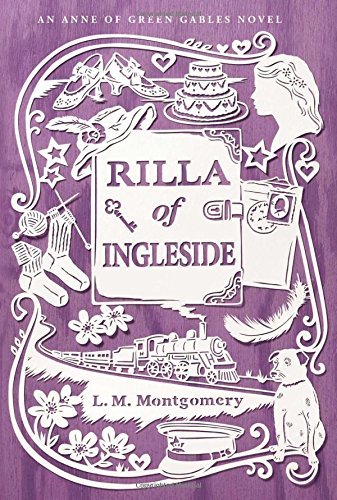
Rilla of Ingleside by L.M. Montgomery

Rilla of Ingleside by L.M. (Lucy Maud) Montgomery (An Anne of Green Gables novel; first published 1921; this Aladdin edition 2015)

35 chapters; 440 pages

Subjects: World War One, Canada, family, women in war, young adult (Year 7-10)

Image result for Rilla of Ingleside by L.M. (Lucy Maud) Montgomery (An Anne of Green Gables, novel; first published 1921; this Aladdin edition 2015)

(The cover of this new edition refers to different elements of the story, like Dog Monday, knitting socks, wedding cakes, the green hat, trains and letters.)

Synopsis
This is the 8th of 9 books (chronologically) in the Anne of Green Gables series, although the 6th to be written. I’d only read the first book in the series before, so I was confused initially as to who were all these people – but I kept reading and hoped it would come clear (it mostly did).

The book focuses on Marilla (“Rilla”) Blythe, Anne and Gilbert’s youngest daughter and the baby of the family. She is desperate to be seen as old enough to go to parties (and not treated as a child), but the years of light-hearted fun she dreams of vanish as World War One gets underway. We see Rilla grow in maturity as she takes on the organisation of the Junior Red Cross and responsibility for a war baby (carried home in a soup tureen), watches her brothers and many other friends go off to war and supports her mother in her grief.

It’s made very clear the pressure that boys were under to enlist – from themselves, their friends and society in general. The agony that every family went through with the news of battles fought, won or lost, is portrayed with complete authenticity, mixed with some humour to make it bearable.  “To me,” Rilla writes in her diary, “the strangest of all the strange things since 1914 is how we have all learned to accept things we never thought we could – to go on with life as a matter of course.”

The Canadian experience of WW1 was in some ways so similar to the NZ experience, but in other ways quite different, so it’s always interesting to read stories told from their perspective – for example, the references to the Gallipoli campaign.

The LM Montgomery Online site says that this is “one of the only contemporary depictions in Canadian fiction of women on the home front during the First World War.” 

Rilla of Ingleside is dedicated to the memory of Frederica Campbell MacFarlane, Maud’s friend and cousin who died in the flu epidemic in 1919. 

About the author
Everything you want to know about Lucy Maud Montgomery, much loved Canadian author (1874-1942) is here.

Some things I didn’t know about her:
  • her mother died of TB when she was 21 months old
  • she grew up with her grandparents
  • she was one of the few women of her time to study at university
  • when her manuscript of Anne of Green Gables was rejected by several publishers, she put it away in a hat box before trying again in 1907 (when it was accepted, published in 1908 and became an immediate bestseller)
  • she was secretly engaged for five years before getting married in 1911
  • she had three sons, but one was still-born
  • she left Prince Edward Island after her marriage, but nearly all (19 out of 20) of her novels are set there. 

I love some of her very delicious and funny lines:
- “I am done with crying which is a waste of time and discourages everybody.” (Susan, the housekeeper)
- (When their own horses aren’t available, and Rilla has to ride a very old one that keeps stopping every few yards) “Rilla felt that this, coupled with the fact that the Germans were only fifty miles from Paris, was hardly to be endured.”
- (Rilla talking about Fred Arnold, who is a very nice young man and “would be quite handsome if it were not for his nose”): “When he talks of commonplace things it does not matter so much, but when he talks of poetry and ideals the contrast between his nose and his conversation is too much for me and I want to shriek with laughter.”

Other books you might like:
Uprooted: a Canadian war story by Lynne Reid Banks tells the story of evacuees in WW2.
Where poppies grow: a World War I companion by Linda Granfield is a non-fiction book about WW1 from the Canadian perspective.

Have you read it?
Have you read this book? Let me know what you think!

Monday, 3 October 2016

Anzac biscuits by Phil Cummings

Anzac biscuits by Phil Cummings, illustrated by Owen Swan (Scholastic, 2013)

32 pages with full page illustrations

Subjects: World War One, Australia, family, food, picture books (Year 1-3)

Synopsis
This book seems to be set during World War One but that is never actually stated, although there are clues (barbed wire, choking smells, snow, trenches suggest Europe; the “smell of burning red gum” suggests Australia).

The story, told in very few words, alternates between Rachel and her mother baking biscuits in their cosy farmhouse, and Rachel’s father alone on the battlefield, tramping through the mud and sheltering from the weather and the gunfire. The colours alternate between warm colours and colder hues, but the two worlds are linked by mirrored words, images and actions and by a framed photograph of her father on the farmhouse wall.  

I’ve said “alone” because the soldier is completely alone in almost every scene (in one spread, he is trudging behind two other men, but we can’t see their faces.) It feels odd and unusual to have a battlefield shown as being so empty, but it does underline his loneliness and separation from his family. 

On the final page, the biscuits have found their way to Rachel’s father on the other side of the world. The back page blurb says: “This is a touching story of a family torn apart by war but brought together through the powerful simplicity of ANZAC biscuits.”

At first reading, I found it a bit disconcerting that Rachel and her mother could be singing, dancing and laughing. But actually I think that is a good message: that you can miss someone, but you don’t have to be miserable all the time, or feel guilty about having happy moments. (I think that’s why the empty battlefield bothered me, because many soldiers did find companionship with their mates).

Reviews:                                                         
My little bookcase calls it “a tender story of war” that “shows the private moments of families who are left behind to worry about their fathers, brothers, uncles and sons.”

Kids’ book review says it offers a gentle narrative that isn’t too scary or confronting.

Aussie reviews calls it "a lovely tale, and a beautiful way of introducing both the subject of war and the history of Anzac biscuits".

Questions:                                               
“The soldier bravely lifted his head to peer across the fields.” I’m still wondering about this line - is he brave or not? Shouldn’t he be keeping his head down?

About the author
You can see Phil Cummings' website here. You can also watch him talk about Anzac biscuits and his inspiration or the book. 

About the illustrator
You can read about Owen Swan and some of the other books he has illustrated here. 

Other books you might like
The Anzac puppy by Peter Millett is another non-confrontational book about war for this age group.

Have you read it?                          
Have you read this book? Let me know what you think!