Wednesday, 11 March 2015

An unexpected hero: questions and answers

An unexpected hero by L. P. Hansen : questions and answers

After reading this book, I contacted Linda Hansen to ask if she would mind answering some questions about the process of writing it. I liked the way she showed us Matt grappling with his problems and working out how to solve them for himself, and the way in which she has interwoven the two stories (Archie's and Matt's) and shown the themes connecting them, as well as building up a real sense of tension as the climax of the book approaches.


So thanks to Linda for agreeing, and here are her replies!

  • In the teaching notes, you say that you wrote this book because "New Zealanders hear so little about pacifism, yet Archie Baxter and other New Zealand conscientious objectors are celebrated worldwide".  How did the idea for the book sprout?
I work as a Storyteller and a couple of years ago, was developing a story to tell at the Storyteller’s CafĂ© in Wellington around ANZAC Day.  I decided to test my theory that not many adults knew about James K Baxter’s father, Archie.  So I told his story in the form of a mystery, not identifying the Hero, much as Matt does in my book.

Only one person in the audience was able to name him.

After that I felt that it was time New Zealand children had an example of a genuine Kiwi alternative to the seeming ‘inevitability’ of war, especially at this time when war publicity is at its height. 

  • Did you know much about Archie Baxter beforehand? How did you go about finding out what else you needed to know?
    I hadn't known about Archie Baxter until my middle years, and certainly never heard of him during my formal education.  I read his book ‘We Shall Not Cease’ around twelve years ago and was very moved… found it particularly poignant to be teaching at the N.Z. International Campus at Trentham around that time, right next to where he was tortured and imprisoned. 

    I’ve been a writer and researcher all my working life, so found my material ‘by all possible means’, as researchers do.

  • You're a storyteller as well as a writer. How do the two roles interact with each other?
      Writing is a gift to my storytelling and it works the other way around as well.  I write all of my stories myself, even if they are adapted from another source.  I also write them down, as this gets them into my long-term memory.  Then I speak them aloud and find where sentences are clumsy, spaces are needed, sounds collide and so on.  It’s a lovely process. 

  • Can you tell us about the process of publishing the book? CreateBooks has several other books that deal with the topic of bullying, is that coincidental?
      I did submit the manuscript to several New Zealand publishers according to their requirements – a sample chapter, a Synopsis and so on.  It was No thanks or nothing from them, even after promises to get back to me with two months. Only Scholastic Australia, no longer in New Zealand, replied with a very encouraging response.

      Ann Neville of CreateBooks Publishing validated my original feeling, as she had only just learned about Archie Baxter herself when my offer and Synopsis arrived. She immediately asked for the full M/S and within a day or two, accepted it virtually without alteration.  I didn’t then know about the company’s other books, so the Bullying theme was coincidental.

  • Do you want to tell us anything about the process of writing this book - or about the next novel you're working on?
      I tend to write to a topic first and build up the characters and settings later.  Although I already feel I know the characters and their situations well before I begin, it takes time to make them real to readers.

    Being a life-long writer, I am very ‘picky’ about writing clearly.  Lots of adjectives and adverbs might go in but they don’t last long.

   My next novel is currently out for review with some teenage critics.  Perhaps it will be controversial, perhaps not. 
The main character is a hobby photographer in her sixteenth year.

It’s her journey through some current real-life issues that inspire her into courageous actions, resulting in the police visiting her college. She’s a bold, spirited young hero, we need more of them!


An unexpected hero by L.P. Hansen

An unexpected hero by L.P. Hansen (CreateBooks, 2014)

ISBN 978-0-9941102-7-5

12 chapters; 145 pages

Subjects: World War One, New Zealand, conscientious objectors, pacifism, Archibald Baxter, schools, bullying, farms, junior fiction (Year 5-8)


Synopsis
Matt Turner, 12 years old, faces a move from the big city to the country for family reasons. Instead of living with his parents, he has to stay on the farm with his grandparents and attend the same small country school where his father once went.

First chapters can be tricky when then there is a lot of information to get across, but Linda Hansen’s opening chapter does a fine job of introducing Matt, his grandparents and the farm, explaining why he is there, showing us how difficult it can be for kids on that first day at a new school and hinting at some of the major themes to follow (local war history and Matt’s struggles with public speaking).  

At Matt’s new school, the annual Year 8 farewell speeches are a big community event, and he has arrived in time to be a part of it. Matt’s family has never made a big deal about war, so he doesn’t know who to choose for his “war hero”. Even worse, he hates speaking in public (a fact that his grandparents don’t know about him) and is terrified that he will stutter, blush and totally mess up.

The book follows Matt’s journey both in thinking about the nature of heroism and in taking steps towards a victory of his own. I liked the way that the author shows us Matt struggling with both of these issues, and getting help from other people, but ultimately finding a way towards his own resolution of them.

Reviews:
Bobs book blog (always an excellent resource) gives the book a very good review and calls it “an excellent short novel …for primary and intermediate children and a timely reminder that it takes courage to refuse to fight

Free Teachers’ Resource kits are available from the publisher here.

Questions:
Who would you choose as your war time hero?
(I’m currently taking my first ever MOOC (Massive Open Online) course on “Changing faces of heroism”,  and this is one of the first questions we were asked.)

About the author
Linda Hansen is both a storyteller and a writer. In 2012, she won the Jack Lasenby Children’s Writing Award for ‘Socks in the Library,’ a story about homelessness.

Linda developed her writing skills by working in places like Radio New Zealand and then in Parliament where, as the deputy director of one of the Research Units, she researched and wrote for politicians. During her time at Volunteer Service Abroad, she learned about countries where the volunteers worked and wrote handbooks about them.

Other books you might like:
Other books that deal with the topic of pacifism are Evan’s Gallipoli by Kerry Greenwood, Remembrance by Theresa Breslin and My brother’s war by David Hill. 

Things I didn’t know
I did know something about Archibald Baxter and I‘ve read his classic memoir We will not cease, but I didn't know anything about the developments in the country that Matt uses for the basis of his speech. I don’t want to spoil the plot but it is worth searching online for the idea of “changing rifles into notebooks”.

Links
You can find more info about Archibald Baxter on Te ara, NZ history or the site Lest we forget – "remembering peacemakers on Anzac Day".

Have you read it?
Have you read this book? Let me know what you think!

Wednesday, 4 March 2015

Number the stars by Lois Lowry

Number the stars by Lois Lowry (Houghton Mifflin Co., 1989)

ISBN 0 395 51060 0

17 chapters; 137 pages

Subjects: World War Two, Denmark, Sweden, Jews, Resistance, Occupation, courage, friendship, junior fiction (Year 6-8)


Synopsis
This is not a long book, but it is simply but powerfully told and won the Newbery Award. I am going to quote from the book jacket itself, because it provides the perfect intro:

“’How brave are you, little Annemarie?’ Uncle Henrik asks his ten-year-old niece. It is 1943, and to Annemarie Johansen, life in Copenhagen is a complicated mix of ordinary home and school life, food shortages, and the constant presence of Nazi soldiers. Bravery seems a vague virtue, one possessed by dragon-slaying knights in the bedtime stories she tells her younger sister, Kirsti. Too soon, she herself is called upon for courage.

As the German troops begin their campaign to "relocate" all the Jews of Denmark, the Johansens take in Annemarie's best friend, Ellen Rosen, and pretend she is part of the family. Ellen and Annemarie must think quickly when three Nazi officers arrive late one night and question why Ellen is not blond, like her sisters.

Through Annemarie's eyes, we see the Danish Resistance as they manage to smuggle almost the entire Jewish population, nearly 7000 people, across the sea to Sweden. In this tale of an entire nation's heroism, Lois Lowry reminds us that there is pride and human decency in the world even during a time of terror and war.”

Lois Lowry has written an Afterword in response to the question “How much of Annemarie’s story is true?”

Reviews:
There are lots of study guides available online. The  Scholastic page has extra teaching resources including extension guides and writing prompts.

The book also features on the prestigious Kirkus reviews which calls it a "deftly told story that dramatizes how Danes appointed themselves bodyguards--not only for their king, who was in the habit of riding alone in Copenhagen, but for their Jews."

Questions:
Where does the title come from? (Hint: Look in the chapter titled “Let us open the casket”.) What do you think it means?

Author’s website
Lois Lowry’s website starts on a cheery, welcoming note: “Hi! I wish I could invite you into my kitchen for a cup of tea and we could chat. That's not possible. But please... join me here, at the website. It's the next best thing.”

It contains her biography with lots of family photos and interesting facts, FAQs, speeches, videos and even a quiz. Lois Lowry was born in Hawaii, went to school in America and Japan, got married at 19 and had four children. She writes that her older son was a fighter pilot in the US Air Force. “His death in the cockpit of a warplane left a little girl fatherless and tore away a piece of my world. But it left me, too, with a wish to honor him by joining the many others trying to find a way to end conflict on this very fragile earth.”

I also liked this paragraph:
“My books have varied in content and style. Yet it seems that all of them deal, essentially, with the same general theme: the importance of human connections. summer to diemy first book, was a highly fictionalized retelling of the early death of my sister, and of the effect of such a loss on a family. Number the starsset in a different culture and era, tells the same story: that of the role that we humans play in the lives of our fellow beings.”

Other books you might like:
Claire Huchet Bishop’s Twenty and ten, set in France, also shows how courage and friendship can help to save those whose lives are in danger, as does Hero on a bicycle by Shirley Hughes (set in Italy).

In I am David, Denmark is the country that David is told to head to. In my post on that book, I talk about how it isn't a WW2 story at all, but I still like the connection. 

Things I didn’t know
I didn't know anything about the Danish Resistance (Denmark surrendered to Germany in 1940).  I had no idea that over 7,000 Danish Jews - almost all of the country's Jewish population - were taken across to safety in Sweden.

I didn’t know about King Christian and loved the story of how he used to ride out on his horse every morning to greet his people, unguarded,  because “the whole of Denmark” was his bodyguard. In fact there is a picture book about him, The Yellow Star: The Legend of King Christian X of Denmark by Carmen Agra Deedy, which tells how he responded to the Nazi edict that all Jews must wear a yellow star by wearing a yellow star himself – however, this is apparently a blend of fact and legend, as no Danish Jews were ever “forced" to wear the yellow star.


But as the Holocaust Encyclopedia points out, “The legend conveys an important historical truth, however: both the King and the majority of the Danish people stood by their Jewish citizens and were instrumental in saving almost all of them from Nazi persecution and death.”


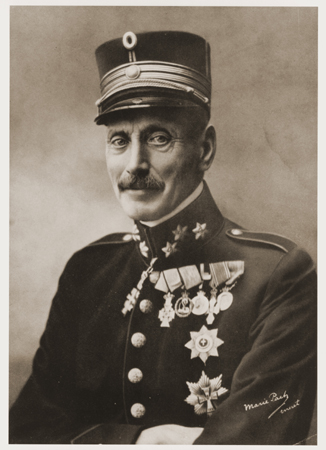
King Christian X. According to popular legend, King Christian X chose to wear a yellow star in support of the Danish Jews during the Nazi occupation of Denmark. In another version, the Danish people decided to wear a yellow star for the same reason. Both of these stories are fictional. However, the legend conveys an important historical truth: both the King and the Danish people stood by their Jewish citizens and were instrumental in saving the overwhelming majority of them from Nazi persecution and death.
King Christian X of Denmark

Here is a picture of a Danish rescue boat, and a map showing how close Denmark is to Sweden. You can even see film footage of the German presence in Copenhagen.

Have you read it?
Have you read this book? Let me know what you think!

Monday, 23 February 2015

War: a children's book by Zachary Gallant

War: a children's book by Zachary Gallant; illustrated by Jenna Frome


This is not a usual review as this book isn't in the shops, or even published yet in traditional form, but you can read the full text online here

Zachary contacted me via this blog to describe his vision for this book and  the Kickstarter programme that he and Jenna have organised to try and get their project "up and running".  


The Kick-starter page describes it as "A beautifully illustrated rhyming book explaining to children the root causes of war, and their role in preventing future wars". It includes details of how the project came about (under Story), lists of rewards for pledges and more info about Zachary and Jenna


You can also read an interview with Zachary on the NonProphet Status blog here (and there's an address at the end if you want to tweet questions to him.) 


Many of the books I've reviewed on my blog are novels set in war time, but there are a few (for example, The general by Janet Charters, illustrated by Michael Foreman) that take a more general, perhaps allegorical look at why wars start, and Zachary's book is more like that. There's a very thoughtful response to it on this blog, which talks about how difficult it can be for children at various ages to grasp abstract concepts, and asks how children might relate to the text, and Zachary says on the Kickstarter page that they are still working with teachers and psychologists to improve the text's readability and rhymes.   


I especially liked Zachary's reply to the question asking what he would like his own child to learn from the book: 

My decision to start this project really came from the knowledge that I was having a kid. After about four years of rolling the question of how to explain war to a kid around in my head, the whole context changed when it became personal: How will I explain war, the subject in which I’ve immersed myself for most of my short professional life, to my own child when he asks?


What I really want my son to learn from this book is the value of empathy and of critical thinking. I want him to learn that he has no true eternal enemies, and that there are no innately bad people, and certainly no such thing as an entirely evil religion or country or ethnicity or race.


Update: Zachary has emailed me to say that the book is now available here. He is currently working with German and Kurdish translators and a Tunisian illustrator to put out a second edition framing the story within the refugee crisis.


Saturday, 14 February 2015

When the guns fall silent by James Riordan

When the guns fall silent by James Riordan (OUP, 2000)

ISBN 978-0-19-273570-6

25 chapters; 157 pages

Subjects: World War One, France, football, Christmas, truce, trenches, deserters, young adult fiction (Year 9-11)


Synopsis
Jack and Harry, friends and keen footballers, go off to fight in WW1. The football game played in the Christmas truce of 1914 (the time “when the guns fall silent”, in the title) only takes up two or three chapters at the end, although there is more about football at the beginning as well. This main narrative is framed by the story of 12-year-old Perry, visiting the WW1 graves in France in 1964 with his grandfather (the older Jack.)

I don’t think I would give this to a child as their first book about WW1. The descriptions of death and battle are very graphic, possibly nightmare-inducing; they include references to firing squads, suicide, mercy killings, rumoured German atrocities and horrible injuries.
    
Parts of the dialogue are written in dialect, which can be hard to read aloud. The depiction of the officers is almost invariably critical. They are all “chinless wonders from Winchester”, apart from one poet-officer who is killed leading his men into battle; the rest of them are chateau generals who enjoy fancy food behind the lines and face no personal danger.

Some of the story is told in letters which would have been unlikely to get past the censors, but no reference is made to the issue of censorship (which is part of the war story, after all).  However I did like the inclusion of the poems, chants and songs at the start of many of the chapters, especially one I didn’t know before called “Achtung! Achtung!” by Mary Hacker.

The book was first published in 2000 but has been recently re-released for the centenary of the beginning of WW1 in 2014.

Reviews: 
The Bookbag calls it “a moving story which fully captures the horrors of war, and doesn't shy away from being fairly graphic in its telling of them.” Their reviewer also notes the puzzle of which age group to recommend it to: "I think thoughtful younger readers will get a huge amount out of it, but I know many parents and guardians will want to be warned of those things. Teens may initially be surprised by its short length, but it packs a lot into its relatively few pages."

Scribbles book review makes the same point (“A hard-hitting, graphic and, at times, upsetting account of soldiers on the front line during the First World War”), and draws an interesting comparison about the difference between graphic violence in fantasy or sci fi and in war books.

And finally, there's one more review here in Thoughts about Books

Author’s website
James Riordan died in 2012, aged 75, and you can read an obituary for him in the Guardian.  He certainly led an interesting life, which included joining the Communist Party of Great Britain in 1959 and going to live in Russia for many years; he was a keen footballer and football supporter and became the only foreigner to play in the Soviet football league.  

Jim Riordan was the only westerner to play in the Soviet football league
James Riordan (Photograph: BBC)
About the illustrator
Caroline Tomlinson did the cover and typography and you can read about her method of working here.

Other books you might like:
War game by Michael Foreman tells the story of a football game played between opposing sides during a temporary truce. Look at my blog posting on that book for more details about Christmas and other truces that took place during the First World War. 

Truce : the day the soldiers stopped fighting by Jim Murphy is a non fiction book on the same topic.

Or you can read more about the Christmas truce on the BBC Sport website here.

Valentine Joe by Rebecca Stevens also uses the device of a child visiting the war graves with a grandfather to frame the story.  

Things I didn’t know:
  • That the English national anthem God save the King (back then) was based on a German tune, and the Germans sang a hymn Heil Dir im Siegesktanz to the same tune in the trenches.
  • That the English Government banned all “alien” music, which included Mendelsohn’s Wedding march. (So I suppose you couldn't have it played at your wedding!) 
  • That in England during WW1, German shepherd dogs were renamed Alsatians.
Have you read it?
Have you read this book? Let me know what you think!

Sunday, 8 February 2015

A child's war: questions and answers

Mary Skarott is Research Librarian, Children’s Literature at the National Library. Recently she has curated an exhibition called "A child's war", which explores how children in New Zealand were affected by the Great War (or World War One.) 

The exhibition runs until 27 February, so if you are in Wellington, do try and see it. You can read more about it here, and Mary has also written a fascinating blog post about the effect of WW1 on school prizes. 

I asked Mary if she would answer some questions for me about her experience of putting the exhibition together, and I'm so glad she agreed because what she has to say is so interesting, especially her ideas about how writing about war for children has changed over the years. I'm looking forward to tracking down some of the books she mentions. 

Covers of three books from the children's collections: A child's history of ANZAC; Munition Mary; and the Boy Allies on the North Sea Patrol.
L-R: A child's history of ANZACMunition MaryThe boy allies on the North Sea patrol
                
  • A child's war contains a wide variety of material (and even an opportunity for people to sit and do a spot of knitting!) How did you decide what to put in the exhibition?
There are two main components to the exhibition: the books that children read during wartime (focusing on those that are actually about WWI), and an examination of how children in New Zealand were affected by and involved in the war, both at school and at home. It is very interesting to see how these two aspects intertwine: the content of the books is very much a reflection of the patriotic fervour of the time.

Part of my job is to look after the Dorothy Neal White Collection of pre-1940 children’s books, so I knew that there was a wealth of material there to choose from, although narrowing it down to 16 books in display cases and 9 cover images on the wall was certainly a difficult task. It was a matter of balancing interesting written content with visual appeal. Some really interesting books had to be discounted purely for aesthetic reasons. I particularly wanted visitors to be able to see inside the books, so many of them are displayed open. I also wanted to include material that was marketed for both boys and girls. The book cover images include some striking examples of the use of persuasive imagery.

It was the other component of the exhibition that I found the more challenging in terms of selecting material. After a lot of searching to identify potential items in the collections and a lot of background reading some clear topics began to stand out for me. I decided to select case items and images to go with four subjects that I felt would effectively illustrate what children experienced during the war: military cadets, patriotism in schools, fundraising and warwork, and the impact on family life. Again, it was a matter of balancing text and images.  

Large format photographs are a key part of this section, and visitors have said how much they enjoy seeing the detail in them such as the old buildings and people’s clothing and facial expressions. Other items that begged to be included are the School Journals, Her Excellency’s knitting book, and letters and drawings from two of Lieutenant-Colonel William Malone’s sons sent to their father after his departure to the war.
  
  • I really enjoyed looking at the selection of children’s books from the Dorothy Neal White Collection that were published during World War I. What were some of these that stood out for you?
First pick would have to be Elphinstone Thorpe’s Nursery rhymes for fighting times, with illustrations by G.A. Stevens (London: Everett, 1915). Visitor’s jaws invariably drop when they see this one, open at her rewrite of Mary, Mary, quite contrary:

                Belgian Mary, quite contrary,
                                How does your garden grow?
                With German shells and poisoned wells,
                                And ruined folk all in a row.

I was also particularly taken with Munition Mary, by Brenda Girvin (London: Humphrey Milford, Oxford University Press, 1918) because it is one of the few stories written about a girl taking an active part in the war effort, beyond knitting socks for the soldiers. Mary, who comes from a well-to-do London family decides to seek work in a munitions factory.
Notable for its speed of production is Mrs Belloc Lowndes’ Told in gallant deeds: a child’s history of the war (London: James Nisbet & Co., 1914), which gives accounts (very much from a British perspective) of battles fought during the first months of the war. I wonder whether, when she started to write it, she thought like many others that the war would be over by Christmas.

  • You mentioned that the National Children’s Collection holds a number of contemporary children's books about WWI. What are some of the differences that you see in how children's writers today approach the subject of WWI, compared to how they wrote about it 100 years ago?
Many of the children’s writers producing books during WWI were motivated by the desire to promote the cause of the Empire, and consequently imperial attitudes feature strongly in their writing. The adventure stories aimed at boys tended to paint a sanitised picture of conditions at the Front, focusing on heroism and derring-do rather than pain or death. There was unrelenting patriotism, and national stereotypes abounded.

In contrast, contemporary writers have very different motives, and the approach looking back generally produces works that are much less black and white and which recognise the complexities of war.
Some of the key differences are:
-Inclusion of the conscientious objector’s viewpoint
-Acknowledging the devastating impact of battle on soldiers at the front line (both physical and psychological)
-Acknowledging the enemy as human, not as a national stereotype
-Taking a critical view of the justification for the war, and poor leadership decisions
-The use of primary source material such as diaries and letters
  
  • In your job, you must get to see lots of children's books about war that many of us have forgotten about, or don't even know about. What do you think are some of the little known treasures in the Library's collection?
Two more WWI books that nearly made it into the exhibition:
Mary Grant Bruce, From Billabong to London (London: Ward Lock, 1915)
Mary Grant Bruce, Captain Jim (London: Ward Lock, 1919)

Mary Treadgold, We couldn’t leave Dinah (London: Cape, 1941)
Winner of the 1941 Carnegie Medal. Set on the Channel Islands during Nazi occupation.

Two of my favourite sophisticated picture books. These are still on some public library shelves, but are old enough that they may not be familiar to all:
Raymond Briggs, The tin-pot foreign general and the old iron woman (London: Hamish Hamilton, 1984) An allegorical treatment of the Falkland Islands War.

Toshi Maruki, Hiroshima no pika (New York: Lothrop, Lee & Shepard, 1980)
A retelling of a mother’s account of what happened to her family in the destruction of Hiroshima by atomic bomb in 1945.

Wednesday, 28 January 2015

Ronnie's war by Bernard Ashley

Ronnie’s war by Bernard Ashley (Frances Lincoln Children’s Books, 2010)

ISBN 978-1-84780-162-3

190 pages; 4 sections (Blitzkrieg, Top bunk boy, The American captain, Man of the house)

Subjects: World War Two, London, England, evacuees, Blitz, Americans, VE Day, junior fiction (Year 5-8)


Synopsis
When war is declared in 1939, Ronnie is a boy of eleven. By VE Day, he is a young man who has left school and is working as a spot welder, although his mother wants him to get an engineering apprenticeship. In-between times, the story takes us through his experiences in four separate sections. He is caught in the Blitz, and then evacuated to a village in Lancashire where he has to cope with a chilly welcome in his new home and a hostile reception and bullying teacher at school. His father is called up for the Royal Artillery and goes missing in action, probably in the Far East. Ronnie and his mother move out of London to another village in Essex where she gets a job working on an American Air Force base.  

The scene where Ronnie goes to look for his mother is a dramatic description of the aftermath of an air raid (there is a similar scene in The machine gunners by Robert Westall, when Chas and his dad make their way across town to try and find out if his grandparents are still alive.) His relationship with his mother – its ups and downs, through his teenage years, but their underlying love for and loyalty to each other – provides a link between the four sections, as does their ongoing worry and uncertainty about what might have happened to his father.

There are many small details that help to build up a convincing picture of life in Britain during the war. I always enjoy these unexpected details – facts like what happened with the wartime football league (it was all “guest players and soldiers on leave”, and teams weren’t allowed to play more than 50km from home), or that the Anderson (air raid) shelters that people dug in their back yards had blackout curtains instead of a door. Playground games, lessons, slang and meals all have the ring of authenticity. It also features one of the few fictional descriptions of VE Day celebrations that I’ve read (there's another one in Charlotte sometimes by Penelope Farmer).

Reviews:
This review in the Guardian calls it "a slim, to-the-point volume that proves you don't need to fell an acre to conjure a convincing fictional world... Four vignettes, then, which quickly yet subtly build a full picture of what ordinary life was like for a child who spent their entire adolescence under the cloud of war."

The Historical Novel Society has another review which describes the book (with a few reservations) as "an interesting portrait of a young man in his formative years, which happen to occur against the backdrop of war". 

Author’s website
Bernard Ashley lives in London and worked for many years as a teacher and principal. His first children’s novel was published in 1974 and he has published dozens since then. One of the most well-known is Little soldier shortlisted for the Carnegie medal.

He has some lovely answers to questions hereI especially like his answer to a question I invariably get asked at every school visit: Where do you get your ideas from?
"All around me. One of the advantages of living a hectic life in one of the world's busiest cities is that there's no shortage of drama and excitement around me. Sometimes comedy, sometimes - sadly - tragedy. I never use the people I know, but certain themes recur in relationships. In the creation of characters I use bits of various people. Hitting on the right name for a character is a great help, like the right costume is to an actor."

And I liked what he said about doing research:
"My liking of travel is often satisfied by doing research for one of my stories.
I have to get it right! If I say this London bus takes you there you can depend on it being right. And if you can trust me in the practical things I hope you can trust me emotionally, too."