Sunday, 19 October 2014

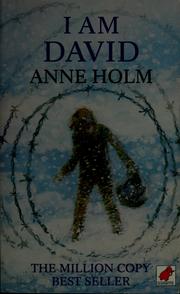
I am David by Anne Holm

I am David by Anne Holm, translated from the Danish by L.W. Kingsland (Puffin, 1969; first published in Denmark, 1963)

8 chapters; 153 pages

Subjects: Denmark, Italy, Eastern Europe, concentration camps, Cold War, dogs, fable, intermediate fiction (Year 6-8)


Synopsis
This entry might be a bit of a cheat, but it is included in all sincerity, even if under slightly false pretences. 

I am David made a strong impression on me when I read it as a child. It’s one of the many classic Puffin books discovered and published by their marvellous editor Kaye Webb.

Recently I re-read it in preparation for a workshop I was holding on Writing about war for children, and discovered that what I thought I knew about it was quite wrong. I thought it was a book about a Jewish boy escaping from a concentration camp in World War Two (a bit like The boy in the striped pyjamas, but with a happier ending.) Turns out that’s not true at all.

The clue is on pg 50 (in my edition). Because David has grown up in the camp, he has no idea about geography or anything else in the outside world, and he’s trying to work out which countries are safe. His definition of a safe country is one with a king or queen, and when he asks someone about England, the answer given is that “at the moment there was a queen because the last king had had no sons, only daughters.” So the book must be set after 1953 (when Queen Elizabeth came to the throne) and it’s an Eastern Europe / Cold War / Communism story, not a World War Two story at all.

Or is it? This article points out that David is 12 in the story, so it's possible that he could have been born during World War Two. 

There are some unlikely coincidences in the plot, especially towards the end, but I think this ambiguity is partly why it has stayed in my memory. It is quite a haunting book.

The book cover above is my own copy, but there are a number of other editions with different covers.


Reviews:
This review on The bookbag calls David "an introspective, deep child" who "observes constantly and learns quickly and ... has his own, strong sense of what is right and what is wrong." 

Another review on Reading matters comments that “the book is not set in a real time or place. Although the circumstances seem real enough, David's background is a synthesis of all the terrible persecution that happened during the Second World War and the subsequent years of cold war communism. This helps to make David a very powerful and pure figure. I don't think he is particularly real. Anne Holm uses him as a blank canvas on which can be drawn the first experiences of life - beauty, knowledge, trust, religion, love, everything.”

It’s a classic, there are masses of reviews and reading guides online. Don’t get bogged down in them. Just read the book for yourself.

About the author
For such a famous book, I couldn’t find much info on the author.

According to this obituary in the Independent, Anne Lise Elfe was born in Aal, Jutland, on 10 September 1922. She married Johan Holm in 1949 and they had one son. She died on 27 December 1998. 

The writer of the obituary describes the book as "a landmark in bringing to children's attention the existence of a world of political evil and the misery this causes. Some doubted the need for revealing such harsh truths at an early stage, but the thousands of children who read the book often sent letters of thanks to the author. Sometimes they wrote directly to the fictional David as well." 

I found this very interesting as it echoed the issues we were discussing in the workshop, to do with "how much” to tell children about war.

In the book, David himself says, “I am glad I told Maria that evil exists. I don’t want her to be afraid, but it’s something you have to know about. Can’t you understand that children have a right to know everything that’s true?”

Other books you might like:
The silver sword by Ian Serraillier (1956) is also about children wandering through post-war Europe, trying to reach a safe country (in this case, Switzerland), although these children do have each other and aren't as completely alone as David.  

Number the stars by Lois Lowry is set in Denmark (where David is told to head to) in World War Two and celebrates the bravery and compassion of the Danish people. 

Things I didn’t know
That this book which I loved as a child isn't about World War Two at all!

Monday, 6 October 2014

Flora's war by Pamela Rushby

Flora’s war by Pamela Rushby (Ford Street Publishing, 2013)

ISBN 978 1 921665 98 1

18 chapters; 243 pages

Subjects: World War One, Egypt, archaeology, nurses, young adult fiction (Year 8-11)


Synopsis
(From the back cover): "It’s 1915 and sixteen year old Australian, Flora Wentworth, is visiting Cairo with her archaeologist father. She watches with growing alarm as first a trickle and then a flood of wounded soldiers are shipped into the city from Gallipoli….As Flora battles to save lives and find her own, a tragic misunderstanding changes everything…"

Reviews:
There are two good reviews here and here. Both mention the way in which the author contrasts the hectic social life of Cairo in 1914 and even early 1915 with the changes that war brings.  

Author’s website
Pamela Rushby was born in Toowoomba, Queensland and now lives in Brisbane.

Other books you might like:
The horses didn’t come home, also by Pamela Rushby (January 2014) describes a visit to an archaeological dig. My review of that book on my blog includes info on the finding in 1922 of Tutankhamen.

Evan's Gallipoli by Kerry Greenwood (October 2013) is a book by another Australian author which has some parallels in the relationship between (vague) father and (confident) child.

Things I didn’t know
Pamela Rushby says in the Author’s note that she was carrying out some early research on WW1 nurses, but what really “grabbed her imagination” was “an entirely different story. Cairo’s story.” The city was “overwhelmed” with wounded soldiers  were sent back from Gallipoli and many hotels and public buildings were turned into hospitals or convalescent homes, with medical staff worked off their feet in trying conditions and volunteers helping as much as possible. 

She paints a convincing picture of the city and its streets and buildings, never letting us forget the history on its outskirts or the ever present heat and dust. I would love to visit the real-life inspiration for the House of the Butcher and Blacksmith (Flora’s home): the Gayer-Anderson Museum. (According to Lonely Planet, this was used as a location for the James Bond movie The spy who loved me!)

Links
Flora and her friend Gwen help out as volunteers at Lady Bellamy’s (very proper) rest and recreation centre, and also on the hospital wards. They make friends with the Australian nurses in Cairo (the first NZ nurses arrived after the 25 April landing at Gallipoli; they were at least in their mid-20s, so would have been quite a bit older than Flora and Gwen.) 

Some of Flora and Gwen's friends depart to work in hospitals on Lemnos or on the hospital ships, so we hear about their nursing work through letters or conversation.  Other actual events such as the riots in the Wozzer are also covered.

There are some amazing photos and stories in this AWM exhibition on the Great War nurses.


A page from the photograph album of my great-great-aunt, Louisa Bird, 
who was one of the first NZ nurses in Egypt.
On the photo in the middle, she has written "15th General Hospital". 


Friday, 19 September 2014

Summer of my German soldier by Bette Greene

Summer of my German soldier by Bette Greene (Puffin Books, 2006; first published The Dial Press, 1973)

ISBN 0 14 240651 1

21 chapters; 230 pages

Subjects: World War Two, United States, Jews, Germans, Prisoners of war, young adult (Year 8-10)


Synopsis
This book  won ALA Notable Book along with New York Times Book of the Year (1973); it was a National Book Award Finalist and was made into a movie in 1978. I read it for the first time for this blog in this Puffin modern classics edition, which makes it yet another modem children's classic that has somehow passed me by until now.  

(From the Puffin page)”When her small hometown in Arkansas becomes the site of a camp housing German prisoners during World War II, 12-year-old Patty Bergen learns what it means to open her heart. Although she's Jewish, she begins to see a prison escapee, Anton, not as a Nazi--but as a lonely, frightened young man with feelings not unlike her own, who understands and appreciates her in a way her parents never will. And Patty is willing to risk losing family, friends--even her freedom--for what has quickly become the most important part of her life. Thoughtful, moving, and hard-hitting, Summer of My German Soldier has become a modern classic.”

There are different covers on different editions. I can’t say I like this cover, though.

Patty (or Patricia Anne) has a wild imagination, wistful daydreams and a huge vocabulary gleaned from reading the dictionary. “I don’t actually mean to be rude, but I am. My father says I ask a lot of questions and then go around contradicting every answer.”

She sometimes seems much younger than 12 and sometimes much older, but I love the way she talks and thinks. And I’m in awe of how the story is told completely from Patty’s point of view, but the author shows us so clearly the things that she doesn’t notice or can’t understand. 

Patty’s mother is distant, her little sister Sharon is too young to provide any support and her father is a tortured soul, but we lose sympathy for him when he is physically abusive. The beatings that he deals out are hard to read about and it’s sad to see Patty’s desperate attempts to win her parents' love and affection, which is so freely given to Sharon. Her family life is made bearable by occasional visits to her grandparents and by Ruth, their cook, who calls her “Honey Babe” and is “the colour of hot chocolate before the marshmallow bleeds in.”

Her life changes the day that Anon Reiker walks into her father’s shop, and the place where she is sent to live at the end would be awful, if not for the fact that her home life is so sad anyway. In some ways, it’s an escape. And she has Anton’s words to hold onto: “Even if you forget everything else I want you to always remember that you are a person of value, and you have a friend who loved you enough to give you his most valued possession.”

Reviews:
This review calls the book "a poignant coming-of-age story about a young Jewish girl from a small town in Arkansas who helps an escaped German POW, an act which changes her life forever." 

Apparently there is a sequel, Morning is a long time coming, but I don’t know if I want to read that. I think I’d rather imagine Patty’s  future for myself.   

Author’s website
(From the back page) “Bette Greene was born in Memphis, Tennessee on June 28, 1934 and grew up in a small town in Arkansas.” That makes her just a bit younger in World War Two than Patty, age 12, living in Jenkinsville Arkansas. “In many ways, Patty Bergen is based on Ms Greene’s childhood experiences as a Jewish girl in the South.”  

You can read more about Bette Green on her website. 

Other books you might like:
So far from the sea by Eve Bunting describes the camps in picture book format. We follow Laura and her little brother Thomas, who are visiting their grandfather's grave in a remote part of the desert. Gradually we learn that their grandparents and their father, as a small boy, were among the thousands of Americans with a Japanese background who were taken to internment camps in World War Two.

Things I didn’t know
I first read about the Japanese interns in So far from the sea, but I had no idea there were so many Prisoner of War camps in America. Like so many other things, it makes sense when you think about it. The German POW camps were in Germany or in German-occupied countries, but for the Allies to set up their own POW camps in England or Europe would use up food and medical resources that they needed for their own troops.

Across the Atlantic, America had masses of food and acres of empty space - and that’s where the POWs went; nearly 425,000 of them, housed in more than 500 camps.  Nearly 23,000 of them – German and Italian – went to Arkansas, where this book is set.

Not many of them escaped, or even tried to. The camps were set in remote locations – and it wasn’t as if they could ever get back home, across the ocean. They had comfortable surroundings and plenty of food; in fact some Americans felt the military was “coddling” them. The camps were closed down after the war and the prisoners were returned to Europe.

You can read more about them here and here. 


Saturday, 13 September 2014

When the siren wailed by Noel Streatfeild

When the siren wailed by Noel Streatfeild (Collins, 1974)

18 chapters; 174 pages

Subjects: World War Two, England, London, children, evacuees, junior fiction (Year 5-8)


Synopsis
Laura, Andy and Tim Clark are evacuated to the country, like thousands of other London children, at the beginning of WW2. They are billeted in a large house with a “kind but gruff” old Colonel. When he suddenly dies, they are sent to live with the dreaded Miss Justworthy, at which point they decide to escape and try to get back to London to find their parents.

Reviews:
This review mirrors my feelings about the book. There is a lot of heavy-handed explaining, many of the characters are fairly one-dimensional (especially Miss Justworthy, the Evacuee Officer), and the children’s flight back to London isn't very dramatic or suspenseful. Some hugely important plot twists are explained away in a brief sentence or two. The children just aren't very interesting and their dialogue is hard to read (“D’you mean I’ll ‘ave a garden all me own what I don’t share with Andy nor Laura?”)

This is a pity because the subject of evacuees is such a fascinating one, and also because I love many of Noel Streatfeild’s other books, especially The painted garden and Ballet shoes, but this one doesn't have the same magic. 

If you are also a Noel Streatfeild fan, you might like to check out the amusing checklist of How to tell if you are in a Noel Streatfeild novel. Warning signs include: “You are ridiculously talented at one very specific thing”, “So are your siblings. Each of you has a separate, distinct talent, which is fortunate because it means you never have to compete with each other” and “You've never taken a single lesson related to your talents until the story starts. You’re just naturally, amazingly talented.”

(And if you enjoy that, you can go on to find out How to tell if you're in a Dorothy Parker, Jane Austen,Thomas Hardy, Charles Dickens or any number of other novels. Complete diversion, sorry. Warning, some entries might be more risque than others.)  

About the author:
This timeline of Noel Streatfeild’s life tells you several interesting things you might not know, such as that she was born on 24 December (perhaps why she was given Noel as a second name) and her first name was actually Mary, that she was employed in WW1 at the Woolwich Arsenal as a munitions worker  (like Johnny’s mother in Lord of the nutcracker men), that she toured England with a Shakespeare company in her 20s and that her London flat was destroyed by a bomb in WW2 .

Other books you might like:
While clearing out some of our book shelves, I  came across another book about evacuee children: Evacuee by Gabriel Alington (Walker Books, 1988.) This treats the subject of evacuees from another angle: that of a timid English girl, Frances (or Fanny) sent away to the USA to live with “Aunt” Bird and her adopted daughter, Pepper. Fanny eventually comes out of her shell, which we know because she gets a new haircut, learns to swim and falls in love with Pepper’s 20-year-old adopted brother (which is slightly creepy as Fanny is only 13.) She also manages to walk into the White House and meet the President.

I think we bought this book at a book fair or second hand bookshops, and it annoyed me because of the plot holes and creepiness factor, but I did learn about the Firsters movement.  The America First movement was against any American involvement in WW2 and one of its leaders was Charles Lindbergh, the famous pilot.

Before Pearl Harbor, aviator Charles Lindbergh was so vocal about his opposition to U.S. involvement in World War II that he became an unofficial leader of America's isolationist movement.


Wednesday, 20 August 2014

Emil and Karl by Yankev Glatshteyn

Emil and Karl by Yankev Glatshteyn; translated by Jeffrey Shandler (first published as Emil und Karl in 1940; this edition Roaring Brook Press, 2006)

ISBN 1-59643-119-9

25 chapters; 186 pages with an Afterword

Subjects: World War Two, Austria, Vienna, USA, children, friends, Jews,  junior fiction (Year 5-8)


Synopsis
This is another book I had never heard of before and one that is unique in many ways. For a start, it is one of the first books to be written for children about what we now call the Holocaust, before people even knew what that really meant.

The story is set in Vienna, Austria, sometime before the start of World War Two. Germany annexed Austria in March 1938 and many Austrian Jews tried to escape but often it was impossible for them to get out, or there was nowhere for them to go. “Incidents described in Emil and Karl, such as Jewish shops being looted, Jews being forced to scrub Vienna’s streets with their bare hands and to act like animals in a public park, actually happened and were reported in American newspapers" (from the Afterword).

Karl has been told to keep away from Emil because he is Jewish, but the two boys are left on their own, with only each other to rely on, when their parents are taken away by the authorities. (Karl is not Jewish, but his parents are Socialists, another category that the Nazis targeted.)  The story of what happens to them over the next few days is told in a quiet, matter of fact way but is absolutely riveting. Together, they meet good people who will help them, and some who suffer for helping them; they encounter cruelty and courage, desperation and generosity, horror and love.

“What makes them do it?” Karl asks after they have been forced to endure the brutality of the pavement-scrubbling scene.  But the book also reminds us that there were many ordinary people who did find the courage to stand up against the regime and fight for freedom, even when they knew that it would probably cost them their lives.

The story is told in very simple language but I think it could actually be quite frightening for younger children, because it is about what happens to two ordinary boys, just like them.

Reviews:
Text Publishing calls this book "A taut, gripping page-turner" and says that it "holds a unique place in publishing history as one of the first works published in any language about what was happening under the Nazi regime."

A Teacher’s resource kit is available here. 

This review in the New York times makes some interesting points about writing for children about war, specifically about the Holocaust: "Indeed, the story of the Holocaust has overwhelmed countless novels intended for adults. The challenge in a book for children is far greater — the risk of frightening them competes with the possibility that an overload of horror will leave them numb. It is perhaps surprising, then, that a writer working with no hindsight at all hit the mark so precisely."

About the author:
Yankev Glatshteyn (1896-1971) was born in Lublin, Poland. He grew up speaking Yiddish, which was the first language for millions of Jews in both America and Europe. When he was 18, he emigrated to the USA and studied law but became a writer instead of a lawyer. He was part of a group of writers who wanted to write poetry and fiction in Yiddish (which was what Emil and Karl was originally written in).

In 1934, Glatshteyn went back to Poland to visit his mother who was unwell. This was when he saw for himself what conditions were like for Jewish people living in Poland and other parts of Europe at that time. In the years leading up to World War Two, Jewish people were being discriminated against and attacked, both economically and even physically. 

Back in America, Glatshteyn wrote two adult novels about this situation as well as Emil and Karl, which was published in New York in February 1940. This was after Nazi Germany had invaded Poland in September 1939 but before America joined the war. In other words, the book was written at the start of the war when nobody yet knew what its ending would be. It was first read by American Jewish children who attended Yiddish schools (as well as their public schools) in the afternoons and weekends. 

Other books you might like:
The silver sword is another famous example of a book about children  being left to cope on their own in war-torn situations. 

The hare with amber eyes: a hidden inheritance by Edmund de Waal is not a children's book, but a fascinating memoir that paints a picture of Vienna at this time. You can read reviews of it in the Guardian and the Telegraph. 

Things I didn't know: Vienna
You can read more about the history of Vienna here and here. 

We find it hard to comprehend this at a distance but who knows how we would have reacted at the time, if we had been the cowed, frightened or equally uncomprehending onlookers? 

DSC_0203
A travel blogger posted this sad depiction which features a bronze sculpture of an elderly Jewish man, on his hands and knees, scrubbing anti-Nazi slogans from the street surface with a toothbrush